The ongoing conflict in the Middle East has caused significant disruptions to air cargo operations, with many airlines suspending or rerouting flights through the region. This has resulted in a shortage of available capacity, leading to increased freight rates and surcharges for shippers.
Logistics experts warn that even if the conflict were to end this weekend, it would take several days to clear shipment backlogs at various hubs and restore normal network activity. Perishable or time-sensitive cargo may be unsalvageable due to prolonged delays.
The crisis has presented an opportunity for airlines and logistics companies to capitalize on the shortage of ocean shipping capacity, with shippers looking to avoid delays and shipping lines jettisoning Middle East-bound cargo in India, Sri Lanka, and other locations. This could lead to a shift towards air freight as a means of bypassing ocean bottlenecks.

Air cargo volumes have grown 4% year over year in 2025, with demand up about 6% in the first two months of this year, outpacing capacity growth of 4%. However, global air cargo capacity has fallen 18% week-over-week, with 13% directly tied to large Middle East carriers.
Airports in Dubai, Abu Dhabi, and Qatar have been closed to commercial traffic, with some emergency flights allowed. Freighters and passenger-belly capacity have dropped nearly 40% on the Asia-Middle East/South Asia-Europe corridor, pulling global cargo capacity 21% below the pre-Chinese New Year level.
Passenger and cargo airlines have paused service to Israel and other Middle East nations or rerouted flights until hostilities calm down. FedEx has suspended all flights in, and around, the Arabian Gulf, while Cargolux has cancelled all Middle East flights except for Muscat, Oman.

The closure of major container shipping ports in the United Arab Emirates, Saudi Arabia, and other Gulf countries could contribute to extended lead times, particularly for sea-air shipments. Dubai is a critical connection point for shipments moving from Asia by vessel and then transferred to aircraft for transport to destinations in Europe or the United States.
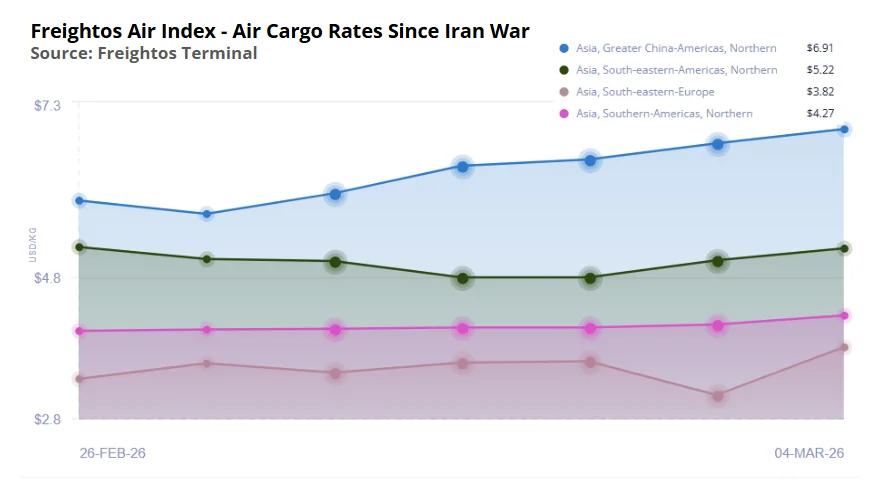
Freight forwarders are already chartering flights to compensate for lost capacity, with Kuehne+Nagel warning that backlogs of Europe and U.S.-bound cargo in Asia could begin building up by the beginning of next week. Air freight rates are rising sharply due to rerouting of aircraft, reduced payloads, and rising fuel costs.
The effects of the Iran war on air cargo operations extend far beyond the Middle East, with long detours requiring aircraft to carry more fuel, limiting payload capacity and increasing costs. This could lead to a shift in demand towards more efficient modes of transportation.
As the situation continues to unfold, shippers are facing increased uncertainty and potential delays, highlighting the need for flexibility and contingency planning in air cargo operations.
The escalating Iran war is expected to have long-term effects on global air cargo operations and prices.