
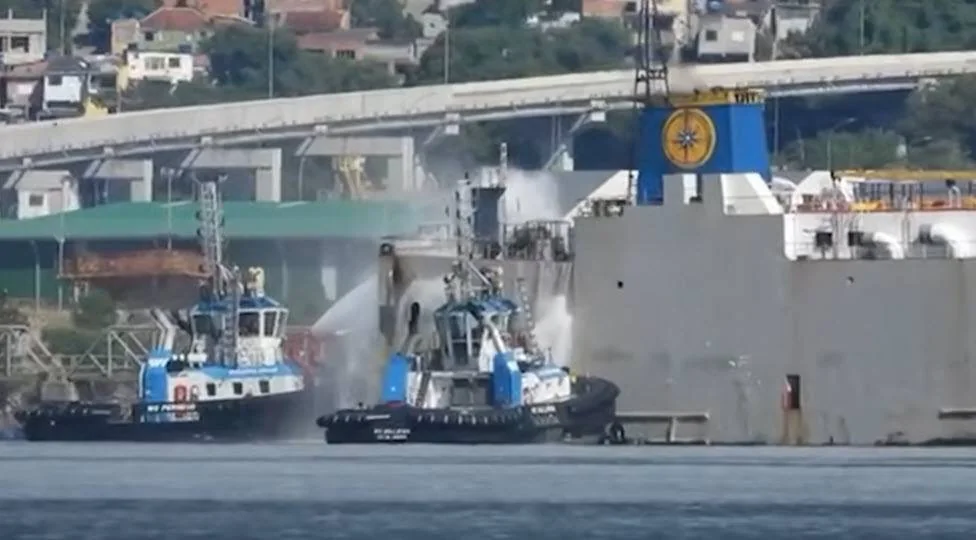
A devastating fire broke out on a Panama-flagged livestock carrier, North Star 1, while it was docked at the Port of São Sebastião in Brazil on March 3. The incident has sent shockwaves through the maritime industry, raising concerns about the safety and welfare of animals transported by sea. The cargo ship was carrying approximately 2,600 cattle destined for Turkey when the fire started in a provisions store containing livestock fodder.
The crew of the North Star 1 received medical attention due to smoke inhalation, but fortunately, no fatalities were reported among the crew members. However, the 2,600 animals onboard required immediate disembarkation, and they were safely relocated to a nearby facility. The fire's rapid spread and the lack of life-saving equipment on board have raised questions about the industry's preparedness for such incidents.
The incident is a stark reminder of the dangers of fire at sea, particularly in the livestock carrier sector. As Dr. Lynn Simpson, an Australian veterinarian, pointed out, these vessels do not carry adequate safety measures to protect animals from fires. In the event of a blaze, the crew's primary concern is often their own evacuation, leaving the animals to suffer and perish.
The lack of emergency preparedness and life-saving equipment on livestock carriers has led to numerous tragic incidents in the past. According to reports, over 100,000 animals have died from fires while at sea since the 1980s. These statistics underscore the need for improved safety regulations and industry standards to prevent such disasters.
The incident also raises questions about the reporting of fires on livestock carriers. While some incidents are reported, many others go unreported, leaving it unclear how many ships are 'firetraps' waiting to happen. The lack of transparency and accountability in this sector is a pressing concern that must be addressed.
In December, a coalition of 36 organizations issued a letter to the Secretary-General of the IMO calling for binding international regulations for livestock carriers. This move highlights the industry's growing recognition of its responsibility to prioritize animal welfare and safety at sea. However, more needs to be done to ensure that these regulations are implemented effectively.
The incident on North Star 1 serves as a wake-up call for the maritime industry to reassess its priorities and take concrete steps towards improving safety standards. The consequences of inaction can be devastating, and it is imperative that the industry takes responsibility for ensuring the welfare of animals at sea.
As the industry continues to grapple with this issue, it is essential to examine the root causes of these incidents and develop effective solutions. This includes investing in life-saving equipment, improving emergency preparedness, and enhancing reporting mechanisms to prevent similar disasters from occurring in the future.
The maritime industry must learn from this incident and take immediate action to address the concerns surrounding livestock carrier safety. By prioritizing animal welfare and safety at sea, we can reduce the risk of such tragedies and create a more responsible and sustainable industry.
The incident highlights the need for improved safety measures on livestock carriers, as the lack of life-saving equipment and emergency preparedness can lead to catastrophic consequences. The industry must take responsibility for ensuring the welfare of animals at sea.