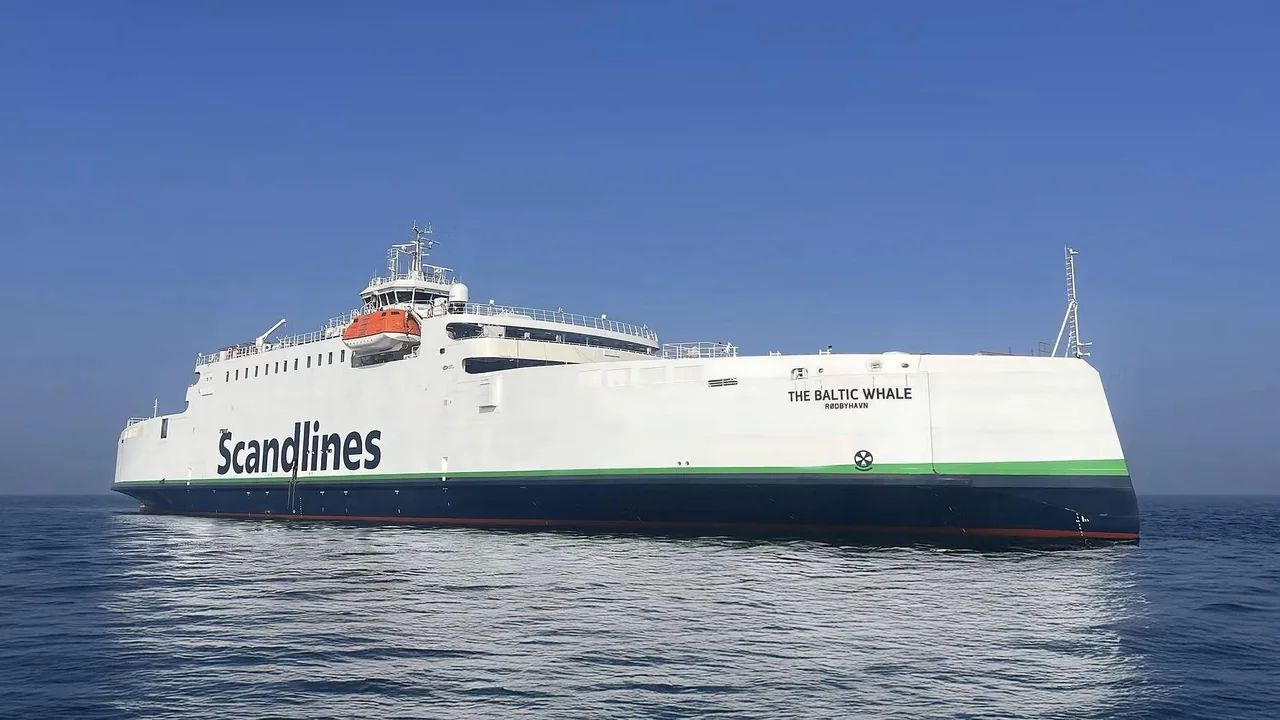
Scandlines has officially launched its new ferry, The Baltic Whale, on the Rødby-Puttgarden route connecting Denmark to Germany. This move represents a crucial step towards the company's ambitious goal of sailing without direct emissions by 2040. By introducing this zero-emission vessel, Scandlines is strengthening its capacity for freight customers and contributing to a more sustainable maritime industry. The Baltic Whale's innovative design and technology make it an attractive option for those seeking environmentally friendly transportation solutions.
The Baltic Whale boasts one of the world's largest battery systems on board a ferry, allowing it to operate without direct emissions during normal operation. This impressive feature not only reduces greenhouse gas emissions but also minimizes noise pollution above and below water. The ferry's name, 'Baltic Whale', pays homage to the marine environment in which it operates, particularly the Baltic Sea porpoise.
The Baltic Whale can complete the 18.5 km crossing between Rødby and Puttgarden in approximately 45 minutes. With new power cables and transformer stations in place at both ports, charging time is remarkably quick – just 12 minutes in each port. An intelligent charging tower ensures seamless connections, even when the water level or movement of the ferry changes.
The Baltic Whale offers an additional option for hybrid operation, allowing it to switch between electric and diesel power as needed. This flexibility enables the ferry to adapt to changing circumstances and optimize its energy efficiency. The presence of diesel generators also provides a backup solution in case of emergencies or extended periods of operation without electricity.
The Baltic Whale is designed with freight transport in mind, featuring space for 66 freight units spread across two decks. This capacity allows it to handle 'dangerous goods', including industrial products, batteries, cosmetics, and car parts, in a structured setup. By increasing its freight capacity, Scandlines can free up space on other ferries for passenger vehicles during peak seasons.
The introduction of the Baltic Whale has resulted in a significant increase in Scandlines' capacity for transporting freight units on the Rødby-Puttgarden route by 27 percent. This boost in efficiency is crucial for the shipping company, as it enables them to better meet the demands of their customers while reducing their environmental footprint.
The Baltic Whale's impressive features and capabilities make it an attractive option for those seeking environmentally friendly transportation solutions. Its innovative design and technology set a new standard for the maritime industry, demonstrating the potential for sustainable shipping practices.
Scandlines has invested heavily in the development of the Baltic Whale, with a project budget of EUR 84 million ($98 million). This significant investment reflects the company's commitment to reducing emissions and promoting environmentally responsible transportation options. As the shipping industry continues to evolve, initiatives like the Baltic Whale will play a crucial role in shaping its future.
The Baltic Whale is an exemplary model of sustainable maritime innovation, offering a glimpse into the exciting possibilities that emerging technologies can bring to the industry. By embracing zero-emission ferry operations, Scandlines is paving the way for a more environmentally conscious shipping sector.
The introduction of the Baltic Whale marks a significant step towards reducing emissions in the shipping industry, with its battery system and shore-based electricity making it an attractive option for freight customers.