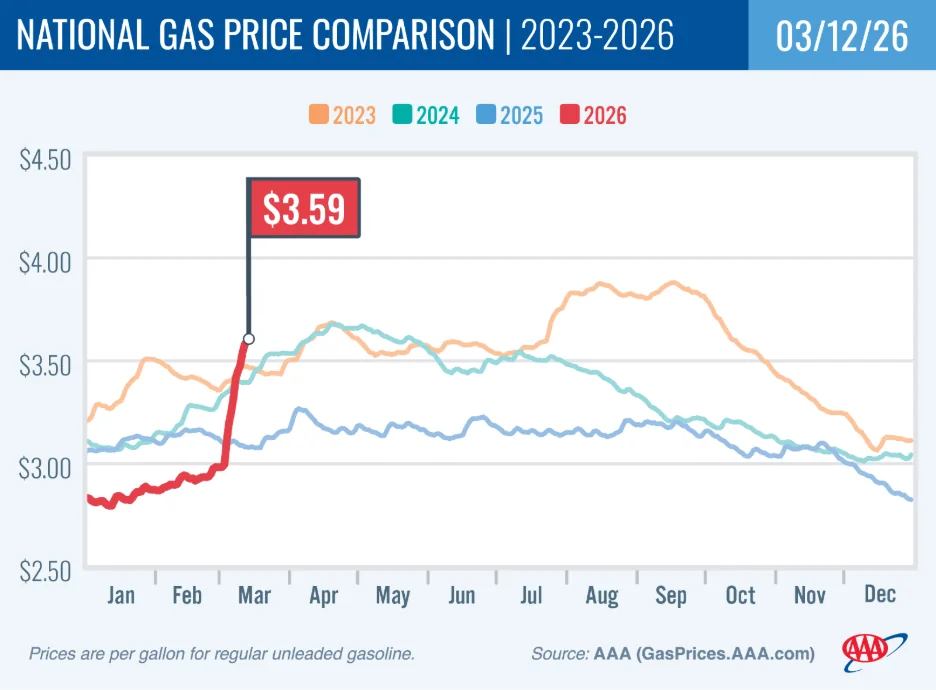
As the country embarks on its spring break, drivers are facing a perfect storm of rising pump prices and increased demand for gasoline. The national average price for regular gas has jumped nearly 35 cents since last week, with current prices mirroring those seen in the spring of 2024. This increase is largely due to the seasonal surge in driving as warmer weather sets in and more people hit the road.
The rise in pump prices is a result of crude oil prices surpassing the $100/barrel mark multiple times in recent days, making it more expensive for refiners to produce gasoline. To help mitigate this, the US government has announced plans to release 172 million barrels of oil from its strategic reserves over four months, marking one of the largest emergency releases in history.
The International Energy Agency's efforts to release a total of 400 million barrels of oil are also contributing to the increased supply of crude oil on the market. However, despite this effort, gasoline demand continues to rise, driven by warmer weather and increased mobility.
According to new data from the Energy Information Administration, gasoline demand has increased last week from 8.29 million barrels per day to 9.24 million, with total domestic gasoline supply decreasing from 253.1 million barrels to 249.5 million. This surge in demand is further exacerbated by the fact that gasoline production has also increased, averaging 9.9 million barrels per day.
The recent increase in crude oil prices has had a ripple effect on other energy markets, including electricity. The national average per kilowatt hour of electricity at a public EV charging station has risen by 2 cents to 41 cents, making it more expensive for electric vehicle owners to charge their cars.
As the country's top 10 most expensive gasoline markets are revealed, it becomes clear that some regions are paying significantly more than others. California tops the list with prices of $5.36 per gallon, followed closely by Hawaii and Washington.
In contrast, states in the Midwest and South are among the least expensive for gasoline, with Kansas taking the top spot at $3.04 per gallon. This disparity highlights the regional variations in energy costs that can have a significant impact on drivers' wallets.
The nation's top 10 most expensive states for public charging per kilowatt hour also reveal a clear pattern of regional variation. West Virginia leads the pack with prices of 54 cents, while Kansas takes the bottom spot at just 29 cents. This disparity underscores the need for more affordable and accessible electric vehicle charging infrastructure across the country.
Ultimately, the combination of rising pump prices, increased demand, and limited supply will continue to have a significant impact on drivers' wallets and travel plans this spring break season.