

New camera washers highlight the flaw in vision-only systems, while paying Tesla owners still wait for a solution. Not long after news emerged that Tesla had equipped its Cybercab prototype with a rear camera washer, more developments out of Austin suggest the company is extending this upgrade to other models. Specifically, early units of the Model Y being used in Tesla's pilot Robotaxi program are now sporting exterior camera washers as well.
Unlike many other car manufacturers, Tesla is famously pursuing a vision-only approach for its autonomous driving systems. Doing so is cheaper than equipping vehicles with advanced sensors, such as radar and LiDAR, but it has its issues. For example, if those cameras get dirty, they won’t work properly, an obvious issue for a company that hopes to deploy millions of driverless vehicles with no human backup inside.
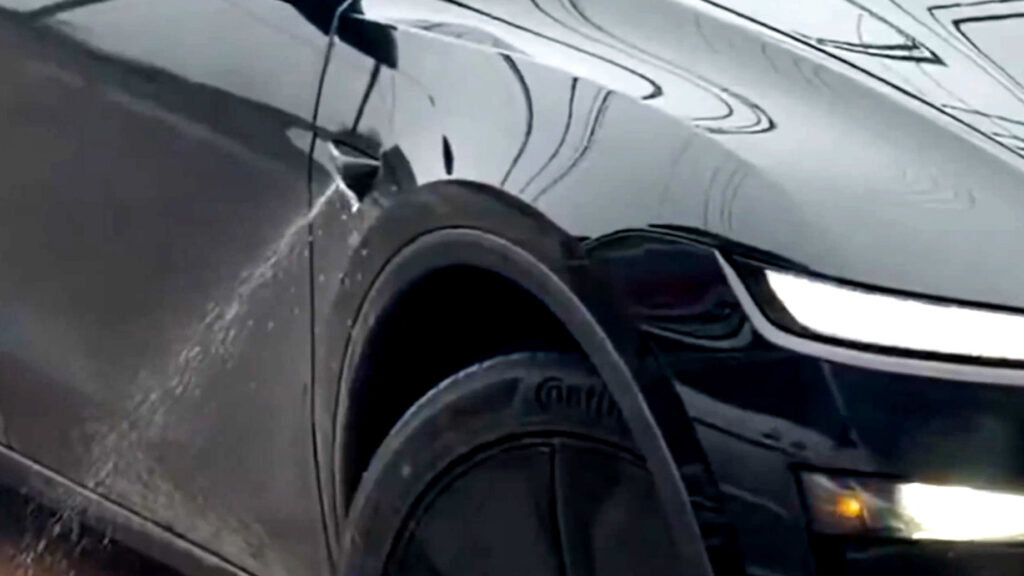
Last week, Tesla made important tweaks to its Robotaxi fleet in Texas, eliminating the need for a human safety driver in the passenger seat, and instead shifting the safety drivers to chase cars that closely follow the self-driving Model Ys. As part of this update, the Model Ys now include functional washers for their external cameras. A washer has been added to the rear camera above the LED light bar, along with additional washers for the cameras in the front-quarter panels.
Meanwhile, newer Cybercab prototypes appear to be getting similar treatment. Along with the rear camera washer, these test vehicles have washers installed for the side-facing cameras on the B-pillars. While Elon Musk would probably never admit it, it seems Tesla has realized that if it is to have any hope of achieving complete autonomy with only cameras, it has to ensure those cameras are always clean.
As we mentioned before, if the Robotaxi and Cybercab are getting the washers, then it’s almost a given that, for economies of scale, regular production Teslas will soon receive the same hardware. And it’s not just about the cost of the components. Software plays a role too, as Tesla tends to streamline development by standardizing features across its fleet whenever possible.
Supporting different configurations adds complexity, which runs counter to the company’s usual approach to efficiency. Will Regular Teslas Get It? The real question now is whether owners of existing Tesla models, many of whom have already spent thousands on the Full Self-Driving package, will have the option to retrofit their vehicles with these camera washers.
Chances are, yes, but don’t expect them to come as a free upgrade. Tesla may soon provide an option to add these washers to older vehicles, but given its history, it’s hard to imagine the company absorbing the cost, regardless of how crucial the hardware might be for a system people have already bought into.
This development highlights the ongoing challenges of vision-only systems in autonomous driving. To achieve true autonomy, cameras must be protected from dirt and debris, which is why Tesla's decision to add washers to its models is a step in the right direction.