
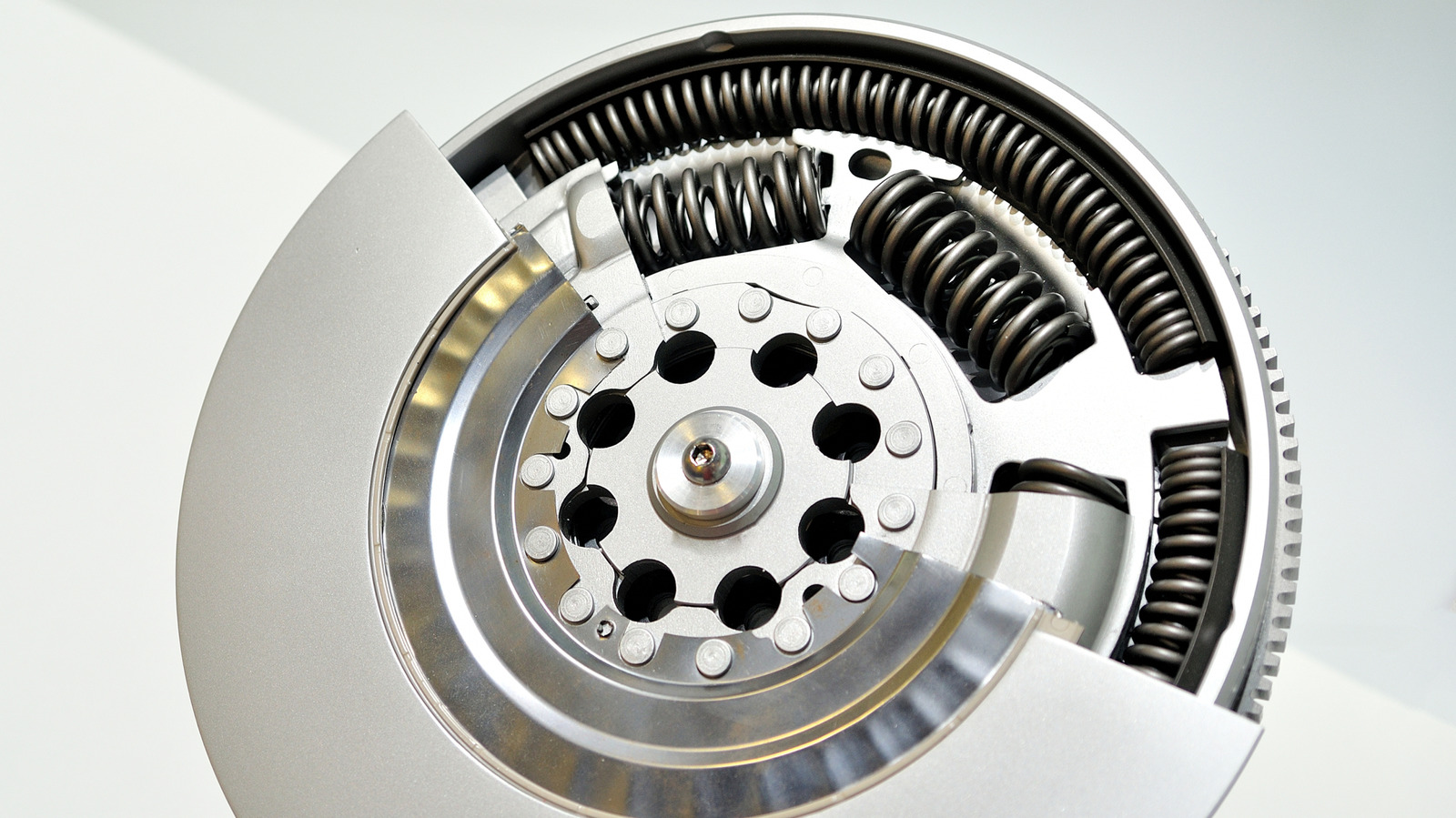
The development of the potter's wheel in Mesopotamia around 3500 B.C. marked a pivotal moment in the creation of flywheels, which have been refined over time to achieve smoother and more consistent revolutions. The same principles that govern the operation of ancient pottery wheels are now at work in modern cars with manual and dual-clutch transmissions. By harnessing energy as rotational momentum, flywheels help to smooth out power delivery and reduce noise, vibration, and harshness (NVH) in the cabin.
The basic function of a car's flywheel is to assist in starting the engine, maintaining smooth operation, and transmitting power to the transmission. While automatic transmissions use flex plates instead of flywheels, they serve the same purpose. The teeth on the flywheel's outer edge mesh with starter gears to generate the necessary torque for engine startup, and each power stroke creates a jolt of torque that is smoothed out by the flywheel's weight and inertia.
The introduction of dual-mass flywheels has expanded the range of applications in which they are used. Unlike single-mass flywheels, which engage directly with the clutch, dual-mass flywheels feature two discs connected by springs that dampen like suspension struts. This design allows for better vibration absorption and reduced NVH, making them particularly well-suited to heavy-duty trucks and diesel engines.
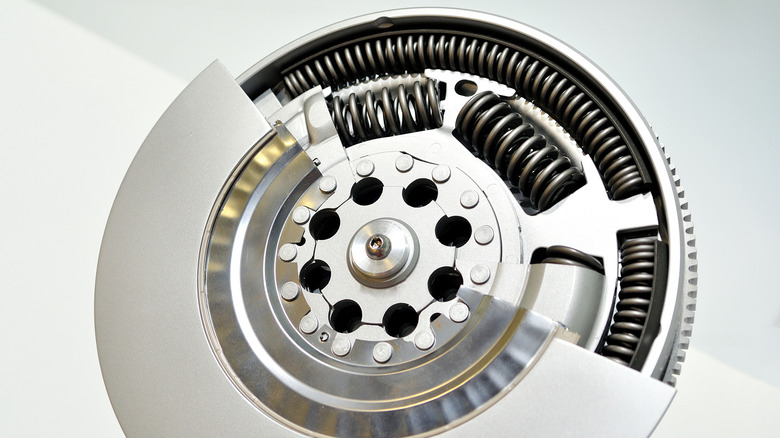
The operation of a single-mass flywheel is straightforward: its surface engages directly with the clutch, and the clutch plate springs provide some damping. In contrast, dual-mass flywheels require two discs that are connected by springs, which compress as one disc rotates and start the other in motion. This complex design allows for more efficient vibration absorption but also introduces potential problems and increased complexity.
The benefits of dual-mass flywheels are evident in high-torque situations like towing, where transmission preservation and longevity are critical. By reducing the shock transferred to the transmission, dual-mass flywheels help to extend the life of the drivetrain and prevent premature wear. This is particularly important in diesel engines, which outsell gasoline-powered trucks due to their superior towing capacity.
In smaller engines with fewer cylinders, dual-mass flywheels can also provide a comfort benefit by reducing the harshness of sporadic power strokes. This is evident in cars like the Volkswagen Golf GTI and Audi DSG transmissions, which use dual-mass flywheels to smooth out the driving experience. By reducing drivetrain noise and vibration, dual-mass flywheels make everyday driving more pleasant.
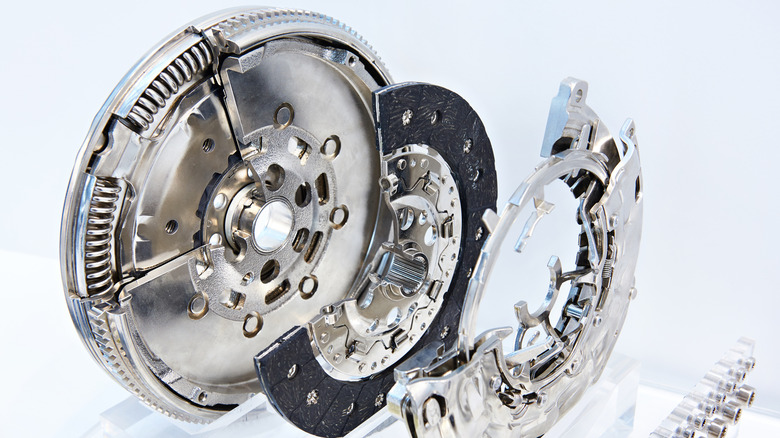
However, the increased complexity of dual-mass flywheels also means that they are generally more expensive than single-mass designs. While a single-mass flywheel can be resurfaced, dual-mass flywheels require replacement if they fail. This increased cost and potential for failure make dual-mass flywheels less appealing to some drivers.
The weight of factory dual-mass flywheels is also a consideration, with most weighing around 30 pounds. While this may seem substantial, it can feel like a hindrance to responsiveness, particularly when compared to lighter alternatives. As a result, aftermarket performance parts companies have developed lightweight dual-mass flywheels that can improve handling and acceleration.
Finally, the tuning of dual-mass flywheel parts can be limited by their design, which may not accommodate increased power output from factory upgrades or aftermarket modifications. In these cases, owners may opt for a single-mass flywheel conversion, which can provide a more direct power engagement between the engine and transmission at the cost of increased noise and vibration.
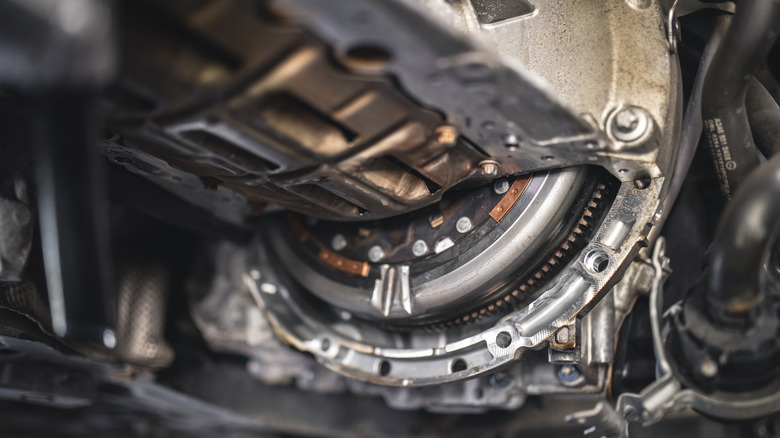
In conclusion, the dual-mass flywheel is a key component in modern manual and dual-clutch transmissions, offering improved driving comfort, performance, and maintenance costs. While its complexity and higher cost may be drawbacks, the benefits of reduced NVH, improved transmission longevity, and enhanced responsiveness make it an attractive option for many drivers.
The use of dual-mass flywheels in modern cars has significant implications for driving comfort, performance, and maintenance costs.