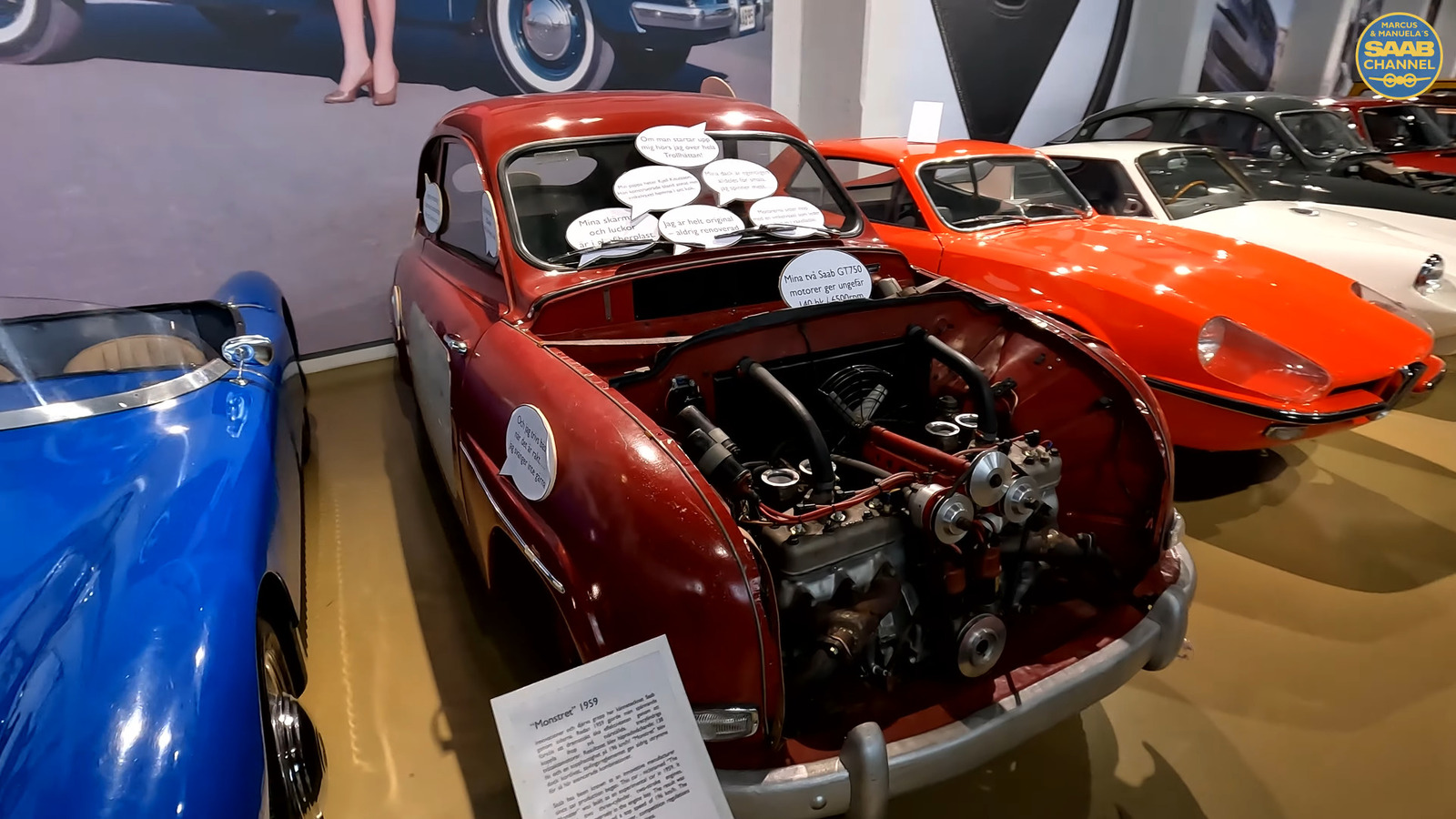
Saab's history is often associated with its eccentric marketing campaigns and its slow demise under General Motors, but the company's early days were marked by innovation and risk-taking. The Saab 93 'Monster' was a product of this era of experimentation, born from the aircraft engineers who designed it. Launched in 1955, the 93 retained the iconic teardrop shape of its predecessor, the Saab 92, but swapped the old two-cylinder engine for a three-cylinder two-stroke mill.
The Monster was never intended to be a production car, but rather a laboratory experiment designed to push the boundaries of rallying performance. With legendary rallyist Erik Carlsson at the helm, the Saab 93 began to make waves in the gravel stages, but it soon became clear that more power was needed to dominate the high-speed circuits. By mounting two 748 cc three-cylinder engines transversely in the front, Saab engineers created a Frankenstein motor that produced an astonishing 138 horsepower.
The specs of the Monster were truly unhinged for the era, with a modified three-speed gearbox and a radiator moved to the rear of the engine. To save weight, steel panels were replaced with aluminum and fiberglass, and the interior was stripped of comfort. The result was a vibrating, screaming, blue-smoke-belching monster that sounded like nothing on the road - a high-pitched six-cylinder two-stroke wail that could be heard from miles away.
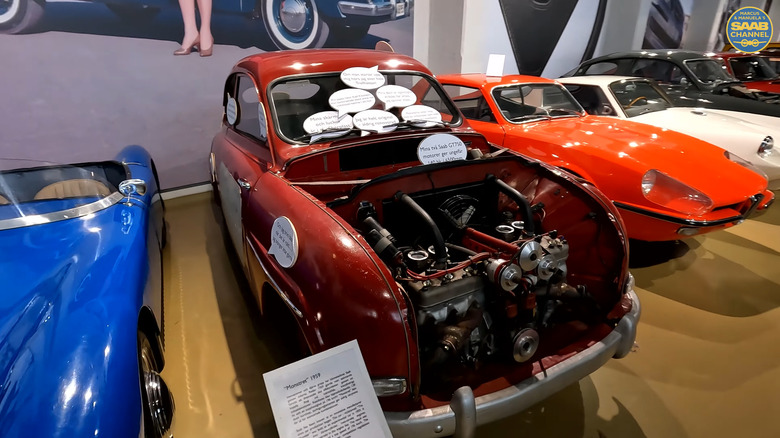
Driving the Monster was a near-death experience, with its massive understeer and torque steer making it a nightmare to handle. Despite its incredible speed of 122 miles per hour during testing, the car was a force to be reckoned with on the road, and its very existence raises questions about the limits of innovation in car design.
The Saab 93 'Monster' is a testament to the lengths to which manufacturers will go to achieve performance, even if it means sacrificing comfort and practicality. Its legacy lives on as one of the most infamous cars in automotive history, a reminder that sometimes, progress comes at a steep price.
Today, the Monster remains an intriguing footnote in Saab's history, a symbol of the company's willingness to push boundaries and take risks. While it may never have achieved mainstream success, its impact on rallying and car engineering is undeniable.
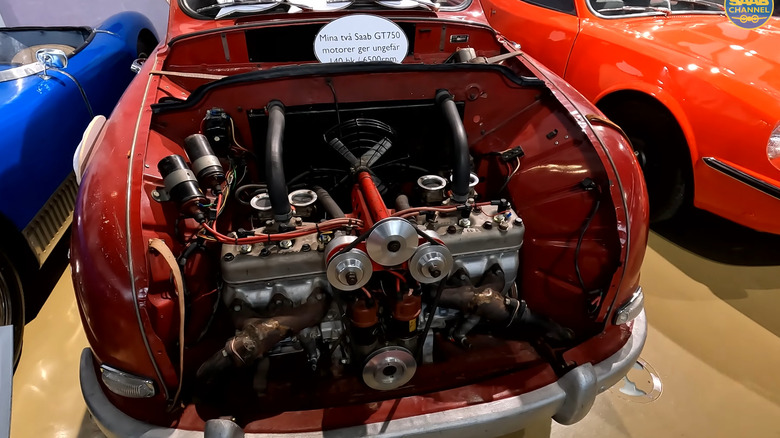
The Monster's existence also highlights the challenges faced by engineers working in the 1950s, when safety standards and emissions regulations were still in their infancy. The car's two-stroke engines and lack of comfort features would be considered egregious safety hazards today.
As a cultural artifact, the Saab 93 'Monster' is a fascinating relic from an era of automotive innovation. Its very existence serves as a reminder that the pursuit of speed and performance can lead to some truly remarkable - if not always practical - designs.
The Monster's legacy continues to captivate car enthusiasts and historians alike, offering a unique glimpse into the early days of Saab and the company's most ambitious project. Its enduring appeal is a testament to the power of innovation and experimentation in shaping the automotive industry.
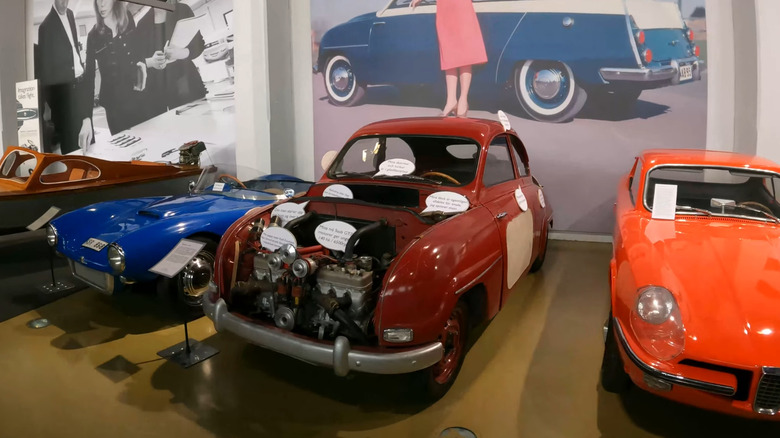
The Saab 93 'Monster' was a groundbreaking but ultimately doomed experiment in car engineering that showcases the lengths to which manufacturers will go to achieve performance.