
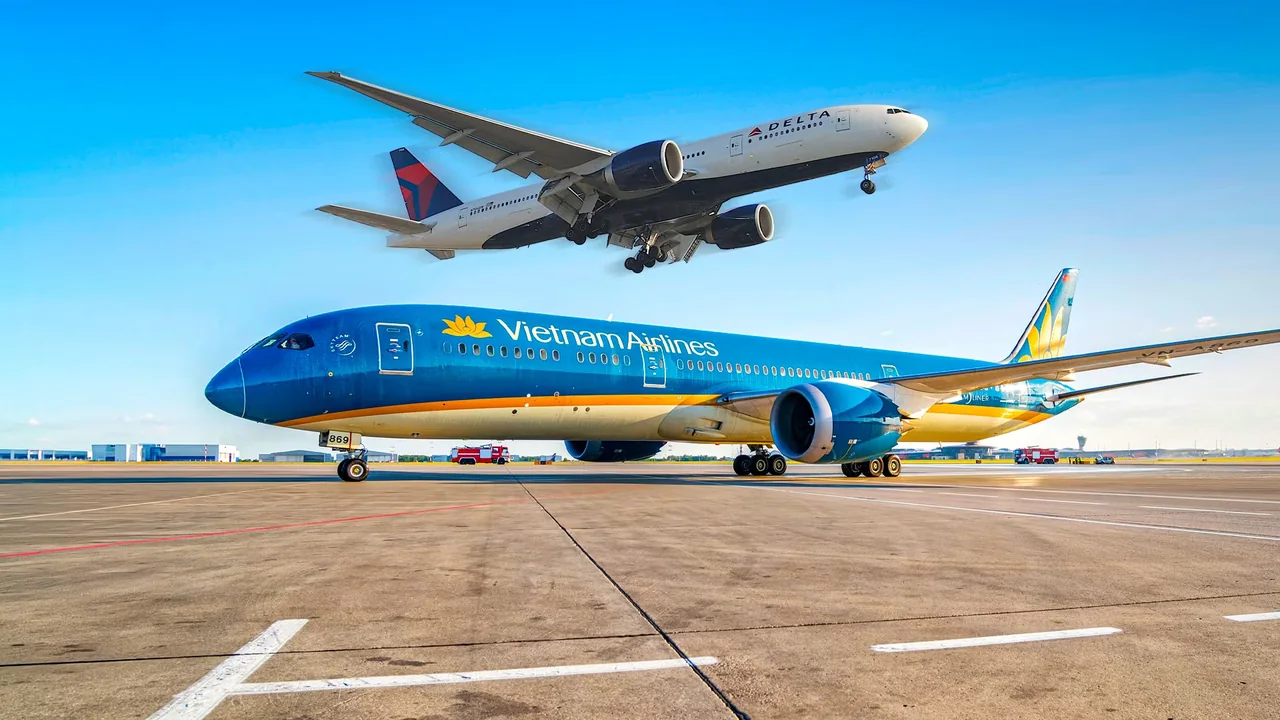
The debate over which aircraft is more comfortable, the Boeing 777-200LR or the 787-9, has been ongoing among passengers. A Reddit user recently highlighted the significant difference in humidity levels between the two planes, with the 787's cabin pressurization resulting in a much more comfortable experience. This highlights the importance of cabin pressure and its impact on passenger comfort during long-haul flights.
The Boeing 777-200LR is still a capable aircraft, but it falls short when compared to the 787-9 in terms of cabin pressurization. The 787's cabin is equivalent to standing at 6,000 feet above sea level, while the 777-200LR's cabin is pressurized to 8,000 feet. This difference may seem small, but it makes a significant impact on passenger comfort during long flights.
Cabin pressurization is just one aspect of an aircraft's ability to provide a comfortable flying experience. Noise levels and air conditioning systems also play a crucial role in passenger comfort. The 787-9 has less engine noise and vibration inside the cabin, making it a more peaceful environment for passengers. Additionally, the air conditioning system on the 787 is quieter than that of the Boeing 777-200LR.

The 787's advanced cabin lighting system also adjusts to different phases of flight, further enhancing passenger comfort. This level of attention to detail demonstrates the aircraft manufacturer's commitment to providing a comfortable flying experience for its passengers. By considering factors such as cabin pressurization and noise levels, airlines can differentiate their products and offer a more enjoyable experience for their customers.
While both aircraft have their advantages, passengers are unlikely to be as comfortable on the 777-200LR as they would be on the 787-9. However, the 777's longer range capabilities make it an attractive option for flights to further destinations. The 777-200LR has a maximum range of around 9,393 nm, which is over 1,000 nautical miles further than the Boeing 787-9.
As aircraft gain altitude, the air becomes thinner and it becomes increasingly difficult to breathe. Cabin pressurization is essential for preventing hypoxia and ensuring passenger safety. The 787-9's advanced environmental control system (ECS) manages airflow inside the cabin, maintaining a safe internal pressure that allows passengers to fly without risk.

The Boeing 777X will build on the advancements made by the 787-9, including its superior cabin pressurization and noise reduction capabilities. This suggests that airlines can expect even more comfortable flying experiences in the future. With the adoption of composite material fuselages, the 777X will be both lighter and stronger than older aircraft.
The differences between the Boeing 777-200LR and the 787-9 are a testament to the ongoing pursuit of innovation in the aviation industry. By prioritizing passenger comfort and safety, airlines can differentiate their products and offer unique experiences for their customers. As the demand for long-haul flights continues to grow, it is likely that we will see even more advanced aircraft designs in the future.
The Boeing 787-9's superior cabin pressurization and noise reduction capabilities make it a more comfortable choice for medium and long-haul flights. With its advanced environmental control system and attention to detail, the 787-9 sets a new standard for passenger comfort in the aviation industry.
The Boeing 787-9's superior cabin pressurization and noise reduction capabilities make it a more comfortable choice for medium and long-haul flights.