
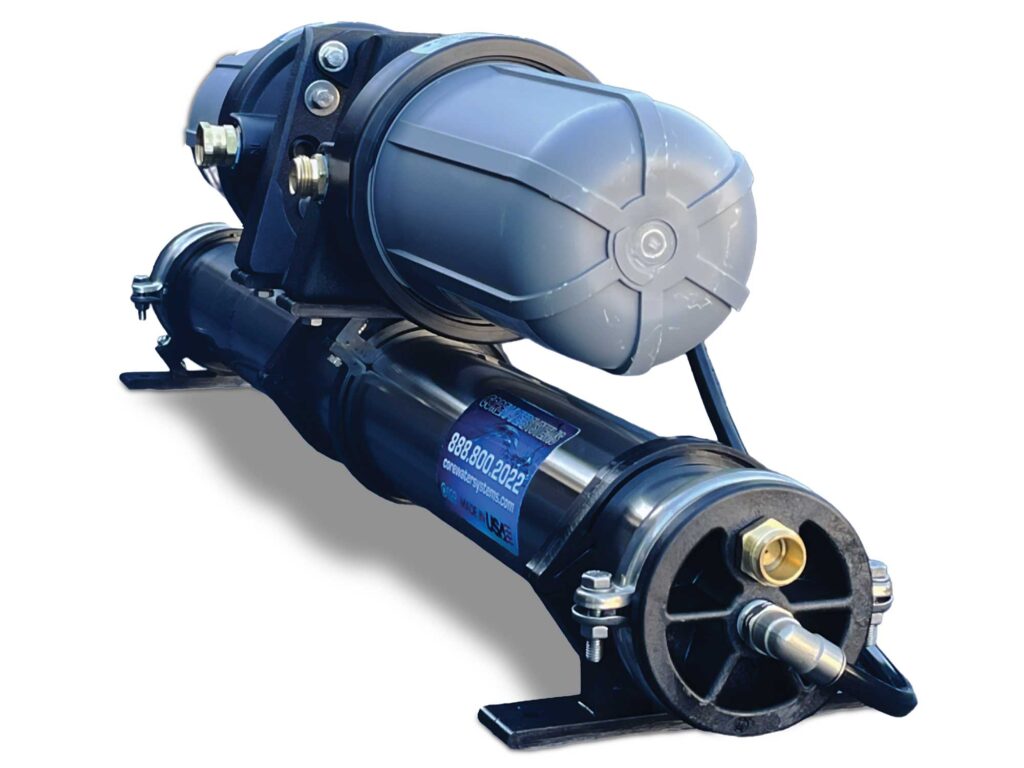
Deckhand Supply offers a hand-carry single-membrane three-stage reverse-osmosis water-purification system priced at $1,861.64. Utilizing a water-purification system can significantly enhance the maintenance of your boat, especially after it has been docked or placed on a trailer. This system is particularly beneficial for those dealing with water supplies that contain high levels of dissolved solids, which can lead to unsightly hard-water deposits on gelcoat and metal surfaces. If not promptly wiped dry with a chamois or microfiber towel, these deposits can mar the finish of your vessel.
To provide insight into the advantages of water-purification systems, Eric Johnson from Deckhand Supply in Huntington Beach, California, shared some valuable tips for boaters considering such a purchase. There are two primary technologies available for water purification: reverse osmosis (RO) and deionization (DI). While the initial purchase price of a RO system is generally higher than that of a comparable DI system, the costs associated with replacement filters and membrane elements for RO systems tend to be lower over time.
For instance, on one of Deckhand Supply's more affordable RO systems, the sediment and carbon filters can be replaced for approximately $80, with a lifespan of 2 to 6 months. The RO membrane itself costs about $480 but can last between 3 to 5 years. In contrast, a comparable DI system requires about $230 for replacement resin, which only lasts 1 to 3 months. Johnson notes that a typical recreational boater can expect to get about one season of use from either system before needing to replace elements.
At optimal performance, a RO system can reduce total dissolved solids (TDS) to around 7 to 10 parts per million (ppm). On the other hand, a DI system can achieve even lower levels, sometimes reaching 0 ppm or 1 to 5 ppm. However, there is a cautionary note regarding DI systems: the presence of dissolved oxygen in DI water can corrode unprotected aluminum, particularly in warmer climates, although stainless steel remains unaffected. This is an important consideration for boaters when selecting a purification system to ensure the longevity and appearance of their vessels.