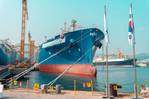


The Saint Kitts and Nevis-flagged vessel Blue Ocean A was sailing off the island of Saint Peter, Italy, on its way to Spain with 33 crew on board when a request for help was sent. Winds of over 50 knots and waves as high as five meters pushed the ship towards shore making operations particularly complex, said the Italian Coast Guard. The rescue was coordinated by the Italian Coast Guard of Cagliari, which deployed aircraft from the port captains and a helicopter from the Military Air Force.
The ship was eventually secured with the help of local tugboats although tow lines snapped four times. No livestock were reported onboard. In December, a group of 36 animal welfare organizations from all over the globe wrote an Open Letter to the IMO pleading for the development of an international code for the carriage of livestock.
The letter clearly stated the high risks including in the event of mechanical failure as we have seen overnight with the MV Blue Ocean A. The global fleet of around 110 ships comprises the oldest and most contentious ships of any shipping sector in the world, with the average age of a livestock carrier being over 40 years. This is nearly a decade older than when the majority of merchant ships from other sectors are heading to the scrapyard.

As these ships age they pose a significantly higher risk to general maritime and crew safety, and of course at any age they pose an unnecessary, unacceptable, and avoidable high risk to animal welfare. The footage from last night highlights that the crew have some scope for rescue, however, when animals are on board there is no way to assist them at sea. Until this trade is fully replaced with meat exports these incidents will continue to fill the media and are likely to become even more prolific as the fleet is worked into its rapidly approaching grave.
We need to fix what remains of this rapidly dying trade, or more sensibly, replace it entirely with reefers of high quality, non-diseased, non-stressed, meat for the sake of animal and crew welfare, and also for the public safety of any end product consumer.
The incident highlights the need for improved safety measures and regulations in the livestock industry, particularly when it comes to older vessels. The fact that the Blue Ocean A is nearly a decade older than the average age of other merchant ships underscores the risks associated with aging fleets.