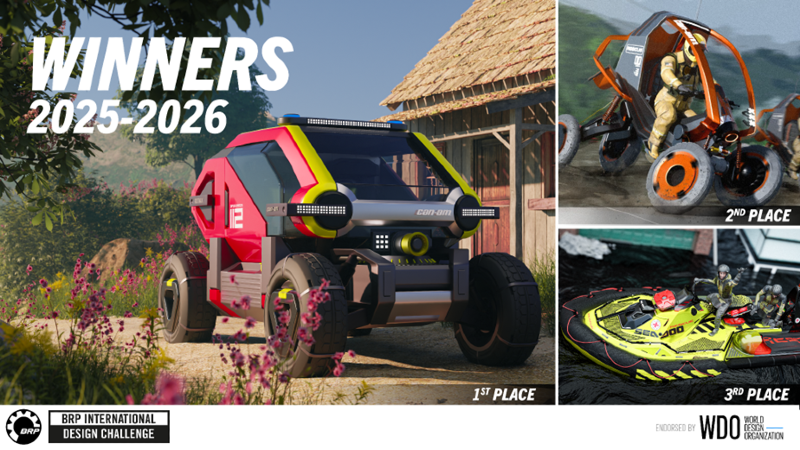
The BRP International Design Challenge has brought together some of the brightest minds from across North America and Europe to tackle a pressing issue: emergency response vehicle design. The competition, which took place during Arctic Design Week in Finland, saw approximately 70 students from eight universities participating. This year's challenge focused on developing emergency response vehicle concepts aligned with United Nations sustainability goals.
The event reflects BRP’s ongoing commitment to nurturing the next generation of design professionals and strengthening collaboration between academia and industry. By providing a platform for students to put their design thinking approach and creative skills into practice, BRP is investing in the future of mobility. This initiative not only benefits the students but also contributes to the development of innovative solutions that address real-world problems.
The competition allows students to work closely with both their professors and BRP design professionals, providing them with valuable mentorship and guidance. This collaborative approach enables students to develop a deeper understanding of the industry and its challenges, ultimately leading to more effective and sustainable designs. The event is a testament to BRP’s dedication to fostering a culture of innovation and collaboration.

The winners of this year's International Design Challenge were announced during Arctic Design Week in Finland. Top honors went to Valentin Leboucher from Rubika, France, whose wildfire-focused concept features a dual-function vehicle that transforms into a remote firefighting base with a deployable hose rover. This innovative design showcases the student’s ability to think outside the box and develop creative solutions to complex problems.
Leboucher’s winning concept not only addresses the needs of emergency responders but also contributes to the United Nations sustainability goals. By incorporating sustainable design principles, Leboucher has demonstrated his commitment to creating a better future for mobility. This is a shining example of how design can be used as a tool for positive change.
Second place was awarded to Kirtish Gaood from the College for Creative Studies for a modular, Sherpa-inspired rescue vehicle designed for mudslide response in Northern India. The concept emphasizes agility and rapid evacuation using multiple units, making it an ideal solution for challenging environments. Gaood receives €3,000 for his outstanding contribution.
Third place went to Antoine Rupp from Rubika, France, whose flood-response vehicle focuses on patient comfort and stability through advanced suspension systems. Rupp’s design prioritizes the well-being of emergency responders, demonstrating a deep understanding of the human factor in design. His concept is a testament to the importance of empathy in design.
The Design Challenge continues to demonstrate the importance of empowering young talent and giving them the space to explore bold ideas. Each edition strengthens our belief that collaboration across generations is essential to shaping the future of mobility, and that great design knows no boundaries. We congratulate all the participants for their hard work and dedication, and offer our warmest congratulations to our finalists and winners.
The event, hosted by the University of Lapland, reinforces BRP’s focus on design-led innovation and collaboration with future talent. By investing in the next generation of designers, BRP is not only shaping the future of mobility but also contributing to a more sustainable and equitable world.
The International Design Challenge highlights the importance of collaboration between academia and industry in shaping the future of mobility.