

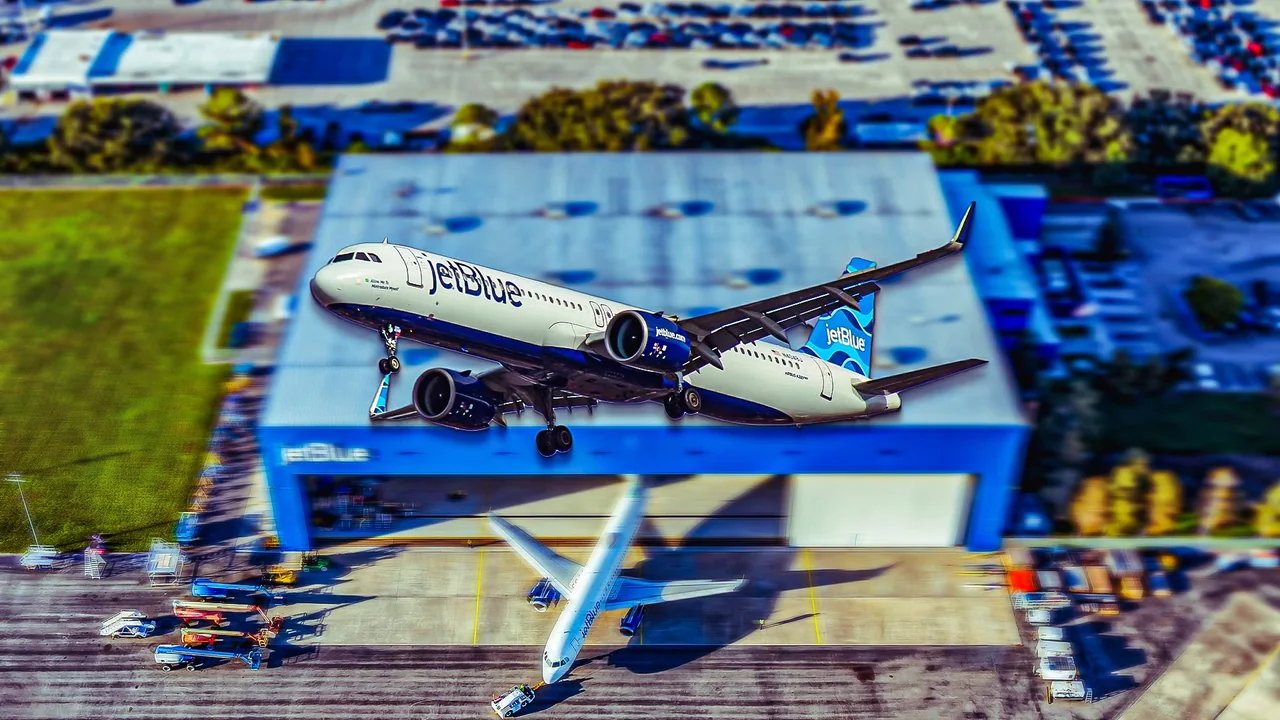
JetBlue Airways, a New York-based low-cost carrier, has been exploring the possibility of being sold to one of its major rivals. The airline's strategy is shrouded in mystery, but it appears that JetBlue has a scenario-based plan on how it could work with United Airlines, Alaska Airlines, or Southwest Airlines. This proposal would also examine how the airline would fare with support from Washington.
The airline's decision to consider sale comes at a tumultuous time for JetBlue, which was blocked from acquiring Florida-based ultra-low-cost-carrier Spirit Airlines in 2024. Since then, JetBlue's share price has dropped by around 40% since the beginning of 2025, indicating that the airline is struggling to stay afloat in an increasingly competitive market.
Despite its struggles, JetBlue remains a unique player in the US airline industry, offering a product that competes head-to-head with higher-end airlines. Its signature features include free WiFi and Mint (Business class), which sets it apart from other low-cost carriers. However, this also means that JetBlue is vulnerable to criticism from lawmakers who are skeptical of its business model.

If JetBlue were to merge with one of the country's bigger airlines, the deal would face intense antitrust scrutiny. The US government has been cracking down on airline mergers in recent years, and any deal would need to meet strict regulatory requirements. While some lawmakers may support a merger, others would likely be critical of the move.
The idea of merging with a larger carrier is still in its early stages, and JetBlue is not currently pursuing talks with any of its major rivals. The airline has also not acknowledged whether it has received any indications of interest from potential buyers. As JetBlue moves forward, it appears to be focusing on restoring profitability and adding value for its shareholders and crewmembers.
JetBlue's strategy, known as the 'JetForward' plan, aims to restore the airline's financial health and create opportunities for its employees. The plan has been in the works for several years and is seen as a key part of the airline's future success. However, it remains to be seen whether this plan will be enough to turn JetBlue's fortunes around.

While no carrier has officially indicated that it is interested in acquiring JetBlue, United Airlines appears to be the most likely candidate. The two carriers have already launched their own partnership called Blue Sky, which enables customers to book flights and earn or redeem miles across both airlines. This partnership has given United access to seven daily round-trip slots from New York's JFK airport.
United Airlines has been eyeing JetBlue as a potential acquisition target for some time, and the two carriers have already made significant progress on their partnership. However, any deal would need to meet strict regulatory requirements and would likely face intense scrutiny from lawmakers. Despite this, many in the industry believe that a merger between United and JetBlue could be a game-changer for both airlines.
The potential sale of JetBlue has sent shockwaves through the airline industry, with even the CEO of United Airlines indicating that he would be interested in acquiring assets from struggling carriers like JetBlue. As the situation continues to unfold, one thing is clear: the future of US airlines will depend on how they navigate the complex and ever-changing landscape of global competition.