

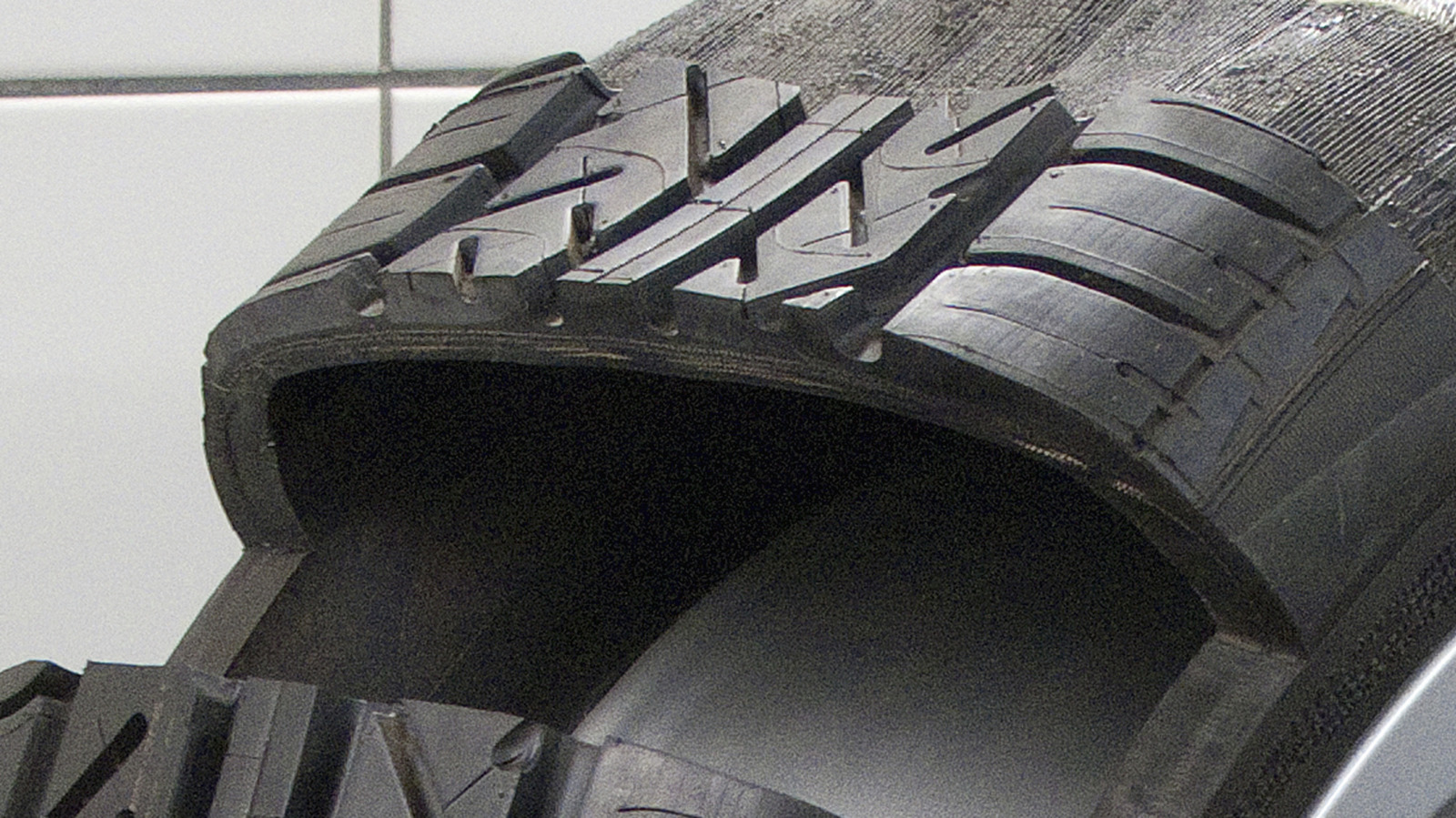
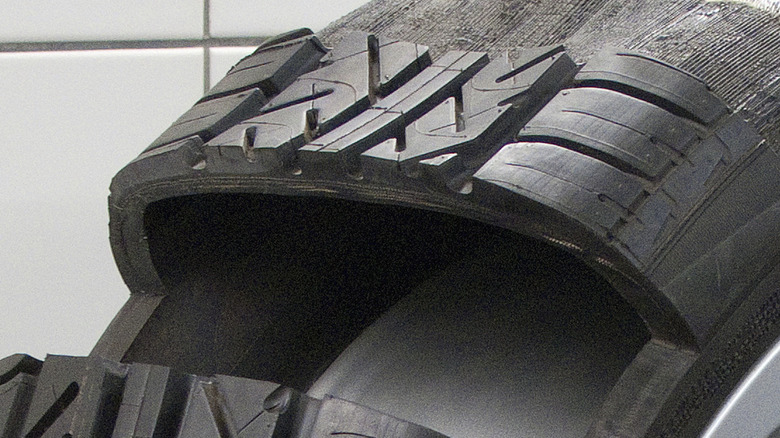
In the world of tires, understanding the difference between bias ply and radial tires is crucial. The layers within a tire, known as plies, lie in relation to its direction of travel, which can significantly affect its performance. Radial tires have polyester, polyamide, or steel cords that form the layers lying perpendicular to the direction of travel, while bias ply tires have nylon or Kevlar cords laid at a 30- to 40-degree angle bead-to-bead in a crisscross X-like fashion.
This information is meaningless unless one design presents advantages over the other. Bias-ply tires excel at carrying heavy loads, handling rough surfaces, and resisting puncture, but when it comes to road manners, fuel efficiency, ride comfort, and handling high-speed corners, radial-ply tires are simply superior. This is why you often see them on high-performance sports cars.
Radial ply has become the industry standard, with bias ply construction relegated to niche applications such as off-roading, drag racing, and period-correct restorations. However, even in these areas, radials are gaining ground, as seen in recent tests comparing radial and bias ply slicks.
The difference between a pair of fresh bias ply Mickey Thompson ET Drag slicks and a set of Mickey Thompson Pro Bracket Radials is striking. The Bracket Radials' stiff sidewall resulted in less tire wrinkle, which shortened the unload and re-engagement window, leading to improved performance.
Bias-ply tires have softer sidewalls, increased flexibility, and conform better to the track surface, but this comes at the cost of absorbing horsepower that could be used for speed. In contrast, radial ply tires are designed to minimize tire wrinkle and maximize speed.
Track temperatures, tire pressures, and suspension setup can all impact straight-line performance, making it challenging to pinpoint a clear winner between bias ply and radial tires. However, recent tests have shown that bias-ply slicks excel in less-than-perfect conditions, while radials perform better when conditions are closer to ideal.
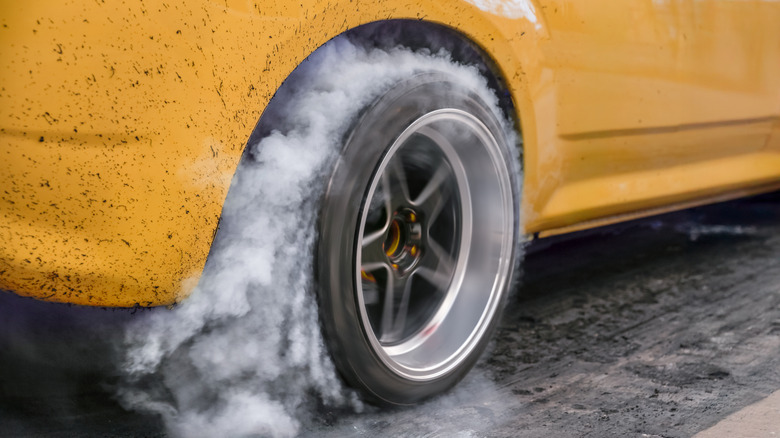
The shift towards radial tires has significant implications for the automotive industry, with many manufacturers opting for their superior road manners and fuel efficiency. As a result, bias ply construction is becoming increasingly obsolete.
Despite the advantages of bias-ply tires in certain areas, such as off-roading and drag racing, radials are slowly gaining ground. This trend is likely to continue, as manufacturers prioritize performance and efficiency over niche applications.
The evolution of tire technology has led to a more nuanced understanding of the differences between bias ply and radial tires. As manufacturers continue to innovate and push the boundaries of what is possible, it will be interesting to see how this technology impacts the automotive industry in the years to come.
The shift towards radial tires has significantly impacted the automotive industry, with many manufacturers opting for their superior road manners and fuel efficiency.