
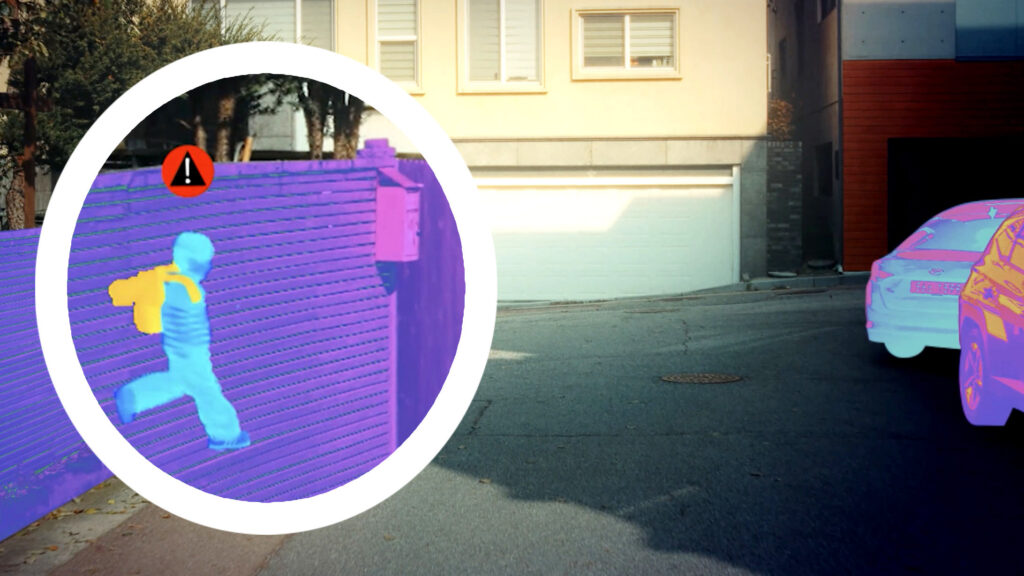
Kia and Hyundai's Vision Pulse tech uses signals from cars, phones, and wearables to map hidden hazards behind obstacles. The system turns everyday smartphones and wearables into extra sets of virtual eyes, helping cars spot danger even when cameras and sensors cannot. Using ultra wide band (UWB) signals, the technology already lives inside many modern phones, smartwatches, and digital car keys.
Hyundai and Kia figured out how to make those signals talk to each other to map where people and vehicles are, even if they're hidden behind a van or building. The system measures the travel time of those signals and works out exact positions with accuracy down to about 100 mm within 100 meters. This means a kid stepping out from behind a parked SUV or a cyclist about to pop into view at a blind junction does not have to be seen by a camera first.
If they have a compatible device, the car already knows they are there and can warn the driver or trigger safety systems. 02 seconds. It also handles more data at once, with the capacity to track over four times the number of moving objects compared to older systems.
One of the big selling points is cost, as Vision Pulse piggybacks on ultra wide band hardware that many cars and devices already have. Some Hyundai and Kia models with Digital Key tech are basically ready to go without extra hardware. UWB's physical characteristics also make it a good fit for messy environments, detecting objects even through buildings, cargo, or dense signal clutter.
It works in messy real world conditions, such as rain, darkness, bright light, and urban clutter, which can trip up cameras. The system is already being tested in warehouses to stop forklifts bumping into workers, and even pitched for disaster response to find people under rubble. On the road, it could mean your phone quietly helping your car avoid accidents.
In one pilot program, Vision Pulse was tested on school buses, where drivers often struggle with blind spots during pickup and drop-off. Children were given tag-like devices that worked with the system, letting the driver see them even when they were briefly out of view. The tags themselves are designed with kids in mind, shaped like keyrings and made of soft silicone, easy to carry and customizable with stickers.

This technology has the potential to keep children safe even when their parents lose track of them.
The use of smartphones and wearables as a safety feature is an innovative approach that can potentially save lives. By leveraging the existing hardware in modern devices, Hyundai and Kia have made Vision Pulse a cost-effective solution compared to traditional lidar and radar setups.