


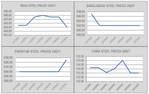
As the world's ship recycling markets reopen after the Eid al-Fitr holidays, they are facing an environment that continues to generate more questions than answers. The market is plagued by confusion, with steel plate prices playing opposite roles in different countries. In India, prices jumped significantly, while in Pakistan, they continued to decline steadily over the past month. This inconsistency has left buyers and sellers struggling to make sense of the market's direction.
The mixed signals have resulted in a lack of pricing clarity, making it challenging for market participants to negotiate effectively. The U.S. Dollar, which has been a key driver of sub-continent pressure this year, remained indecisive, with both firm improvements and losses against various recycling currencies. This indecision has further exacerbated the confusion, leaving buyers and sellers uncertain about how to proceed.
The consequences of this market confusion are being felt across the industry. Market activity remains below levels needed to make meaningful inroads into the tonnage backlog that has been building throughout Q1. The lack of clarity is also affecting the broader macro context, which remains unchanged and unresolved. The Middle East conflict continues to keep freight earnings elevated, discouraging owners from sending ageing tonnage for recycling.
The Baltic Dry Index has yet to give meaningful ground, and oil prices remain firmly above USD 100/barrel. This reinforces the perverse arithmetic of a market where higher energy prices translate into longer trading lives for vessels that ship recyclers need. As a result, the industry is still waiting for sufficient tonnage to arrive to match the appetite being demonstrated by recyclers, particularly in Bangladesh.
The question on everyone's mind is when will the tonnage arrive in sufficient quantity to meet the demand of recyclers? The industry has been asking this same question for most of the past year, and it remains unclear whether the necessary quantities will be forthcoming. The lack of pricing clarity is only adding to the uncertainty.
The impact of market confusion on the industry cannot be overstated. Buyers and sellers are struggling to navigate the complex web of prices and negotiations, leading to a lack of confidence in the market's ability to function effectively. This is having a ripple effect throughout the supply chain, with potential consequences for the entire industry.
The situation is further complicated by the fact that the broader macro context remains unchanged and unresolved. The Middle East conflict continues to keep freight earnings elevated, making it even more challenging for owners to send ageing tonnage for recycling. This has resulted in a prolonged backlog of vessels waiting to be recycled, putting pressure on the market.
As we enter Q2, the industry is still grappling with the challenges posed by market confusion. The lack of pricing clarity and the uncertainty surrounding tonnage quantities are creating an environment that is difficult to navigate. It remains to be seen how the market will respond to these challenges in the coming weeks and months.
The ship recycling industry is at a crossroads, with the need for sufficient tonnage to meet demand being a major challenge. The lack of pricing clarity and the uncertainty surrounding the broader macro context are creating an environment that is difficult to navigate. It is essential that market participants work together to find solutions to these challenges and ensure the long-term sustainability of the industry.
Ultimately, the solution to the market confusion lies in finding a way to restore pricing clarity and increase confidence in the market's ability to function effectively. This will require a concerted effort from buyers, sellers, and other stakeholders to work together and find common ground. Only then can the industry begin to move forward and address the challenges posed by the tonnage backlog.
The lack of pricing clarity is having a significant impact on the industry, with buyers and sellers struggling to anchor their negotiating positions.