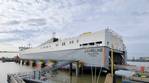



The US has effectively blocked all oil shipments to Cuba in an attempt to pressure the government in Havana, but a recent report suggests that this blockade may be lifted. A Russian-flagged tanker, Anatoly Kolodkin, was spotted just off the eastern tip of Cuba on Sunday, carrying 650,000 barrels of crude oil. This development could provide significant relief to Cuba, which has not received any oil imports for three months due to strict rationing and multiple power outages across the communist-ruled nation.
The US Coast Guard's decision to allow the shipment to go through is unclear, but it may be seen as a lifeline to the Caribbean island amid the de facto oil blockade imposed by Washington. The move could also raise tensions at sea with Russia, potentially leading to a confrontation between the two nations. However, the White House has yet to comment on the matter.
The Anatoly Kolodkin departed from Russia's Primorsk port carrying the crude oil, which is expected to discharge at Cuba's Matanzas port if it does not change its current course. Ship tracking data shows that the vessel is currently making its way to Cuba, and its arrival could be a significant development for the island nation.
Cuba has been facing an energy crisis due to the lack of oil imports, which has led to strict rationing of gasoline and power outages across the country. The situation has worsened since the Trump administration blocked all Venezuelan oil shipments to Cuba and threatened to impose punitive tariffs on any third country that supplied the Caribbean island.
The removal of a crucial Cuban ally who had been providing oil to Havana on favorable terms may have contributed to the current energy crisis. Venezuela's Nicolas Maduro was captured by the US military in January and whisked back to the US to face drug-trafficking charges, leading to a disruption in oil supplies to Cuba.
Another vessel of Russian origin, the Hong Kong-flagged Sea Horse, had been bound for Cuba with 200,000 barrels of fuel but was rerouted to Venezuela. This development suggests that Russia is seeking alternative routes to supply its allies in the region.
The US decision to allow the Russian tanker to reach Cuba may have significant implications for the global energy market and the already strained relations between the two countries. The move could also be seen as a sign of weakness by the US, potentially emboldening other nations to challenge American policies.
Cuba's energy crisis has had far-reaching consequences, including strict rationing of gasoline and multiple power outages across the country. The situation has highlighted the need for alternative energy sources and more efficient distribution systems.
The future of oil supplies to Cuba remains uncertain, but the arrival of the Anatoly Kolodkin may provide some relief to the island nation. However, the long-term implications of this development and its impact on US-Russia relations will likely be closely monitored by global observers.
The US decision to allow the Russian tanker to reach Cuba may have significant implications for the global energy market and the already strained relations between the two countries.