
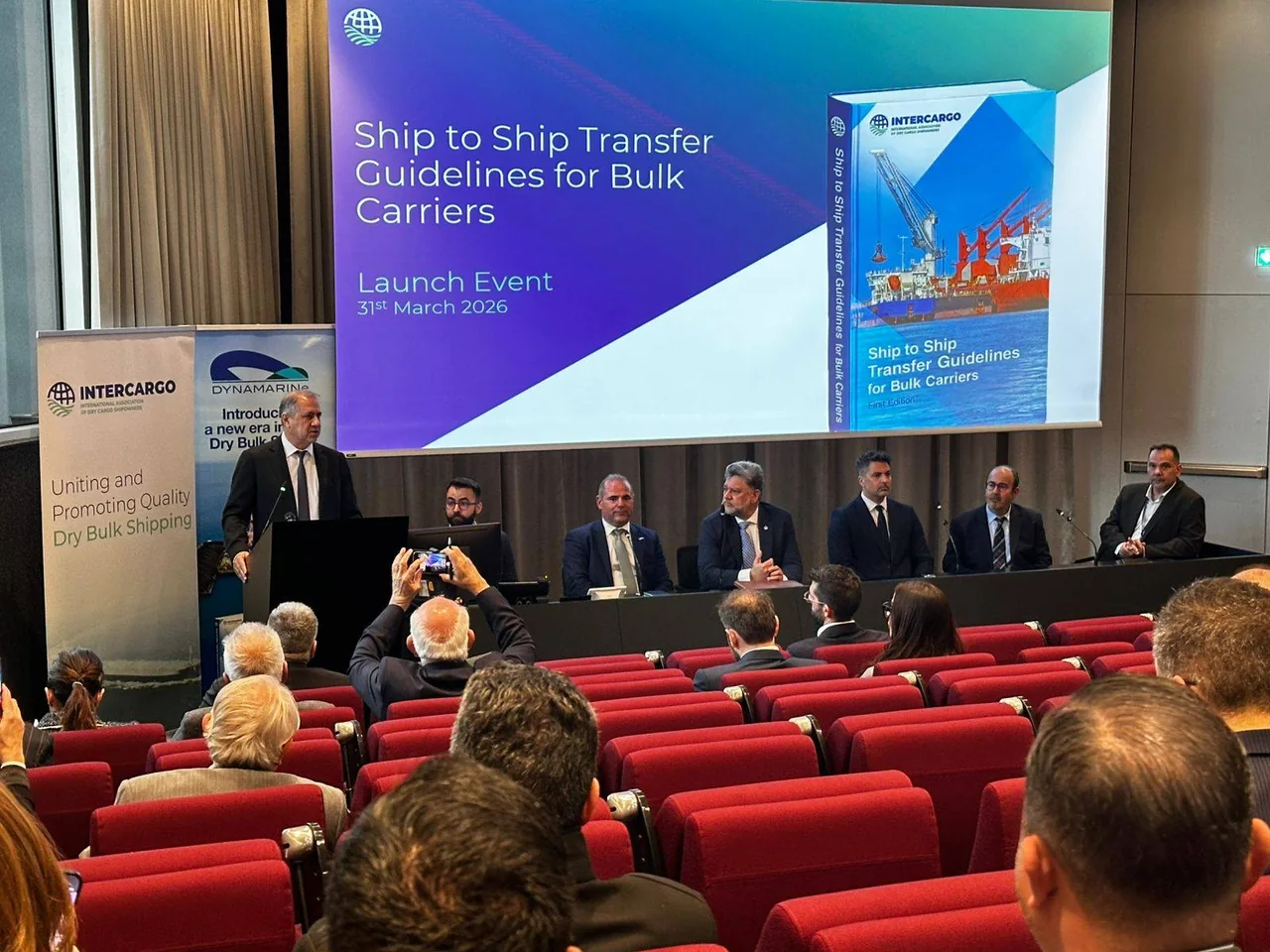
The maritime industry has come together in Athens to address a pressing issue: the safe and efficient transfer of cargo between ships. INTERCARGO, a leading organization representing shipowners, charterers, insurers, and service providers, brought together industry leaders on March 31 to discuss how ship-to-ship (STS) transfers are carried out in dry bulk shipping. The event marked an important step towards establishing a consistent approach to this critical aspect of the business.
The shift towards STS transfers is driven by the increasing size of vessels and limited port infrastructure, which forces cargo to be moved offshore. However, the sector has struggled to develop a standardized method for these transfers, with different approaches adopted in various trades. This lack of consistency poses significant risks to the industry, including damage to vessels and cargo, as well as environmental concerns.
In tanker shipping, STS follows established practices that have been refined over twenty years. In contrast, dry bulk has taken a more ad-hoc approach, shaped by local conditions and the specific realities of each trade. This lack of standardization has led to confusion and uncertainty among industry stakeholders.
The session began with remarks from INTERCARGO Chairman John Xylas, who emphasized the importance of addressing this issue. He was followed by a presentation from Dimitris Monioudis, Chair of INTERCARGO's Technical Committee, who outlined the organization's recently developed 'Ship to Ship Transfer Guidelines for Bulk Carriers.' This document represents a significant step towards establishing a more consistent approach to STS transfers.
The guidelines were developed in collaboration with industry members across the sector, and provide a starting point for a more joined-up approach. The document covers key aspects of STS transfers, including safety procedures, equipment requirements, and best practices for planning and execution.
The discussion drew on the expertise of several industry players, including NYK Group, DYNAMARINe, Britannia P&I Club, James Fisher, Charterwell Maritime, Oldendorff Carriers, and Maran Dry Management. These organizations brought their collective knowledge and experience to the table, sharing insights and best practices that will help shape the future of STS transfers.
By convening stakeholders from across the maritime value chain, INTERCARGO aims to support a more collaborative approach to STS transfers. This includes wider engagement with industry members, as well as ongoing support and guidance to ensure that the guidelines are implemented effectively.
The event marked an important milestone in the development of standardized STS transfer procedures. As the industry continues to evolve and expand, it is essential that stakeholders work together to establish a consistent approach to this critical aspect of dry bulk shipping.
The success of this initiative will depend on the willingness of industry players to adopt new standards and best practices. By working together, we can reduce risks, improve efficiency, and enhance safety in the STS transfer process.
As the maritime sector continues to navigate the challenges of STS transfers, it is clear that collaboration and standardization are key to success. INTERCARGO's efforts will help shape the future of this critical aspect of dry bulk shipping, and we look forward to seeing the positive impact of these initiatives in years to come.
The lack of a clear approach to STS transfers poses significant risks to the dry bulk shipping industry, including damage to vessels and cargo, as well as environmental concerns.