


The Boeing 777X, a highly anticipated long-haul jet, continues to face significant delays in its certification process, casting doubt on the expansion plans of major airlines. Despite this, the aircraft's capabilities and potential routes are still worth exploring. With two subtypes - the 777-8 and 777-9 - each with distinct ranges, Boeing has crunched numbers to determine where these jets could be deployed.
The 777X's range is a significant factor in its potential routes, with the 777-8 capable of covering 8,745 nautical miles / 16,196 km and the 777-9 stretching 7,285 nautical miles / 13,492 km. However, these distances are approximate and based on Boeing's data, leaving room for speculation about actual operational capabilities.
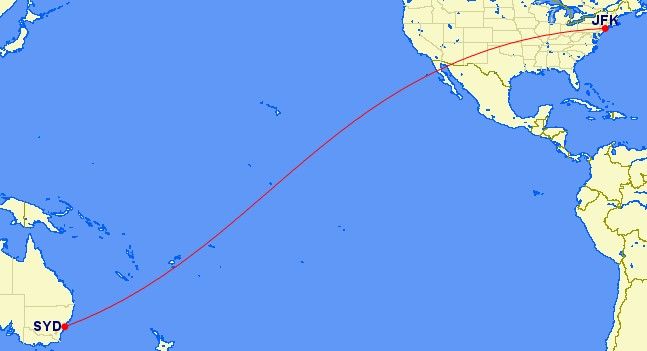
One potential route already in sight is between Sydney and New York, with Qantas planning to operate this route as part of its Project Sunrise initiative. Although the 777X has the capability to cover this distance, Qantas has opted for the Airbus A350-1000ULR instead, citing concerns over cost and reliability.
The decision by Qantas to choose the A350-1000ULR over the 777X highlights the challenges airlines face when considering new aircraft. With the A350 already flying since 2018 without major issues, it's clear that Boeing still needs to address its own delivery schedule and production costs to gain more confidence from carriers.
Currently, Qantas operates flights between Sydney and New York with a stopover in Auckland, using a Boeing 787-9 Dreamliner. This route is set to become daily during the US summer period in 2026, offering passengers increased convenience.
However, not all routes are as straightforward. The potential for an American carrier like United or American Airlines to operate flights between Chicago O'Hare International Airport and Singapore could be a long shot due to the lack of 777X orders from these airlines.
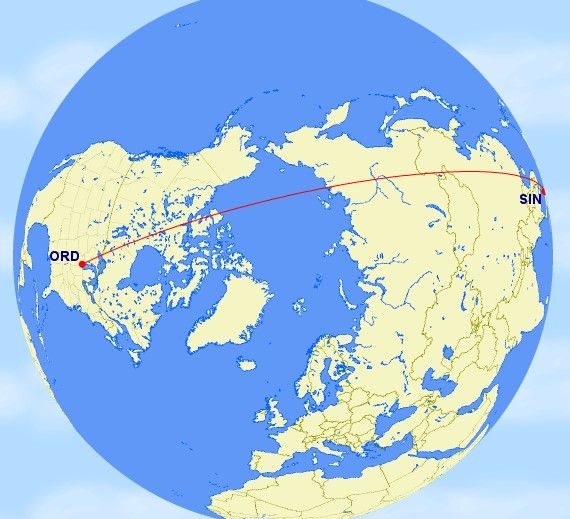
Despite this, there is still hope for the 777X to make its mark on the global aviation scene. Singapore Airlines has ordered the 777-9 variant, but it's unclear if this will be enough to secure routes like those between the US and Asia.
The Airbus A350-900ULR, which Singapore Airlines operates, offers a unique solution for long-haul flights. Its extended range and efficient design make it an attractive option for carriers looking to expand their networks without sacrificing comfort or reliability.
Ultimately, the Boeing 777X's success will depend on its ability to address production costs, delivery schedules, and passenger demand. With several airlines already committing to other aircraft options, the 777X must prove its worth as a reliable and efficient choice for long-haul flights.