The rise of e-commerce has led to a significant shift in the way freight patterns are structured. As warehouses expand and become more numerous, predictable regional routes are replacing long-haul runs—reshaping how fleets spec, operate, and resell day cabs.
Drive through almost any major freight corridor, and you'll see an indication of a big change in trucking networks: Warehouses. Lots of them. More than 2.5 billion square feet of industrial warehouse space was built in the United States between 2020 and 2024.
This expansion has pulled freight inward, shortening runs and reshaping daily operations. Regional warehouses are more numerous, larger than before, and increasingly located closer to where people live.
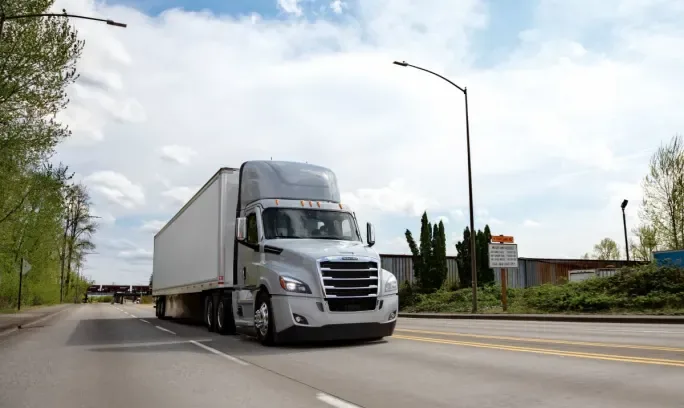
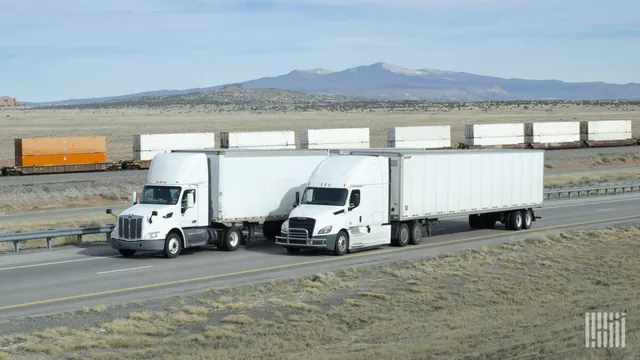
The shift from long-haul corridors to regional distribution networks is redefining operational and equipment strategies, as well as the used truck market , but not in a one-size-fits-all way. As routes compress and freight flows become more predictable, some segments are leaning heavily into day cabs, especially private and regional distribution operations.
That doesn’t necessarily indicate a broad industry shift away from sleepers. Instead, it signals a meaningful realignment inside specific customer groups where duty cycles now favor home-every-night consistency.
Where day cabs may have been viewed more as a niche or secondary option in the past, recent warehouse growth has made them a focal point of truck buying decisions and carries downstream implications for depreciation and remarketing performance.

However, this does not reflect a permanent market-wide pivot. Recent buying patterns are more indicative of cyclical factors, including private fleet replacement and expansion, and stronger vocational demand.
As e-commerce has expanded, freight patterns have become more structured. Long, open-ended runs are giving way to fixed loops that connect fulfillment centers to regional distribution hubs and delivery terminals.
Predictability is becoming a priority. When a run is roughly 200 miles out and 200 miles back, it can fit cleanly within a single shift. Trucks leave the yard in the morning, cycle freight through the network, and return to the same facility by day’s end.
As shorter, repeatable routes become more prevalent in warehouse-driven operations, equipment requirements are shifting accordingly. Sleeper tractors were built for long-distance, multi-day flexibility, yet many are now assigned to work that typically doesn’t require an overnight stay.