

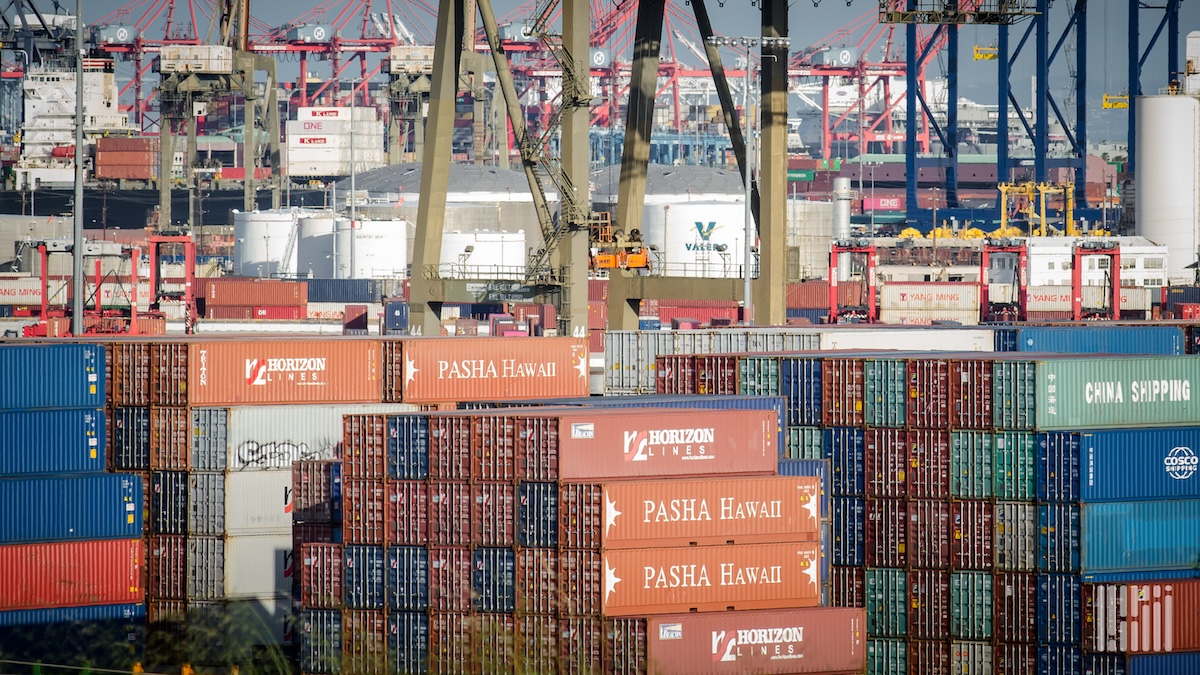
The effects of the Iran war are being felt across the global supply chain, as container rates rise sharply on vital headhaul trade routes including to the United States. The Strait of Hormuz closure has disrupted global shipping patterns, leading to an increase in spot rates for goods traveling from Asia to the US West Coast. This disruption is having a ripple effect on the entire supply chain, with port congestion in the Middle East spilling over into key Asian transshipment hubs.
Spot prices on services from the Far East to North Europe and Mediterranean have climbed 31% and 30% since the end of February, respectively. The increased uncertainty has led shippers to secure capacity at today's rates, rather than waiting for conditions to stabilize, which is a calculated risk against being caught short in peak season three months from now.
The position of carriers is unambiguous - the cost of uncertainty sits with the shipper. Shippers who book capacity today are paying a premium for certainty, but it is a bet with no clear evidence behind it. This shift in behavior is driven by the fact that shippers cannot afford to wait and risk being left without capacity when demand peaks.

Market average spot rates tracked by Xeneta as of April 1 from Asia to the US West Coast were $2,430 per 40 ft. container, and $3,382 from Asia to U.S. East Coast ports. North Europe to U.S. East Coast stood at $1,775. These rates are significantly higher than pre-crisis levels, reflecting the increased risk and uncertainty associated with shipping through the Strait of Hormuz.
Despite concerns about fuel shortages and attacks on Persian Gulf refining, fuel remains available in Singapore, albeit at roughly double pre-crisis prices. Rotterdam prices continue to rise, while ship-to-ship fuel transfers in the Far East are adding cost and complexity.
The lack of visible end to the crisis is causing carriers to draw up contingency plans, which may include slow steaming and alternative routing. These measures aim to mitigate the impact of the Strait of Hormuz closure on global supply chains.
Maersk has asked the Federal Maritime Commission to waive the 30-day waiting period to implement emergency fuel surcharges, highlighting the need for flexibility in the face of uncertainty. However, the agency has rejected this request so far.
The coming weeks will be crucial in determining whether slow steaming and alternative routing can hold the line or if blank sailings become the next lever carriers reach for. The industry is bracing itself for a prolonged period of uncertainty, which may have long-term implications for global supply chains.
Ultimately, shippers must navigate this complex landscape to minimize risk and ensure timely delivery of goods. With the Strait of Hormuz closure continuing to disrupt global shipping patterns, it remains to be seen how the industry will adapt and respond to these changing circumstances.
The Strait of Hormuz closure is having a significant impact on global supply chains, with container rates rising sharply due to the increased risk and uncertainty associated with shipping through the region.