
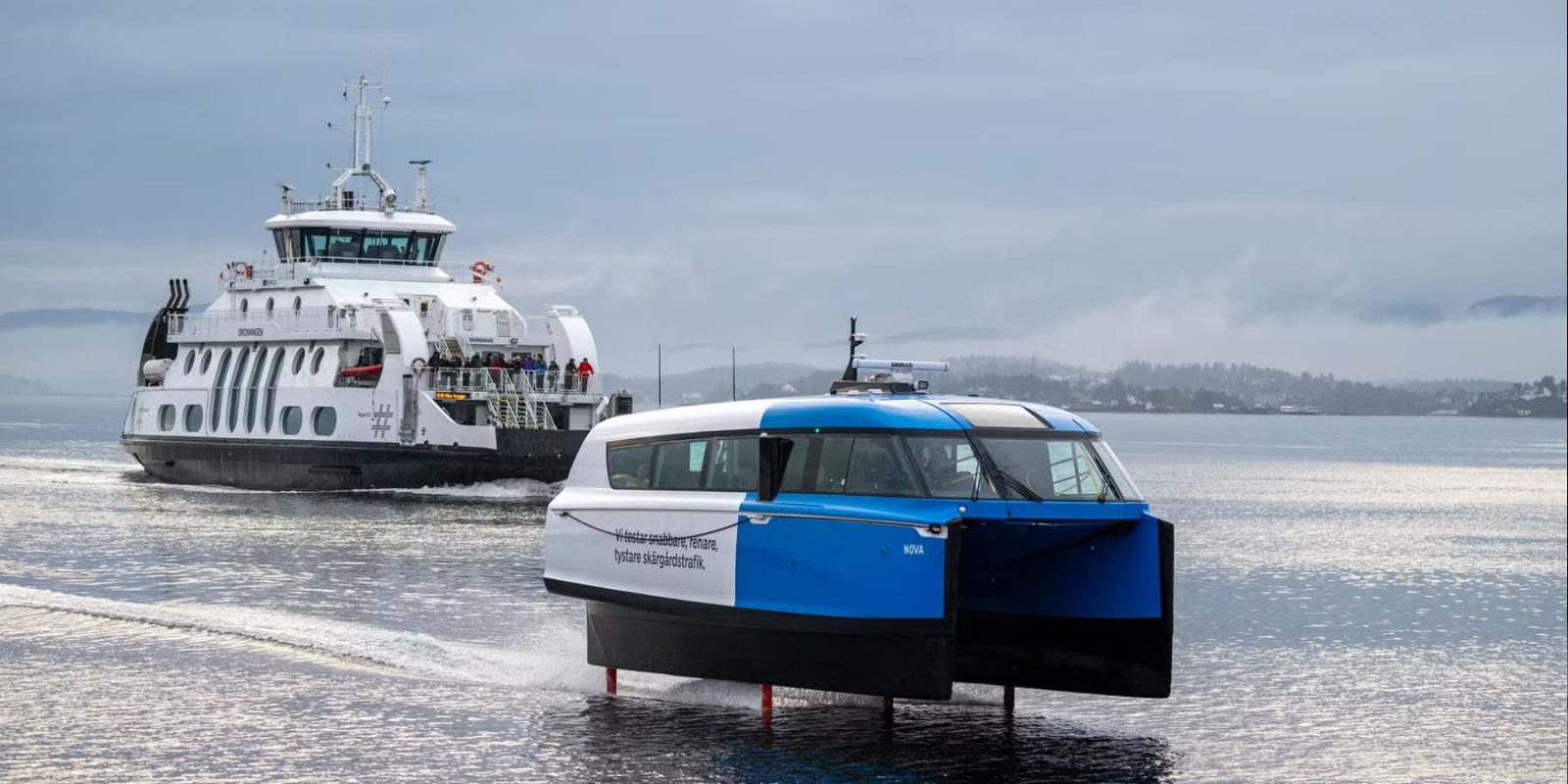
Electric boats and ferries have long been confined to short, fixed routes with expensive charging infrastructure. However, Swedish electric boat maker Candela has set out to prove that these limits are no longer necessary.
The company's P-12, the world's first serial-production electric hydrofoiling passenger ferry, has completed a record-setting 160-nautical-mile voyage from Gothenburg to Oslo, Norway, in just three days. This journey showcases the efficiency of Candela's unique use of hydrofoil technology, which reduces drag and cuts energy consumption by around 80% compared to conventional displacement boats.
By cruising at 25 knots, the P-12 can travel faster and farther using far less energy, cutting costs and reducing charge times. The ferry is already operating in Stockholm's public transit system and holds the title of the fastest electric passenger vessel currently in service.
In contrast to traditional electric ferries that rely on megawatt-scale chargers, the Candela P-12 charges using standard DC fast chargers and a portable 360 kW DC charger powered by a mobile battery system. The entire journey consumed just over €200 worth of electricity, demonstrating the potential for efficient long-distance travel.
This breakthrough highlights the importance of flexible charging infrastructure and challenges traditional notions of what is possible with electric vessels. As Candela continues to push new limits, it's clear that electric boats are becoming faster, cheaper to operate, and far more flexible, making them a viable alternative to conventional diesel-powered ferries.