



A recent rail transportation safety investigation report has shed light on the causes of a derailment that occurred in July 2025. The track classification was found to be Class 4, with an authorized speed for freight trains of 50 mph. No slow orders were in effect at the time of the incident.
7. 46. In July 2025, a Transportation Safety Board (TSB) examination revealed signs of previous rail creep in several locations.
The investigation found that anchors had been repositioned by up to 4 inches during repairs following the derailment. Notably, all anchor displacements on the main track were in the eastward direction, indicating that the rail creep was in the direction of heavy tonnage traffic. Rail creep is a sign of compressive stress in the rail, which can lead to track buckling if left unaddressed.
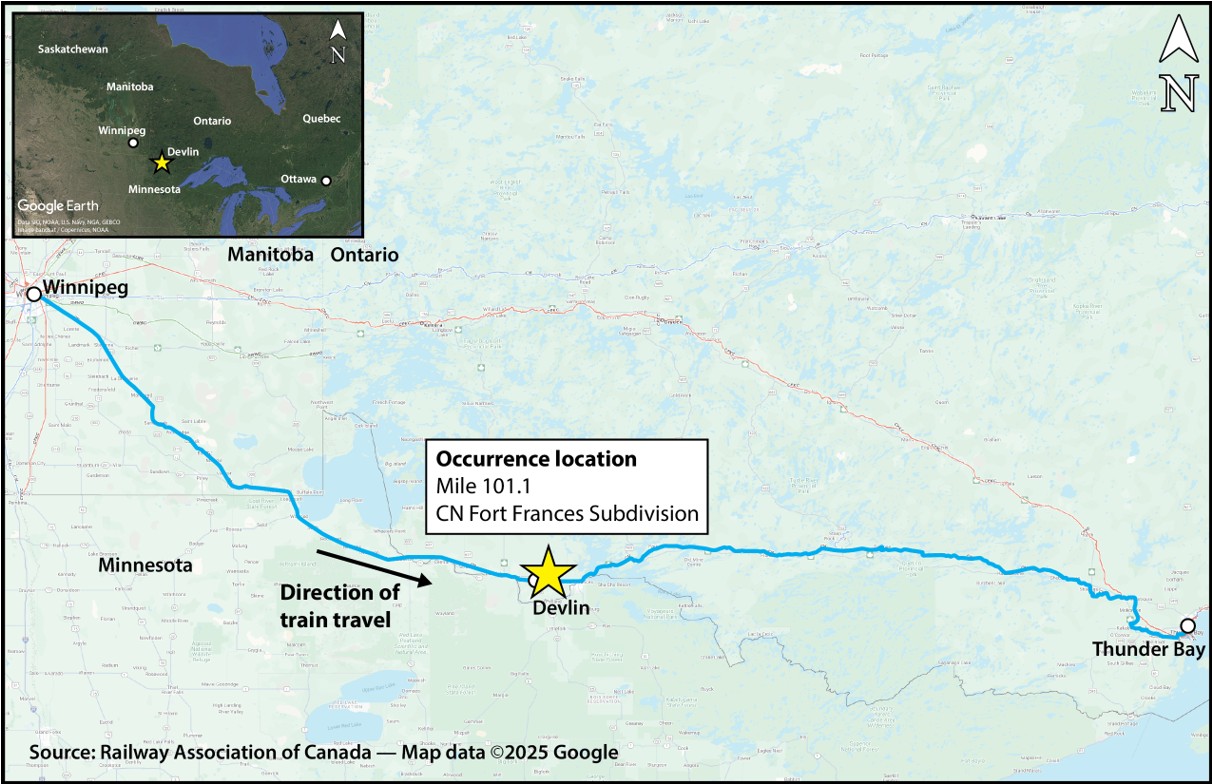
The TSB's findings highlight the importance of proactive measures to manage compressive forces and secure track maintenance. In particular, reinforcing track securement or destressing rails can help mitigate the effects of rail creep. However, unless underlying compressive stress is addressed, rail creep grows increasingly more pronounced over time, posing a significant risk to train safety.
The investigation report provides valuable insights into the causes of this derailment and underscores the need for continued vigilance in ensuring rail transportation safety.
The TSB's findings on rail creep and track security are particularly relevant in light of the Fort Frances Subdivision, where unidirectional rail creep poses a significant risk to train safety. Proactive measures to manage compressive forces and secure track maintenance are essential to preventing such incidents.


