
According to a recent survey conducted by Integrated Dealer Systems (IDS), RV dealers across North America are taking steps to address growing concerns about cybersecurity risks. The survey revealed that 27% of respondents feel 'very prepared' against these threats, a 10% increase from last year, while the share of those who feel 'not prepared' decreased slightly. This uptick in awareness and proactive efforts suggests that dealerships are recognizing the importance of protecting their businesses against cyber threats.
However, despite these positive trends, RV dealers still face significant risks, including disruptions to business operations, data breaches, damage to reputation, regulatory fines or legal penalties, intellectual property theft, and more. A single cyberattack can have far-reaching consequences for a dealership's bottom line and brand image.
Awareness of cybersecurity risks is on the rise among RV dealers, with many taking steps to implement proactive measures to mitigate these threats. IDS has developed a comprehensive guide to help dealerships identify and minimize cybersecurity risks at their locations.
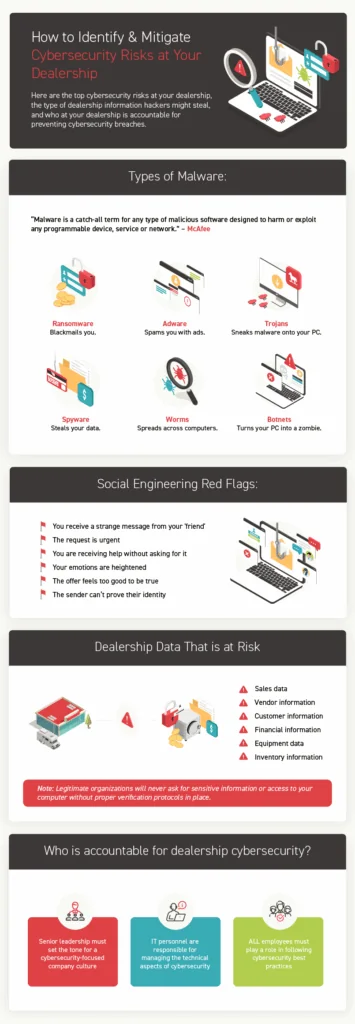
In this guide, we will explore common methods used by hackers to gain unauthorized access to dealership systems and data, including malware and social engineering tactics. We will also delve into the characteristics and methods of attack for various types of malware, such as spyware, worms, Trojans, and botnets.
Malware is a catch-all term for any type of malicious software designed to harm or exploit programmable devices, services, or networks. Each type of malware has its own unique characteristics and attack methods, making it essential for dealerships to understand these differences to effectively protect themselves.
The use of social engineering tactics by hackers can be just as damaging as traditional malware attacks. These tactics involve manipulating individuals into divulging sensitive information or performing certain actions that compromise security.
Given the risks associated with cybersecurity threats, it is crucial for RV dealerships to have a comprehensive cybersecurity strategy in place. This should include proactive measures such as regular software updates, secure data storage, and employee training on cybersecurity best practices.
Awareness of these risks and proactive measures can help minimize the impact of potential cyberattacks. By staying informed and taking steps to protect their systems and data, RV dealerships can reduce their exposure to these threats and maintain a strong online presence.
IDS's guide provides valuable insights into how to identify and mitigate cybersecurity risks at your dealership. By following these best practices, RV dealerships can safeguard their operations and protect their customers' sensitive information.
In conclusion, the threat of cybersecurity risks is a pressing concern for RV dealerships. By understanding the common methods used by hackers and taking proactive measures to protect themselves, dealerships can minimize the impact of potential cyberattacks and maintain a strong online presence.
As the automotive industry continues to evolve, cybersecurity threats are becoming increasingly prevalent, highlighting the need for proactive measures to protect dealership operations.