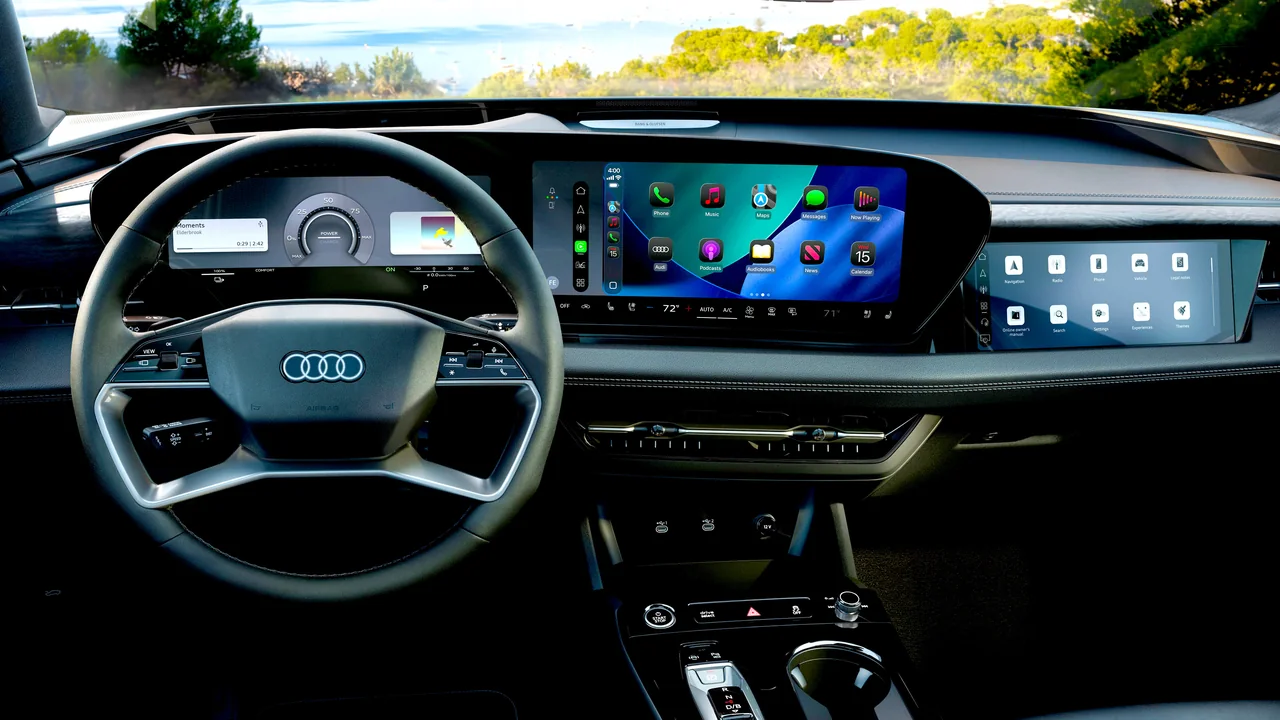
The 2027 Audi A6 e-tron and Q6 e-tron have arrived with steering updates, smarter infotainment, and more intuitive features. Not long after updating the 2026 A5 and Q5 models for the US market, Audi has applied a similar round of changes to its electric offerings. The latest steering wheels come fitted with piano-black haptic-style buttons that work either by touch or swipe, but they're difficult to use and may need to be replaced altogether.
In contrast, some of the more finicky controls have been replaced with physical scroll wheels, such as volume adjustments on the right-hand wheel and gauge cluster menus on the left. The electric A6 and Q6 models can also be optioned with a dashcam through the Premium trim package, while the Premium Plus models include one as standard. Audi has also added a new Technology package that includes an augmented-reality head-up display and a dedicated display for the front passenger.
The infotainment system gets several upgrades, including more intuitive navigation and smoother smartphone integration. Virtual cockpit tweaks have reduced icons, while a driver's smartphone navigation, media, and telephone functions can now be displayed directly onto the gauge cluster. Audi has also improved its voice control function to operate adaptive cruise control and air suspension.
In terms of driving, the regenerative braking function has been updated to include a one-pedal mode, and the S6 Sportback e-tron has a new Dynamic Plus driving mode that allows for controlled oversteer. The 2027 Audi A6 will be available in three versions, starting at $66,700, while the Q6 e-tron comes in four versions, with prices starting at $64,500. Despite these updates, some interior frustrations remain, such as the usability of the new steering wheel controls.
Audi's decision to bring back scroll wheels is a step in the right direction for improving user experience, but it highlights the ongoing challenge of balancing form and function in automotive design. As electric vehicles continue to gain popularity, manufacturers will need to address these usability issues to ensure a seamless driving experience.