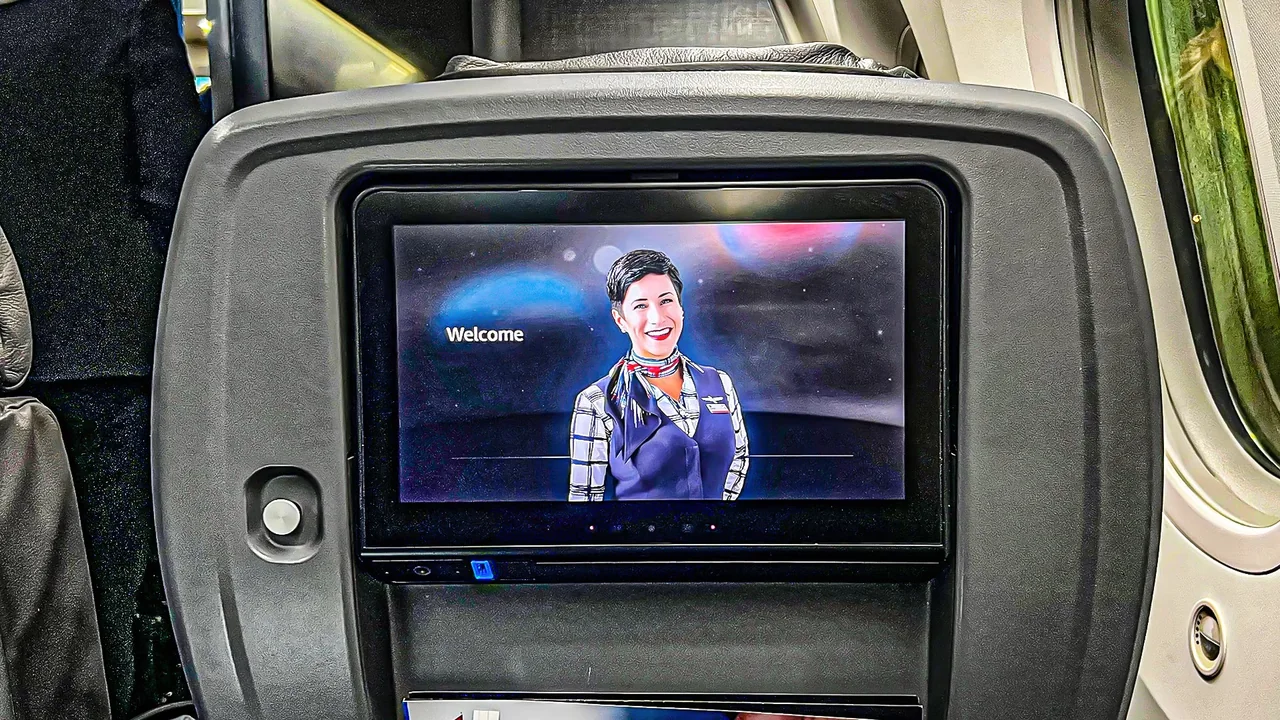
American Airlines' decision to remove seatback screens from its narrowbody fleet has sparked renewed scrutiny as the carrier struggles to compete with rivals like Delta and United. The move, made in 2021, aimed to cater to passengers who prefer streaming content from their personal devices rather than relying on the aircraft's entertainment system. However, this shift may not be sustainable in the long run, especially with the rise of more advanced in-flight entertainment options.
The removal of seatback screens has been a significant change for American Airlines' narrowbody fleet, which operates 300 Boeing 737 aircraft. This move was part of a broader effort to modernize the airline's interior and improve passenger experience. Despite this, some passengers have expressed disappointment with the lack of in-flight entertainment options.
For US travelers, seatback screens offer additional flexibility, allowing passengers to access dozens of movie and TV options onboard even if their personal device dies or WiFi is unavailable. This convenience factor could be a major draw for American Airlines as it evaluates new inflight entertainment platforms and invests in new WiFi programs.

The history of in-flight entertainment dates back to 1921 when Aeromarine Airways screened a short promotional film on one of its flights, marking the first time moving pictures were shown in the air. Over the years, seatback screens became standard across US airlines during the 1990s and early 2000s, especially on long-haul aircraft.
Technological advances eventually enabled individual seatback displays, allowing passengers to select movies and TV shows independently. By the mid-2000s, these systems were increasingly installed on narrowbody aircraft and found on most US routes. This shift marked a significant turning point in the evolution of in-flight entertainment.
The competitive dynamics around seatback entertainment sharpened considerably in the 2000s when JetBlue emerged as an unlikely disruptor by offering live satellite television on every seatback. This move forced legacy carriers to treat entertainment as a real differentiator rather than a simple box to check.

Delta, United, and American all began to accelerate their own IFE investments, upgrading aging overhead systems to individual touchscreens, as well as expanding content libraries to offer passengers more options onboard. This trend has continued even after the COVID-19 pandemic, with airlines seeking to improve passenger experience and stay competitive.
As American Airlines evaluates its in-flight entertainment strategy, it's clear that seatback screens could make a comeback. With the rise of new technologies and changing consumer preferences, airlines are shifting towards more personalized and flexible options that cater to passengers' needs. This shift may ultimately benefit American Airlines as it seeks to improve passenger satisfaction and stay ahead of the competition.
The airline industry is shifting towards more personalized and flexible in-flight entertainment options.