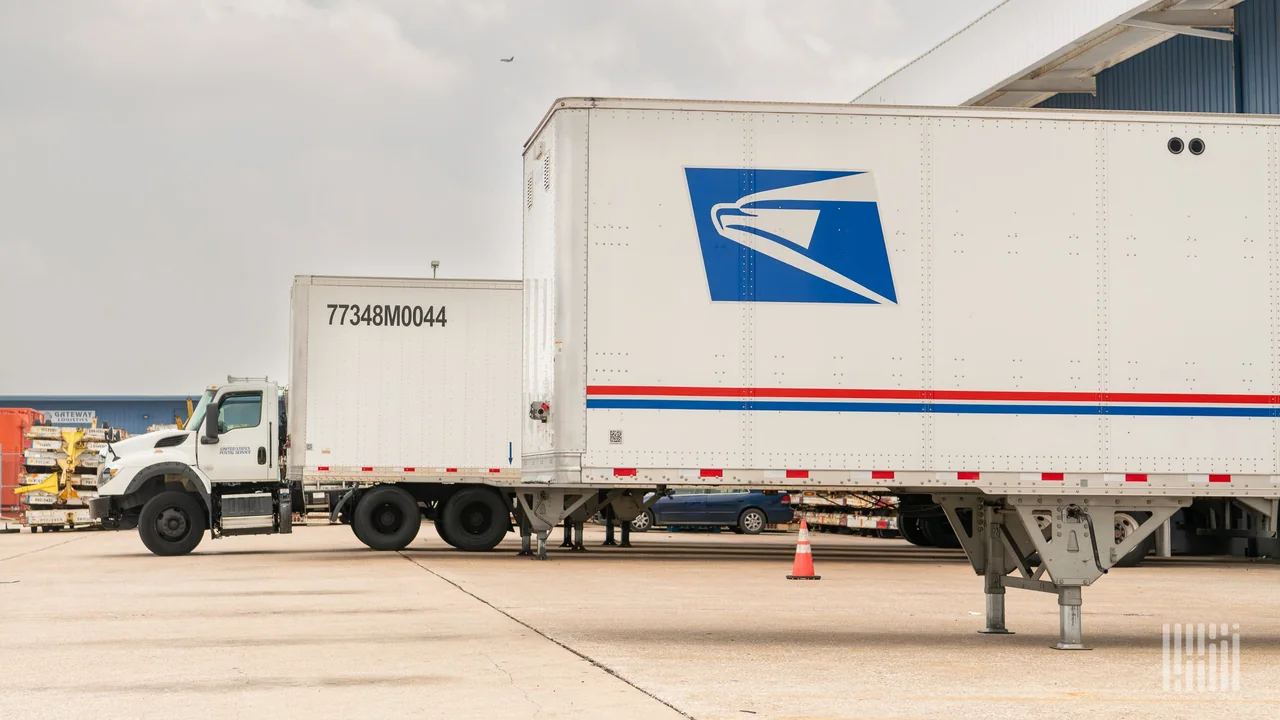
The U.S. Postal Service has issued a strict deadline for non-domiciled Commercial Driver's License (CDL) holders to be screened and badged by the U.S. Postal Inspection Service (USPIS). Effective May 1, 2026, these drivers will no longer be allowed to transport mail under Postal Service contracts or ordering agreements unless they have undergone the necessary clearance process.
This new policy is a response to recent safety initiatives from the Department of Transportation and audits of non-domiciled licensing practices. The USPS has been working with contracted providers to eliminate unvetted non-domiciled CDL operators, citing concerns over alignment with these regulations.
The directive marks a significant shift in the agency's approach to driver eligibility, following a rocky history marked by supply chain disruptions and safety concerns.
In late October 2025, USPS briefly halted loading of trailers pulled by non-domiciled CDL drivers, resulting in canceled loads, missed trips, and delayed sorts across its network. The agency acknowledged that it had underestimated the scale of its reliance on non-dom CDLs.
The move aims to improve accountability and safety in the industry, but may also further tighten an already strained third-party capacity base at a time when USPS faces ongoing cost and service challenges.
Major contractor 10 Roads Express is shutting down in early 2026 after losing key contracts, removing thousands of drivers and tractors from the market. This move highlights the need for suppliers to prioritize driver vetting and compliance with regulations.
The U.S. Postal Inspection Service will screen all non-domiciled CDL holders before they can transport mail under Postal Service contracts or ordering agreements. Suppliers must ensure that any driver assigned to Postal Service work has satisfied all applicable screening and clearance requirements.
Suppliers have just two weeks to complete USPIS screening or find replacement drivers. This deadline underscores the importance of timely compliance with new regulations and the need for suppliers to act quickly to protect their mail-hauling business.
The move is part of a broader effort by USPS to address freight fraud, which poses an existential threat to the industry. The agency must balance the need for improved accountability with the risk of further tightening capacity in an already strained market.
The move aims to improve accountability and safety in the industry.