The world of motorcycle tires is divided into two main categories: tubed and tubeless. While both have their pros and cons, it's essential to understand the differences between these tire architectures. The history of motorcycle tires began with tubed designs, which were introduced in the early days of pneumatic tires. These early tires consisted of a tough outer casing and a softer, airtight rubber balloon inside, held together by a separate tube.
As manufacturing technology improved, manufacturers could create single-piece cast alloy wheels without spoke holes, making it possible to ditch the inner rubber balloon. This led to the development of tubeless tires, which have revolutionized motorcycling tires forever.
The first tubeless tire was introduced in America in 1947 by Goodrich, despite the company not producing tires for its first 25 years.
One of the significant advantages of tubeless tires is their safety in the event of a puncture. Unlike traditional tubed tires, tubeless tires won't immediately deflate if a screw pierces the tire while traveling at high speeds.
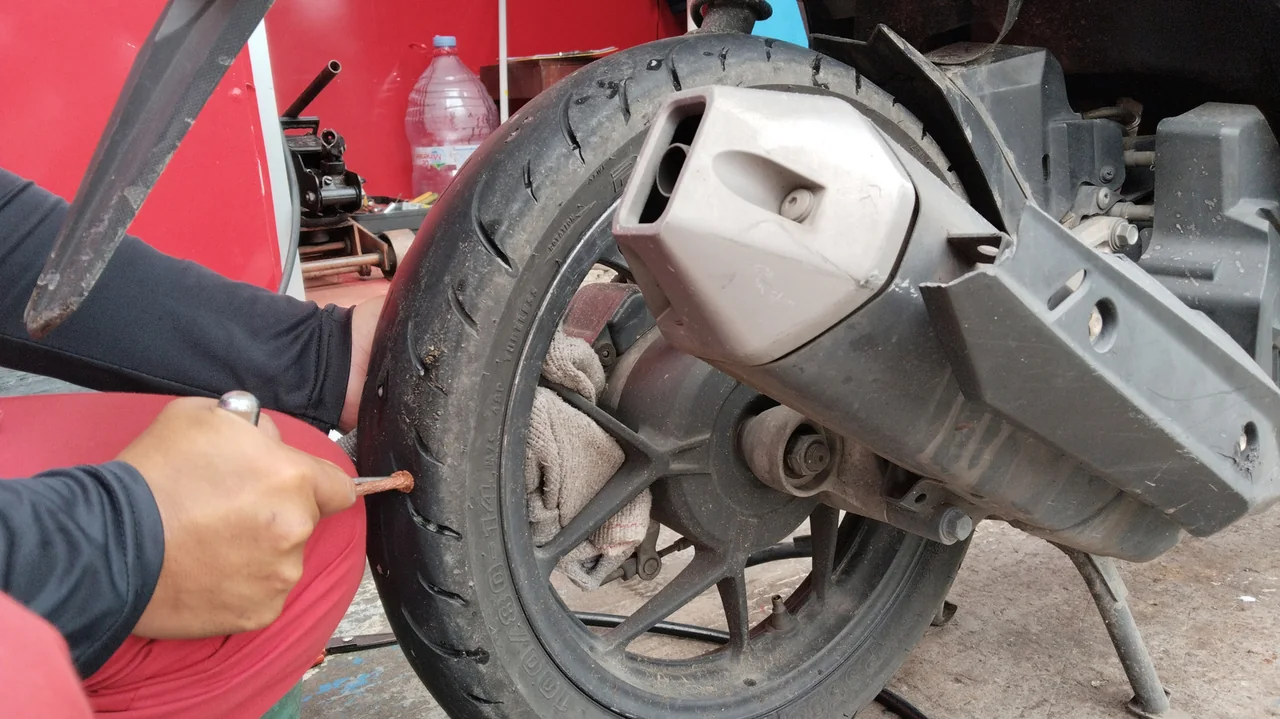
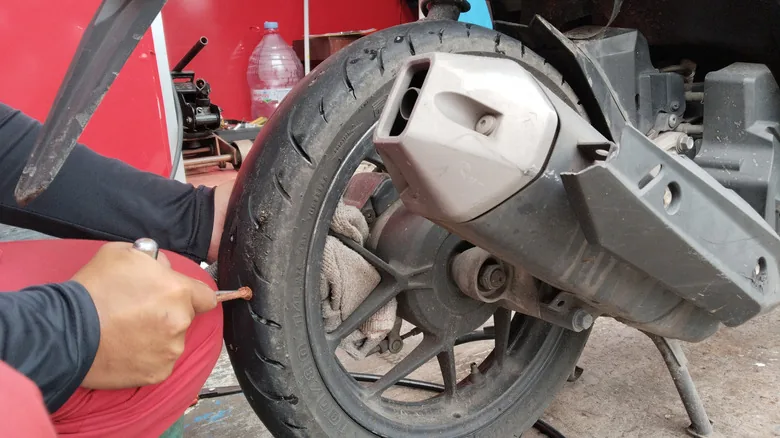
Another benefit of tubeless tires is the ease with which they can be repaired. A simple plug from a puncture repair kit can fix most punctures without removing the tire from the rim.
Tubeless tires also run cooler and weigh less than traditional tubed tires, as there is no friction or mass of an inner tube rubbing against the outer tire casing. This results in improved handling and suspension performance.
However, if a tubeless alloy rim is bent or cracked, the tire's airtight seal is compromised, leading to a flat tire that cannot be repaired with sticky plugs.
In contrast, traditional tubed tires have a more straightforward design, but they can be more prone to punctures and require more maintenance.
Ultimately, the choice between tubeless and tubed tires depends on individual preferences and riding styles. While tubeless tires offer improved safety and ease of repair, traditional tubed tires may still provide better performance in certain conditions.
As technology continues to evolve, it's likely that we'll see further innovations in tire design, including the development of more puncture-resistant materials and advanced repair systems.