
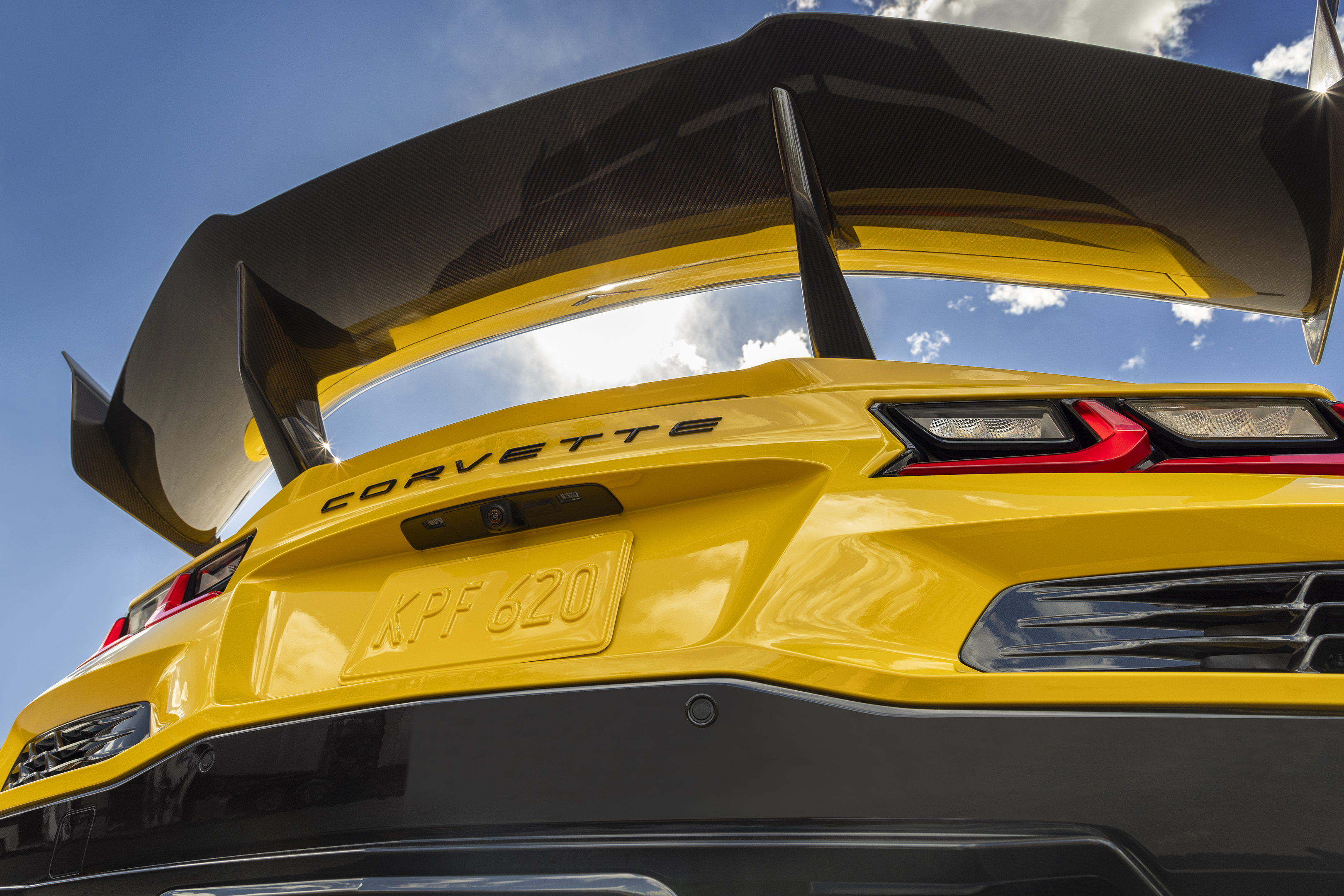
A recent patent filing by General Motors has sparked interest among car enthusiasts, as it suggests that the automaker is exploring the use of active aero elements to make drifting easier. ' This means that GM is looking into using its active aero system to help drivers initiate and maintain controlled drifts, rather than just relying on traction loss. The system would use an onboard controller to determine when the driver is trying to drift, based on inputs such as steering-wheel angle and accelerator-pedal position, and then adjust the aerodynamic bias between the front and rear axles to a drift-optimal range.
This would allow drivers to achieve a controlled loss of traction that's enough to keep a drift going. The hardware for this system would be similar to other active-aero systems, consisting of movable spoilers, wings, fins, or diffusers mounted on actuators that can adjust their angles or move them relative to the airflow around the car. This would enable drivers to bleed off some downforce and make the car easier to drift.
However, the added cost and complexity from movable aerodynamic elements compared to fixed ones could be a drawback. The Corvette is already known for its impressive performance capabilities, and it's clear that GM isn't afraid to build pricey performance cars. In fact, another patent filing in 2024 hinted at an active-aero system for the 'Vette, but this one was tied to an electronic limited slip differential.
It's possible that the same hardware could be repurposed for the drift mode described here. Other automakers are already deploying active aero, with the Ford Mustang GTD being a notable example. However, using active aero specifically for drifting is something new and exciting, and it will be interesting to see how GM implements this technology in its vehicles.
With the Corvette's impressive performance capabilities and the potential for active aero to make drifting easier, this could be an exciting development for car enthusiasts.