
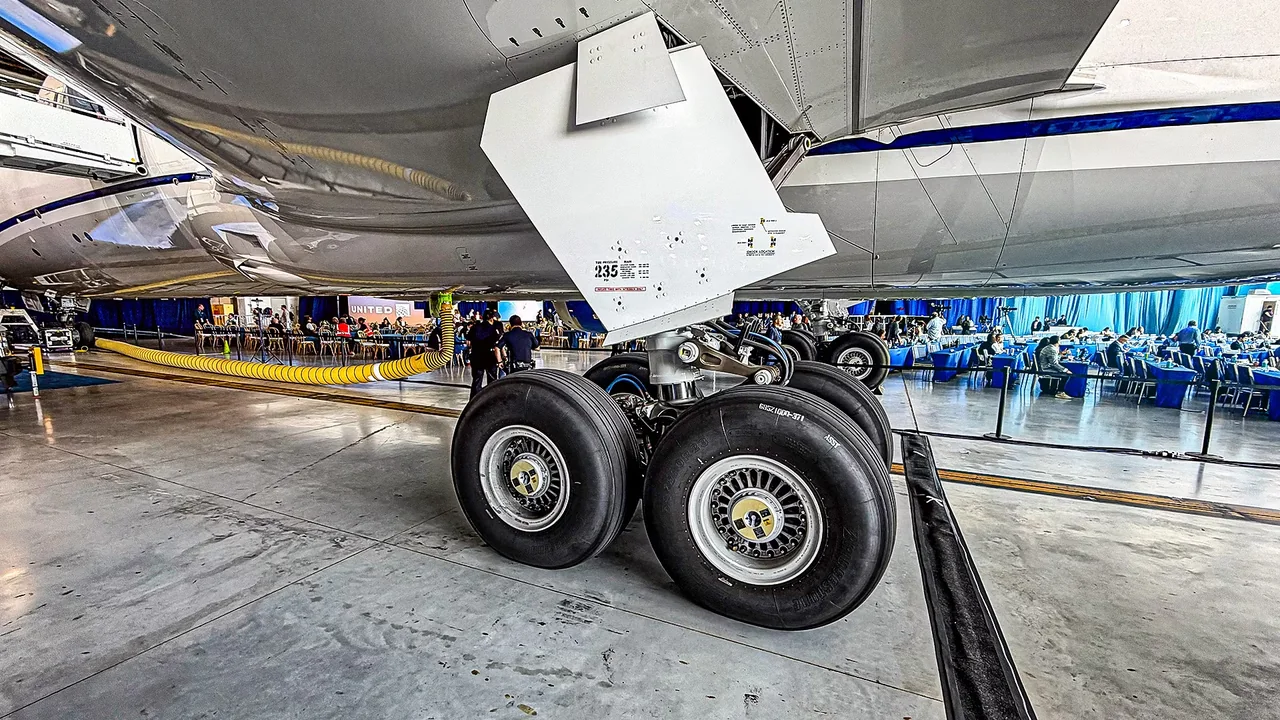
Aircraft landing gear systems are a critical component of modern aviation, responsible for absorbing the immense forces generated during touchdown and ensuring safe landings. The latest advancements in this field have led to significant improvements in energy efficiency, brake performance, and overall safety. One notable example is the Boeing 787 Dreamliner's landing gear system, which boasts near 90% energy efficiency and can withstand temperatures exceeding 1,000°C.
The oleo strut is a fundamental component of every modern aircraft's landing gear system. This simple yet ingenious mechanism uses hydraulic fluid, nitrogen gas, and a small opening to dissipate the tremendous amount of energy generated during touchdown. By compressing the nitrogen gas, it acts as a shock absorber for the landing, cushioning the impact and transferring the energy into something harmless.
The use of nitrogen gas in modern landing gear systems is particularly noteworthy. This chemically inert gas prevents corrosion of the internal surfaces over many landing cycles, ensuring the longevity and reliability of the system. In contrast to traditional steel brake discs, carbon brakes used on new airliners work more effectively the hotter they get, making them a significant improvement in terms of braking performance.

The tapered metering pin is another innovative design feature that refines the basic mechanism of the oleo strut. By varying the size of the orifice as the strut compresses further, it keeps the resistive load on the strut approximately constant throughout the landing process. This results in practical efficiencies of between 80 and 90%, demonstrating the ingenuity of modern aircraft design.
The use of carbon brakes on new airliners is a significant development in terms of braking performance. Unlike traditional steel brake discs, which behave in a way that engineers describe as 'fade' when temperatures climb above a critical value, carbon brakes absorb and distribute heat more effectively. This results in lower thermal expansion and improved stopping power.
The advancements in aircraft landing gear systems are a testament to the ingenuity of modern aviation engineering. By refining the basic mechanisms of shock absorption and braking, manufacturers have been able to create safer, more efficient, and more reliable landing gear systems. These improvements will have a significant impact on the industry, enabling airlines to operate more safely and efficiently.

The development of new materials and technologies has played a crucial role in these advancements. The use of advanced composites and alloys has enabled manufacturers to create lighter, stronger, and more efficient landing gear systems. Additionally, the integration of sophisticated sensors and control systems has allowed for real-time monitoring and optimization of the system's performance.
As the aviation industry continues to evolve, it is likely that we will see even more significant advancements in aircraft landing gear systems. The development of new materials and technologies, such as advanced composites and smart materials, holds great promise for improving energy efficiency, braking performance, and overall safety.
The improvements in aircraft landing gear systems have far-reaching implications for the aviation industry as a whole. By enabling airlines to operate more safely and efficiently, these advancements will help reduce costs, improve customer satisfaction, and contribute to the growth of air travel.