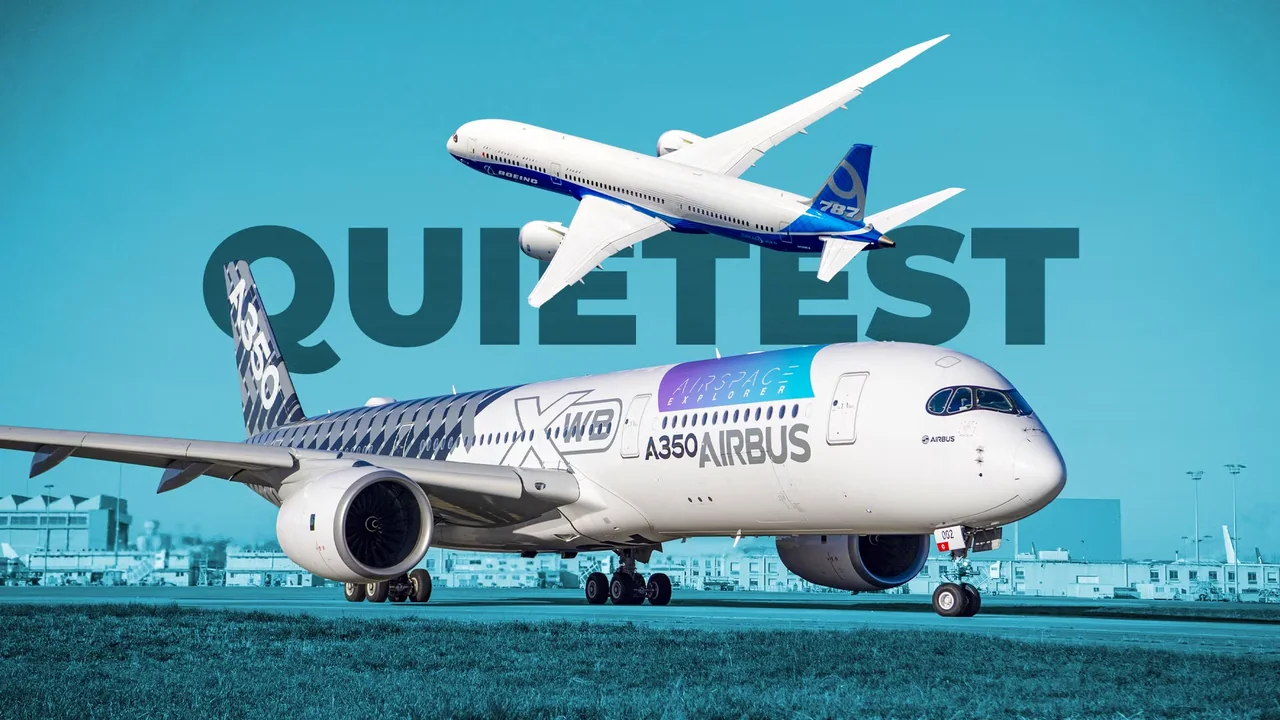
The Airbus A350 and Boeing 787 are two of the most recognizable widebodies of the modern aviation era, blending advances in technology, passenger comfort, and airline economics.
Both aircraft types have become the backbone and future of many airlines' fleets worldwide, utilized primarily on ultra-long-haul and long-haul routes.
The Airbus A350 and Boeing 787 share a common goal: to provide efficient, reliable, and quality services that meet the evolving needs of passengers and airlines alike.

Passenger comfort is a key aspect of both aircraft designs, with a focus on state-of-the-art cabin features, comfortable seating options, and advanced technology integration.
However, there's another factor that often goes unnoticed: aircraft noise, which can significantly impact the overall travel experience.
The Boeing 787 was launched in April 2004, with the first delivery to All Nippon Airways in September 2011, while the Airbus A350 program began shortly after in October 2005.

Both aircraft have carved out a stellar reputation as reliable workhorses, earning the hearts of crew, passengers, and airlines across the world.
The range of both aircraft is also noteworthy, with the A350-900 having a range of 8,100 NM (15,000km), while the Boeing 787's range varies depending on the variant.
Ultimately, the Airbus A350 and Boeing 787 represent a significant step forward in aviation technology, prioritizing passenger comfort and innovation while reducing noise pollution.

The aviation industry's focus on reducing noise pollution will have significant implications for the future of air travel.