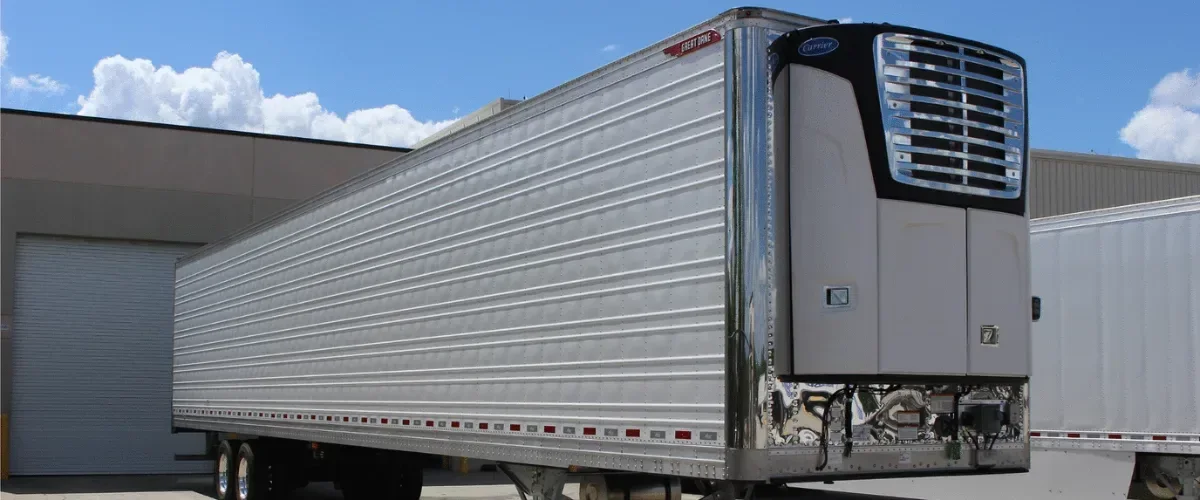
Despite the unexpected increase in US trailer orders, the overall trend remains cautious due to persistent headwinds affecting demand. Elevated steel and aluminum costs, trade uncertainty, and high financing costs are limiting trailer purchases. However, the recent surge may indicate some manufacturers' efforts to adapt to softer market conditions.
The typical seasonality pattern of US trailer orders usually sees a decline in March compared to February. However, this month's 36% increase runs counter to expectations, with net orders reaching 18,045 units. This uptick may be attributed to some manufacturers' strategies to manage excess capacity and optimize fleet utilization.
Despite the gains, trailer orders remain below the 10-year average of 20,276 units for March. The year-over-year decline of 15% indicates that demand is still lagging compared to previous years. This trend suggests that fleets are prioritizing cost management over new trailer purchases.
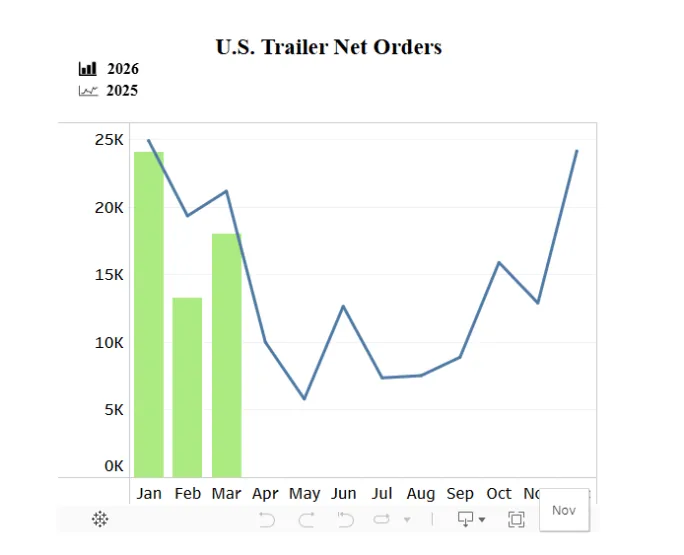
The current order season (September 2025 through March 2026) has seen a 19% year-over-year decline in trailer orders and an 15% year-to-date decrease. These numbers indicate that demand remains subdued, with manufacturers struggling to meet the increased costs of steel and aluminum.
Trailer production also saw an increase of 15% month over month to 17,501 units, but output was still 1% below the same period last year. This suggests that manufacturers are maintaining production discipline despite softer demand conditions.
The data points to continued production discipline among manufacturers as they navigate the challenging market landscape. However, this discipline may be a result of fleets' efforts to optimize their operations and reduce costs.
Persistent headwinds continue to limit trailer demand, including elevated steel and aluminum costs, trade uncertainty, and high financing costs. These factors are keeping orders relatively subdued despite improving freight conditions.
The recent surge in trailer orders has not signaled a broader demand recovery. Instead, trailer purchases remain largely replacement driven as fleets continue to operate with excess trailer capacity. This trend suggests that manufacturers need to adapt their strategies to meet the changing needs of the market.
Stronger Class 8 truck demand is drawing a greater share of fleet investment, driving earlier-cycle truck orders. This shift may indicate that fleets are prioritizing asset utilization and cost management over new trailer purchases. However, this trend also highlights the ongoing challenges faced by manufacturers in meeting the demands of a changing market.
The recent uptick in trailer orders may not signal a broader demand recovery, as fleets continue to prioritize asset utilization and cost management.