
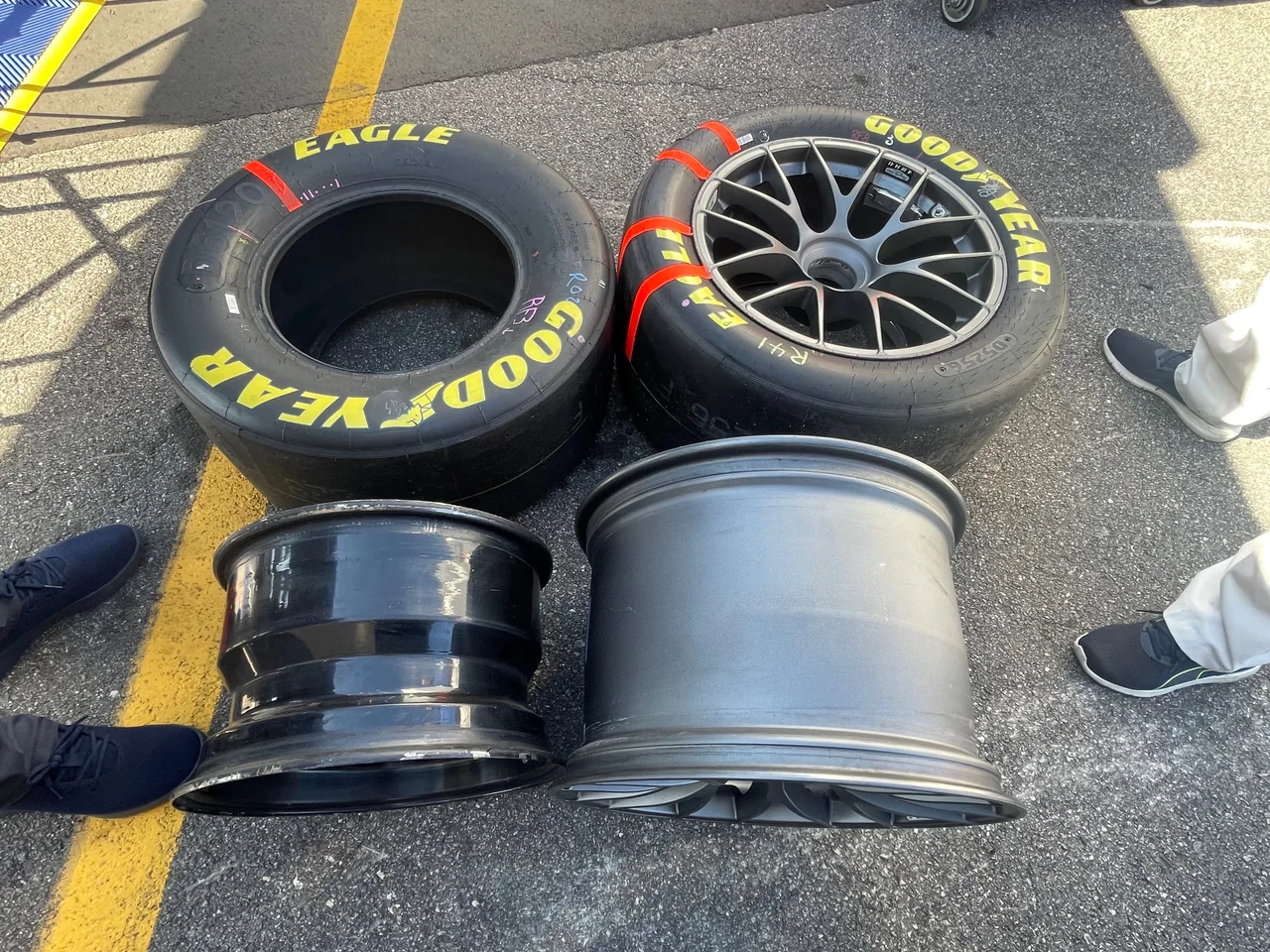
The use of a single, center-locking lug nut system on the current Cup car has enabled four-tire fuel stops to be made in 10 seconds or less. However, this system limits the amount of time teams can spend on pit road, making it difficult to save fuel effectively.
Ricky Stenhouse Jr., a superspeedway racing expert, notes that the current single-lug nut system is not the limiting factor for fuel conservation. Instead, he believes it's the lack of five lug nuts on the wheel that prevents teams from optimizing their fuel stops.
The NASCAR O'Reilly Auto Parts Series wheel, which uses a five-lug nut system, is wider and lower than the current Cup car wheel. This design allows for more flexibility in terms of fuel stop strategy.

NASCAR's decision to reverse the length of the Stages at Talladega Superspeedway was an attempt to disrupt the teams' fuel-saving strategy. However, this move may not be enough to overcome the limitations imposed by the current single-lug nut system.
Spire Motorsports Competition Director Matt McCall believes that the first Stage of the race could potentially be completed with only one pit stop, depending on the pace of the race and any cautions that may occur. This would allow teams to save fuel more effectively and gain an advantage over their competitors.
The lead pack will play a crucial role in determining how the race unfolds at Talladega. Drivers who can maintain their position and avoid cautions will be better positioned to conserve fuel and make strategic pit stops.
Stenhouse's comments highlight the importance of understanding the amount of fuel each competitor possesses. By choosing to pit with drivers who require similar amounts of fuel, teams can minimize their time on pit road and optimize their fuel stop strategy.
The current single-lug nut system has become a significant challenge for NASCAR Cup teams at Talladega. Until a change is made to allow for the use of five lug nuts, teams will continue to struggle with fuel conservation.
The future of superspeedway racing in NASCAR hangs in the balance as teams grapple with this fuel-saving conundrum. Will the current single-lug nut system be enough to overcome the limitations imposed by the design of the Cup car wheel?
As the sport continues to evolve, it's clear that the fuel-saving strategy at Talladega will remain a critical factor in determining the success of NASCAR Cup teams.
The fuel-saving strategy implemented at Talladega and Daytona will continue to be a challenge for NASCAR Cup teams until the return of the five-lug nut system.