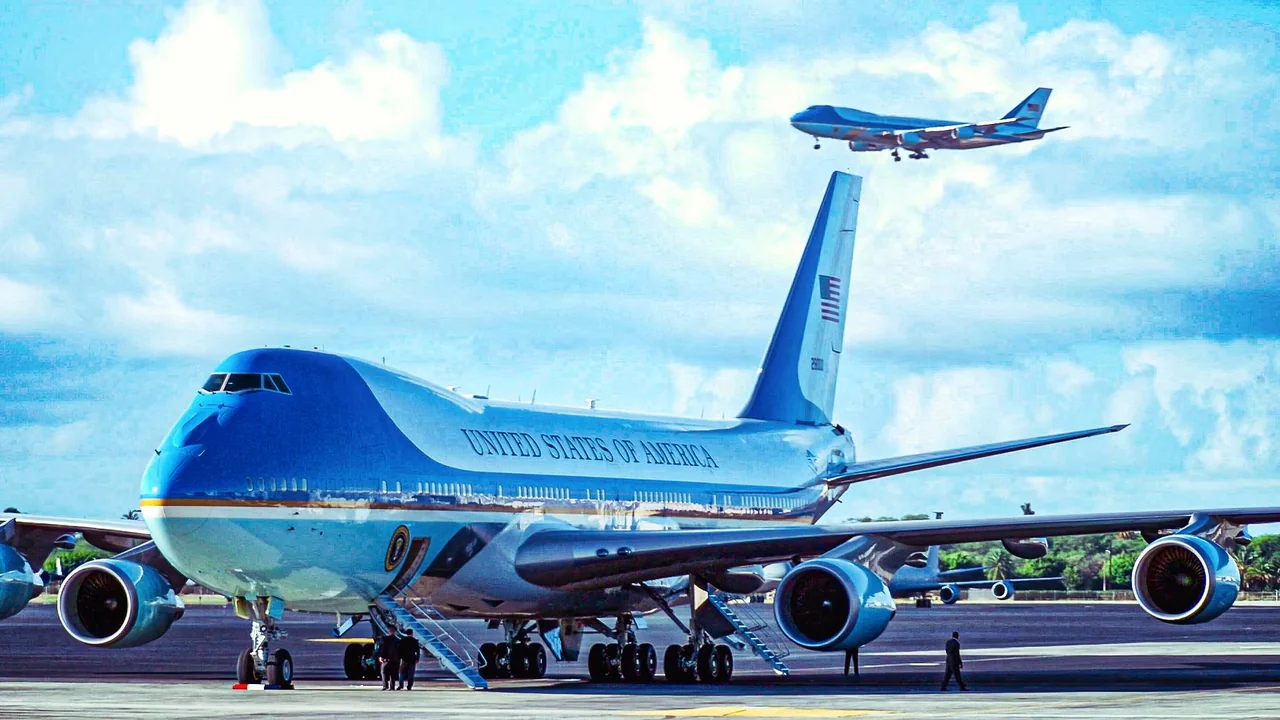
Air Force One's advanced technology includes aerial refueling capabilities, but it rarely uses this feature.
This capability allows the aircraft to loiter for an indefinite period in a worst-case scenario, making it a survivable mobile command post.
However, refueling two massive aircraft at high speeds is inherently risky and poses significant security concerns.

The VC-25A's design prioritizes ground refueling over mid-air refueling due to these risks and security concerns.
Standard ground refueling at secure military bases is always preferred for the President's safety.
This approach has led to a contentious design choice for the successor, the VC-25B, with some arguing that its absence diminishes the aircraft's ability to serve as a survival command post.

The Joint Chiefs and top brass emphasize the importance of this capability in a doomsday scenario like nuclear conflict.
Mid-air refueling is essential for the coordination between Air Force One and the E-4B Nightwatch, allowing both aircraft to stay airborne for days or weeks.
This coordination is critical for ensuring the US government remains functional even if all ground-based command centers are destroyed.

The US Air Force prioritizes security and practicality over advanced features.