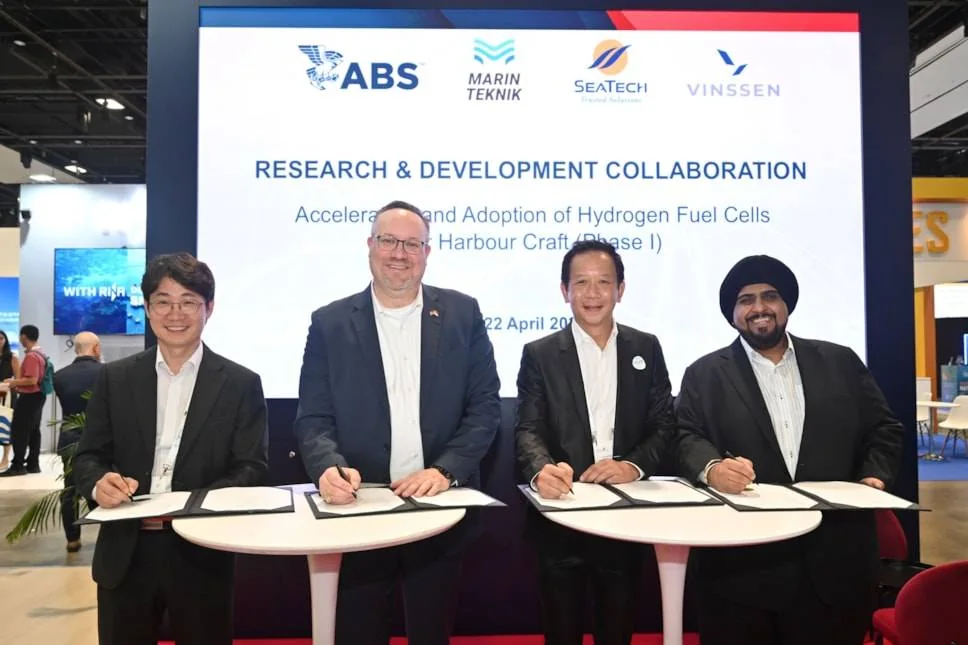
The Port of Singapore has launched a pilot study to develop a hydrogen fuel cell-powered harbor craft, marking a significant step towards reducing emissions in the maritime industry. The project aims to advance the use of hydrogen as a viable marine fuel for harbor operations. A consortium of four companies has signed a research collaboration agreement to drive this initiative forward.
The partnership between ABS, Marinteknik Shipbuilders, SeaTech Solutions International, and VINSSEN brings together expertise in vessel ownership, ship design, fuel cell propulsion, and marine technology to tackle the challenges of hydrogen-powered harbor craft. This collaboration is crucial for decarbonizing the fleet and meeting the growing demand for sustainable shipping solutions.
The pilot study will focus on desktop studies covering feasibility, vessel concept design, techno-economic analysis, risk assessment, and commercial viability. Depending on the outcomes, a second phase could include construction and sea trials of the hydrogen-powered harbor craft. This project is an important step towards reducing emissions in the maritime industry.
Hydrogen fuel cell technology has been gaining attention in recent years due to its potential to reduce greenhouse gas emissions from shipping. The Port of Singapore's initiative aims to demonstrate the practicality of this technology and pave the way for wider adoption. By supporting innovation and research, the port is helping to drive progress in sustainable shipping.
The agreement also highlights the importance of public-private partnerships in driving industry change. The collaboration between ABS, Marinteknik Shipbuilders, SeaTech Solutions International, and VINSSEN demonstrates the value of working together to address complex challenges. This partnership will help to build capabilities and support the adoption of lower-emission solutions across the sector.
The Port of Singapore's efforts are part of a broader trend towards sustainable shipping. As the industry continues to grapple with the challenges of reducing emissions, initiatives like this pilot study are crucial for driving progress. By supporting innovation and research, the port is helping to create a more sustainable future for the maritime industry.
The project's focus on hydrogen fuel cell technology is also significant. Hydrogen has the potential to be a game-changer for the shipping industry, offering a zero-emission alternative to traditional fuels. As the industry continues to explore this technology, initiatives like this pilot study will help to drive progress and support wider adoption.
The successful completion of this project will depend on the outcomes of the desktop studies and any subsequent construction and sea trials. If successful, it could pave the way for the widespread adoption of hydrogen fuel cell-powered harbor craft in Singapore and beyond. This would be a significant step towards reducing emissions from shipping and creating a more sustainable future for the maritime industry.
The pilot study's findings will also provide valuable insights into the commercial viability of hydrogen fuel cell technology for harbor operations. As the industry continues to explore this technology, understanding its potential benefits and challenges is crucial for driving progress and supporting wider adoption.