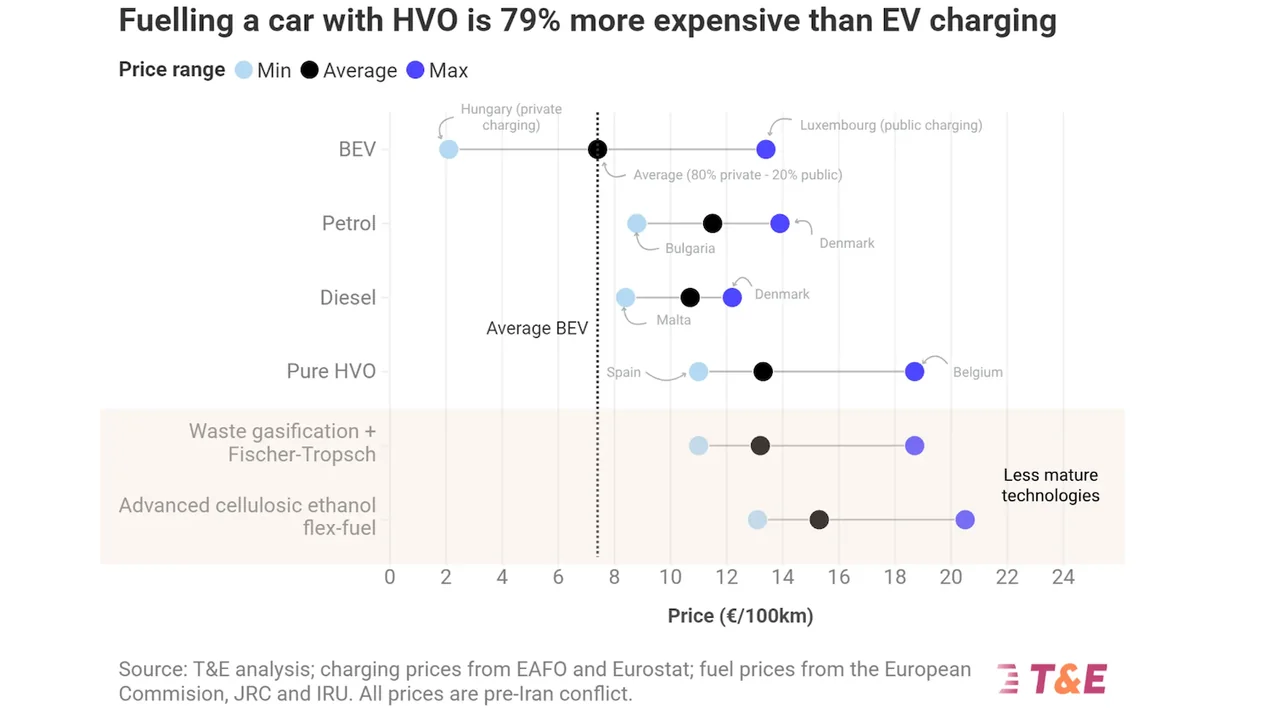
New research has revealed that using advanced biofuels, specifically pure hydrotreated vegetable oil (HVO), is nearly 80% more expensive than charging an electric vehicle. The finding comes as the European Union considers relaxing its car emissions targets to allow vehicles running on HVO to be counted as zero-emission cars. This move would have significant implications for motorists and the environment, highlighting the need for a sustainable energy future.
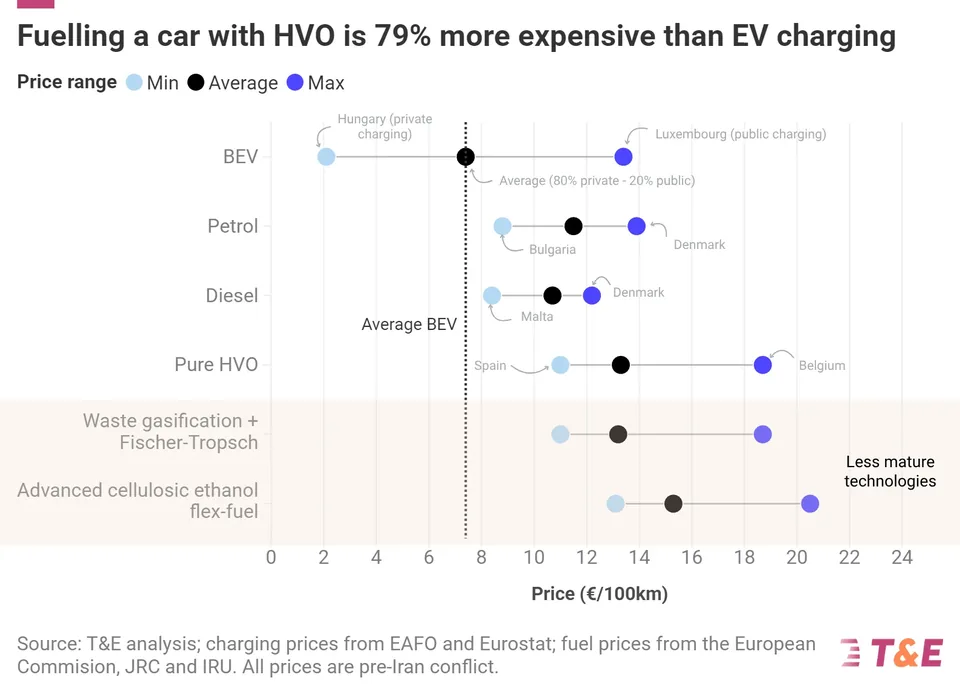
The cost of driving an electric vehicle (EV) in the EU is estimated to be around €7 per 100km driven, whereas pure HVO would cost approximately €13 for the same distance. The European car industry and some governments are pushing for this relaxation of targets, despite concerns over the availability and sustainability of advanced biofuels.
The T&E analysis warns that if the EU allows vehicles to be counted as zero-emission cars running on HVO, motorists could face higher fuel costs and potentially be pushed into buying more expensive biofuels technologies. This would exacerbate the issue of limited sustainable biofuel supplies, which are already under pressure from competing demands such as aviation.
The car lobby's push for weakened emissions targets is seen as a way to delay electrification and shift the burden onto motorists. However, maintaining current targets will ensure an increasing supply of more affordable EVs and avoid expensive diversions into HVO and other biofuels that cannot be scaled sustainably.
Furthermore, the high cost of advanced biofuels could lead to increased competition with the aviation industry for limited sustainable supplies, driving up prices even further. This would have significant implications for European motorists and the environment, highlighting the need for a more sustainable energy future.
The EU Commission's proposal to award biofuels credits to carmakers has been criticized by T&E, which argues that this would lead to a 60% increase in fuel spending by 2050 compared to current regulations. This would result in an additional €500 billion being spent on fuel by European drivers between 2025 and 2050.
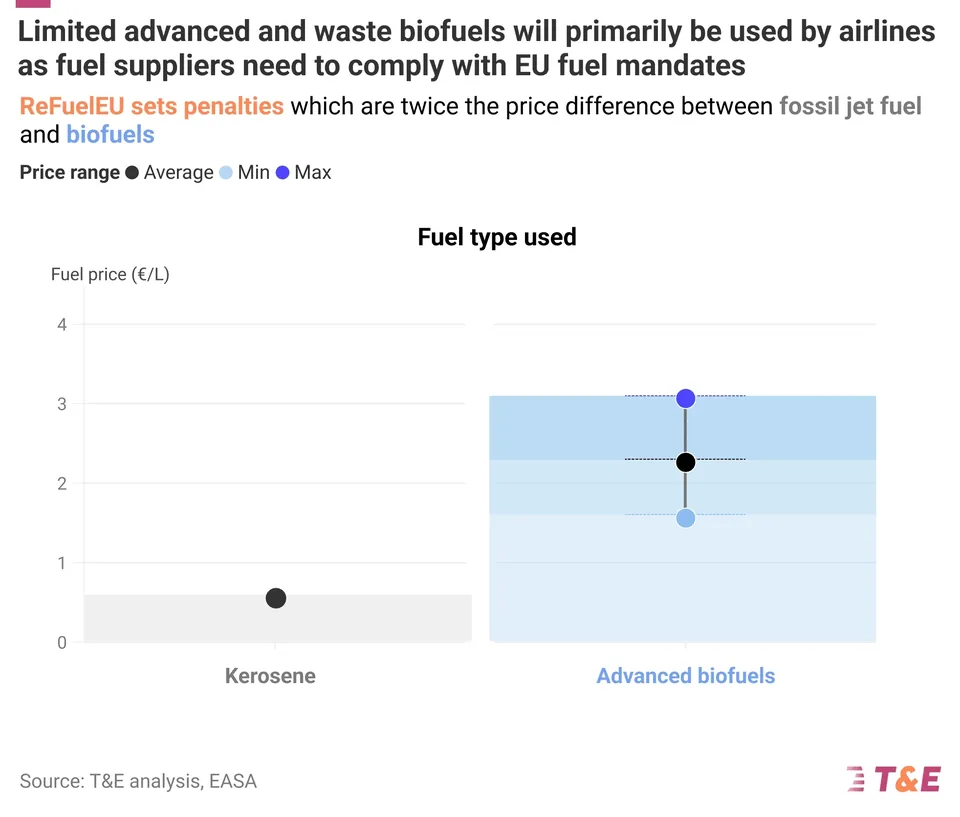
Rejecting the proposed biofuel credits would reduce motorists' bills, accelerate the shift to e-mobility, and cut Europe's reliance on imported fossil fuels and potentially unsustainable or fraudulent biofuels feedstocks. EVs already shield drivers from higher petrol prices caused by the energy crisis, making this a crucial step towards a more sustainable energy future.
The findings of this research highlight the need for a more sustainable energy policy in the EU, one that prioritizes the development of affordable and scalable renewable energy technologies. By doing so, we can reduce our reliance on expensive and unsustainable biofuels and create a cleaner, healthier environment for future generations.
Ultimately, the decision by the EU to relax its car emissions targets will have significant implications for motorists and the environment. It is crucial that policymakers prioritize the development of sustainable energy technologies and take steps to reduce our reliance on expensive and unsustainable biofuels.