

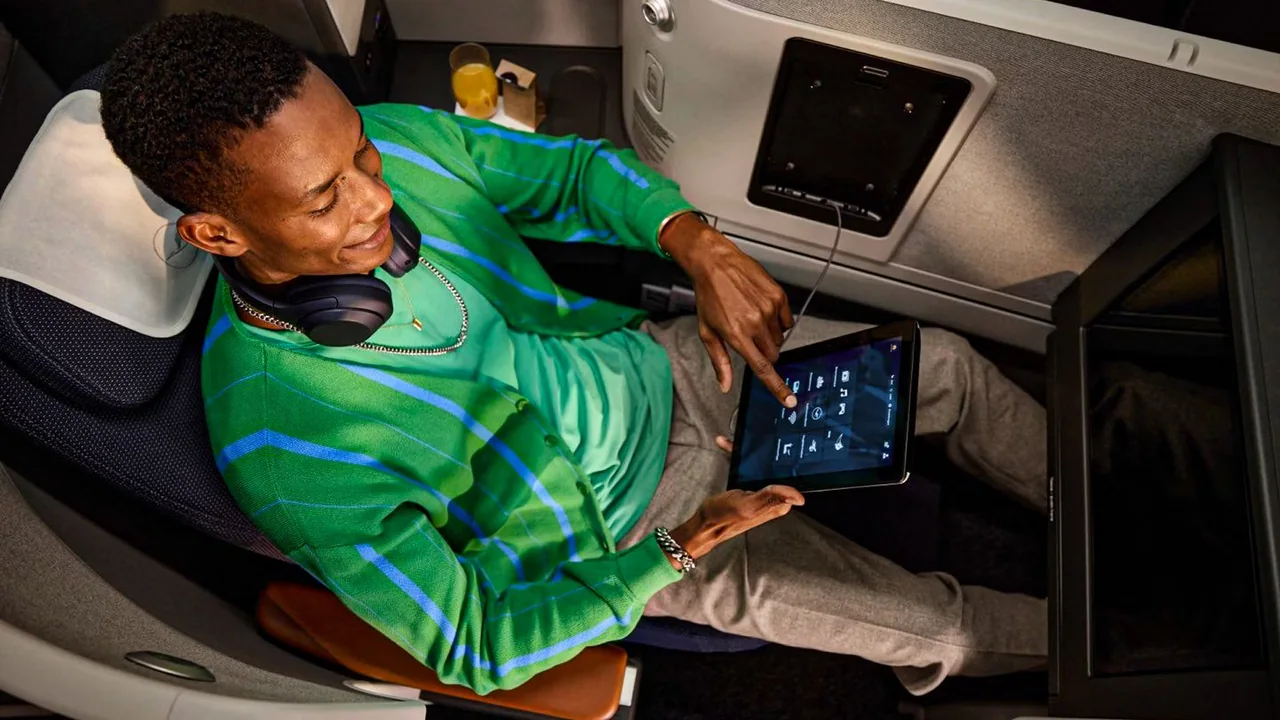
Business class travel has become synonymous with comfort and productivity, with direct aisle access, sliding doors, and lie-flat seats that convert into beds. This allows business travelers to sleep on the plane and wake up in time for work after landing, minimizing downtime.
The evolution of business class seat models has been marked by innovative technologies, improved footwell sizes, and advancements in space efficiency. Angled-flat seats were once touted as a differentiator but have largely fallen out of favor as full lie-flat seats become the norm.
Business travelers are willing to pay a premium for these comforts, with airlines competing to offer the best products. The latest developments in business class seating are focused on providing exceptional comfort and productivity.

A key factor in determining the quality of a business class seat is its bed length, with longer beds offering more comfort and flexibility.
The Safran Unity, installed on Japan Airlines' A350-1000, boasts an impressive 79-inch long bed, making it one of the longest flat beds in business class. This provides ample space for passengers to stretch out and relax.
In addition to its length, the Safran Unity also features larger footwells and more overall living space, creating a cozy and private environment.

The seat's design is further enhanced by privacy doors and partitions that are 52 inches tall, providing an added layer of seclusion for passengers.
The Safran Unity is not just about comfort; it also comes with innovative technology, including a 24-inch 4K display and 'Euphony' speakers in the headrests.
Qatar Airways' QSuite remains one of the most innovative business class products on the market, offering a bespoke staggered layout that alternates between forward and rear-facing seats.

The QSuite's design is also notable for its ability to be reconfigured to suit different passenger needs, with the option to retract center seat and adjust the angle of the seats.


