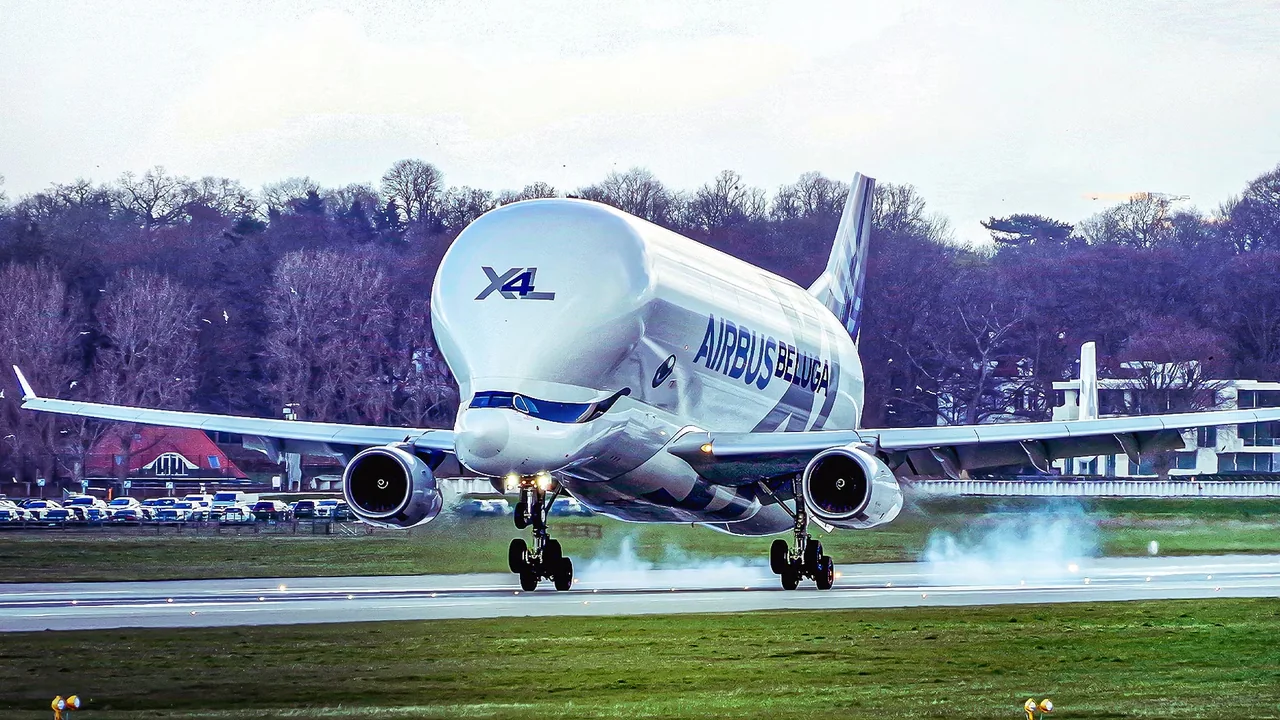
The Airbus BelugaXL may appear as a flying cartoon, but its bulbous upper fuselage and painted grin are the result of a deeply complex engineering challenge. The aircraft's cargo hold is larger than the original fuselage, requiring a new solution to maintain structural integrity, aerodynamic efficiency, and safe flight characteristics.
This challenge led to one of the most unusual yet purposeful design decisions in modern aviation: the lowered cockpit. While it may seem like a minor detail compared to the aircraft's massive cargo bubble, it is central to making the entire concept work.
The Beluga XL is based on the Airbus A330-200 freighter platform, but calling it a modification understates the scale of the transformation. The aircraft needs to carry significantly greater payloads than its predecessor, with the ability to transport two A350 wings simultaneously.

The cargo hold measures over 150 feet in length, 25.3 feet in width, and nearly 25.9 feet in height, making it large enough to accommodate two A350 wings when placed at an angle.
However, increasing cargo volume was not as simple as stretching the fuselage. The Beluga XL's defining feature is its enormous upper fuselage, which sits atop the original A330 structure like a bubble.
This creates a fundamental structural problem. Aircraft fuselages are designed as pressurized tubes, carefully balanced to distribute stress evenly. Adding a second, larger structure on top disrupts that balance and introduces new loads that the original airframe was never designed to handle.

To address this issue, Airbus engineers introduced over 8,000 modifications to the aircraft's design, including the lowered cockpit.
The lowered cockpit is essential in maintaining structural integrity while allowing for the cargo hold's increased capacity. It also enables safe flight characteristics by reducing the risk of aerodynamic instability.
The Beluga XL's design showcases the importance of innovative engineering solutions in meeting complex demands in modern aviation.

The Beluga XL's design is a testament to innovative engineering solutions.