
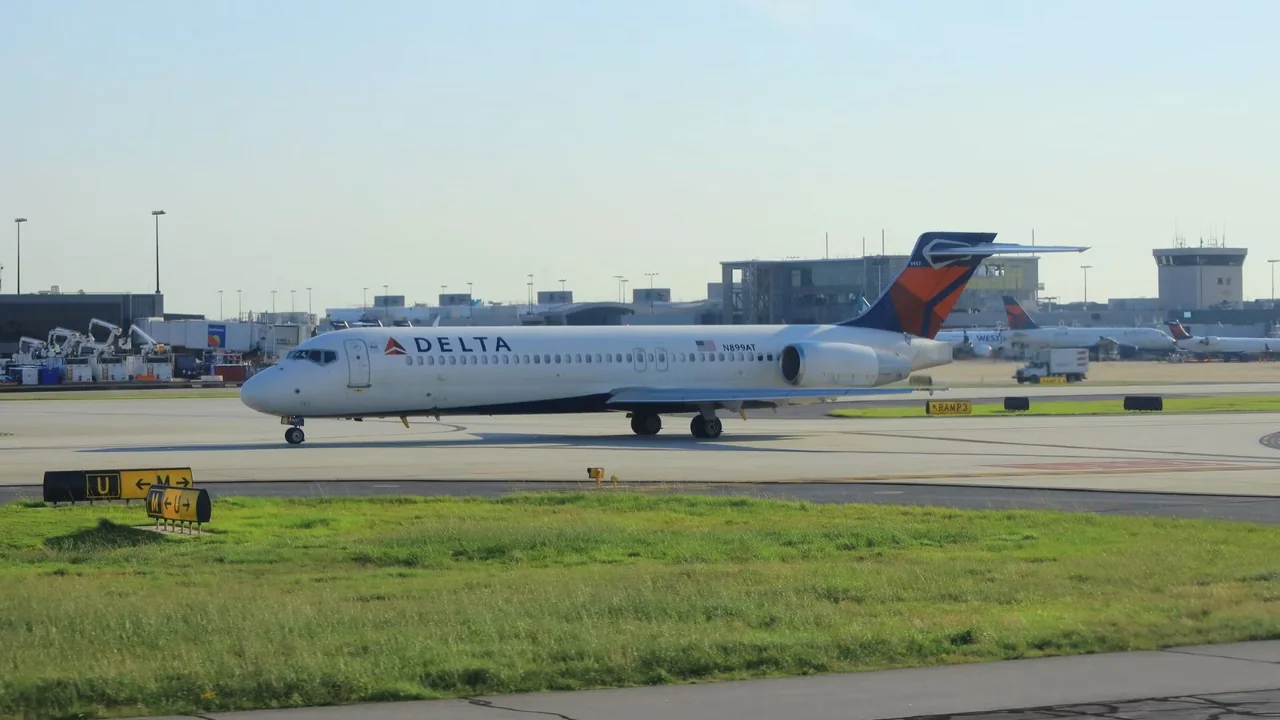
On Sunday, a Delta Air Lines Boeing 717-200 experienced a tire blowout during its takeoff roll at Louisville Muhammad Ali International Airport. The aircraft, registered as N899AT, was operating as DL2801 when the incident occurred. Flight tracking data indicates that the plane departed briefly before returning to Louisville, where it landed safely without further incident.
The crew initially suspected an engine-related issue, specifically a compressor stall, due to the similar symptoms of tire failures at high speed. However, post-flight inspection confirmed a blown tire as the root cause of the problem. This overlap in symptoms can make immediate diagnosis extremely challenging in the critical seconds around liftoff.
Aircraft like the 717-200 are prone to this issue due to their rear-mounted engine configuration, which can transmit vibrations and sensations through the fuselage, making it difficult for pilots to distinguish between engine and tire failures.

Standard procedures prioritize flying the aircraft and stabilizing the climb before troubleshooting ambiguous failures. In this case, the crew continued the departure and became airborne before assessing the situation. They alerted air traffic control of the suspected engine failure, according to the audio recording.
The incident serves as a reminder of the importance of vigilance and caution when dealing with abnormal indications on aircraft. It also underscores the need for pilots to remain vigilant during takeoff and landing phases, where tire failures can be particularly hazardous.
Aircraft tire failures are relatively rare, but they can have serious consequences if not addressed promptly. Aviation authorities such as the Federal Aviation Administration mandate strict inspection and replacement intervals to minimize such risks.

The 717's design, inherited from the McDonnell Douglas DC-9 family, places its engines at the rear of the fuselage rather than under the wings. This configuration offers operational advantages but can make it harder for pilots to diagnose issues related to the landing gear.
In the end, the crew made the right decision in returning to Louisville and prioritizing the safety of passengers and crew. The incident will likely lead to a review of standard procedures and protocols to prevent similar incidents in the future.
The incident highlights the challenges of diagnosing failures in real time and the importance of taking precautionary measures.