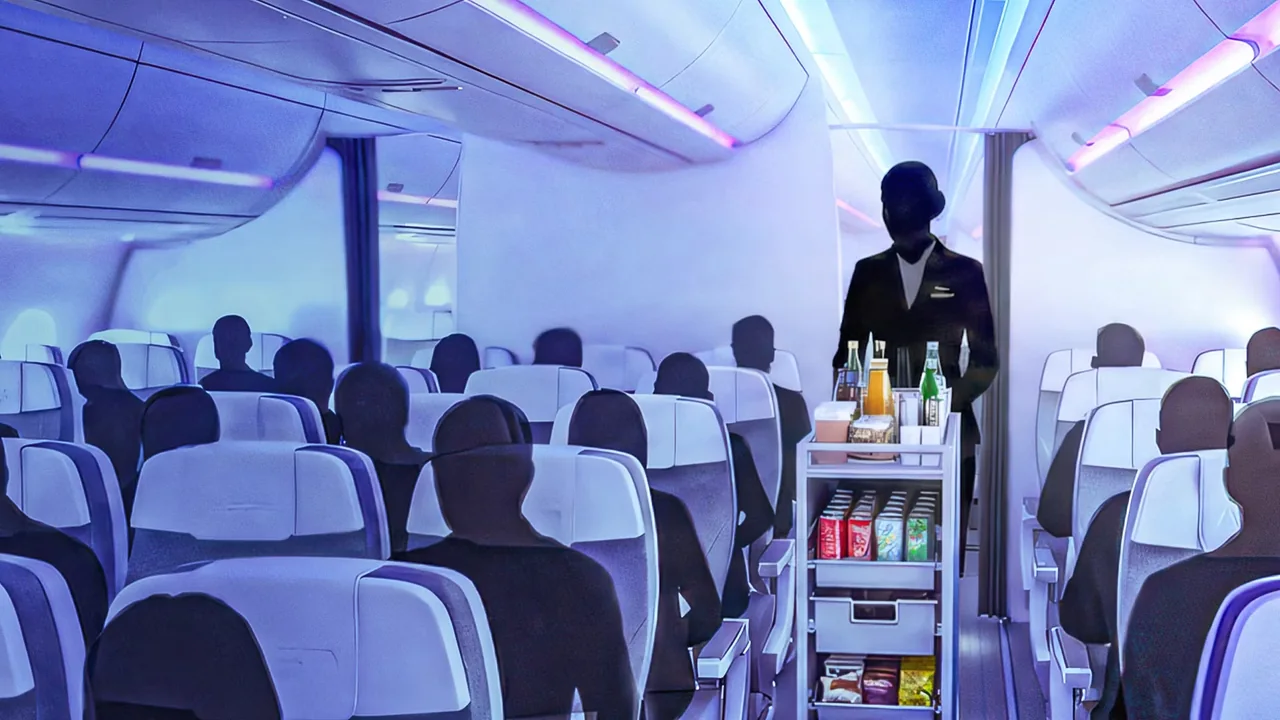
The modern airline industry is continually striving to eliminate inefficiencies and reduce the amount of fuel required for any given flight, with even modest reductions in average takeoff weight capable of saving airlines millions of dollars annually. Despite this ongoing drive toward evidence-led optimization, onboard food and beverage service remains largely dependent on estimates and historical averages rather than actual customer consumption statistics.
This reliance on forecasting is partly due to operational complexity and regulatory constraints, but it nevertheless results in persistent over-provisioning. The outcome is significant financial losses, unnecessary fuel burn, and avoidable environmental impacts across global fleets.
The global airline industry produces roughly 3.97m tons of cabin and catering waste each year, a figure expected to climb to nearly 4.4m tons by 2025 and potentially double by 2040 if current trends continue, largely due to growing passenger demand.

About 3.3 lb of waste is generated for every traveler, with an estimated 18–20% consisting of untouched food and beverages that are either incinerated or sent to landfill due to strict international regulations governing In-Flight Catering waste.
This issue is complicated by the variability in flyer demand across routes, seasons, and cabin classes, which makes accurate forecasting difficult. Airlines must balance the risk of under-provisioning with the financial and environmental cost of over-provisioning.
Catering strategies have historically erred on the side of excess, embedding inefficiencies into the aviation industry that are now becoming increasingly difficult to justify.

Reducing the rate of waste production is both an environmental and an economic issue that needs to be addressed. The aviation industry must adopt more sustainable practices to minimize its carbon footprint.
Smart Catering is an AI and data analytics driven technology that tracks in-flight catering demand in real time, automatically recording what customers consume and what remains.
At the center of the system is a Food Scanner mounted on the catering trolley: a downward-facing camera identifies the contents of each meal tray as it is served and captures what is left when the tray is returned.

A horizontally positioned barcode scanner simultaneously logs beverages placed on the trolley. This data enables airlines to make informed decisions about menu planning, inventory management, and waste reduction strategies.
The aviation industry is taking a significant step towards reducing its environmental footprint by leveraging AI and data analytics.