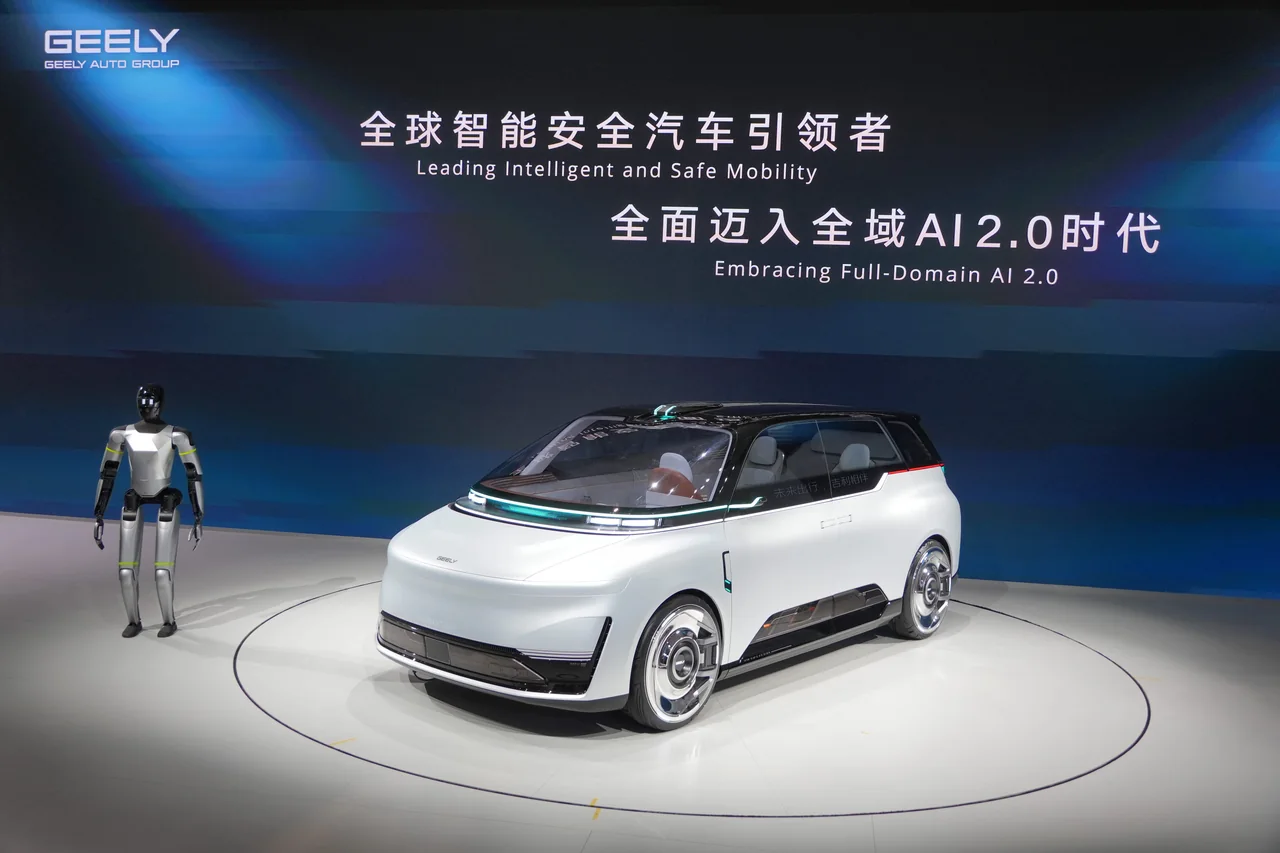
Caocao, a Geely-backed ride-hailing company, has ambitious plans to deploy thousands of autonomous vehicles globally starting next year. The company aims to grow its fleet of 100,000 robotaxis by the end of the decade.
The Eva Cab, Caocao's purpose-built robotaxi, is designed specifically for autonomous ride-hailing and features a stripped-down interior that eliminates unnecessary components.
This design choice is expected to reduce costs, making the vehicle more affordable than a privately owned car. The company has not disclosed pricing information.

Caocao is majority-owned by Geely Holding, which has been working to expand into international markets. The company expects to be among a small group of robotaxi providers still operating in China by 2030.
The rise of robotaxis is expected to create new challenges for traditional ride-hailing services. Companies like Tesla are also developing their own autonomous vehicles, including the Cybercab.
Caocao's expansion could set up a direct rivalry with Tesla, which has stated its intention to gradually scale production before rapidly expanding its driverless fleet.

The development of robotaxis is being driven by advances in artificial intelligence and machine learning. Companies like Xpeng are also pushing their robotaxi development, with plans to produce hundreds or thousands of vehicles within the next 12 to 18 months.
As the autonomous vehicle industry continues to grow, it will be interesting to see how companies like Caocao and Tesla navigate the regulatory landscape and ensure public safety.
The rise of robotaxis is poised to disrupt traditional ride-hailing services and create new opportunities for companies like Caocao.