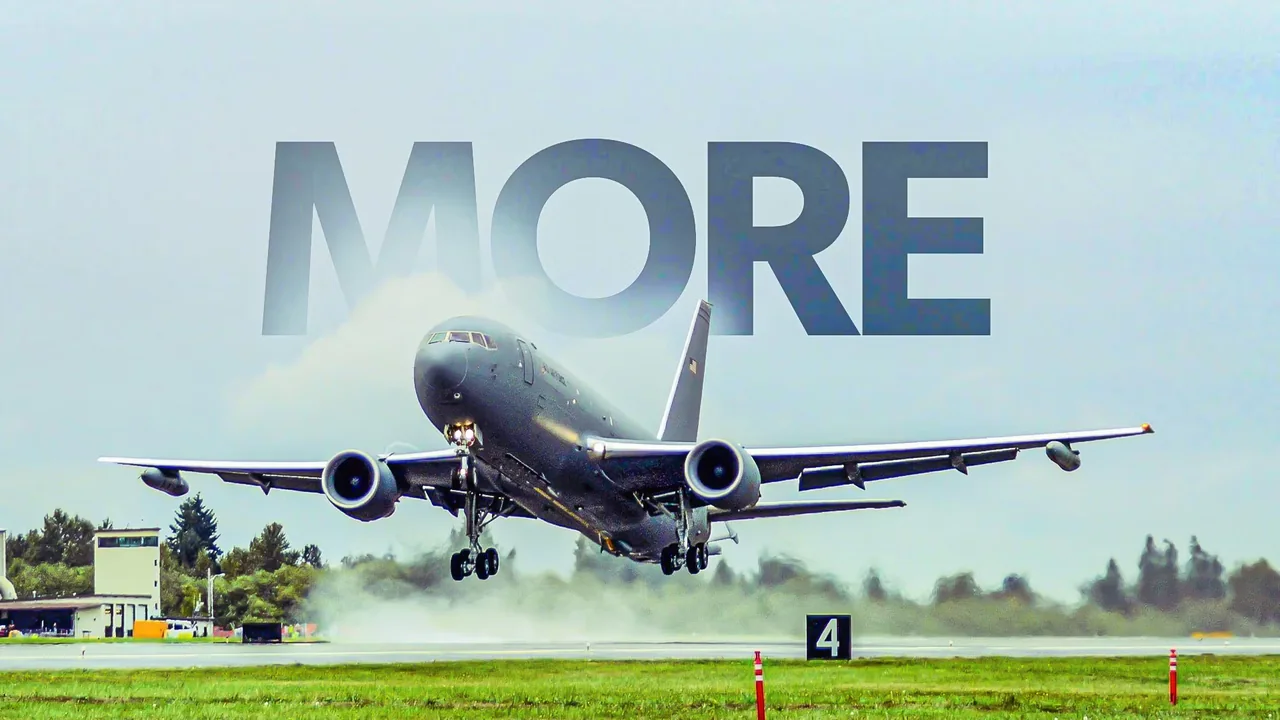
The US Air Force now plans to field 263 Boeing KC-46 Pegasus tankers, a significant increase from the originally planned 179 aircraft. This shift signals a fundamental reassessment of how many aerial refueling aircraft the United States actually needs in an era of high-intensity conflict. The additional jets will be procured at a cost of $3.5 billion in FY2027.
The KC-46's Long Road To Becoming The Air Force's Primary Tanker
The story of the KC-46 Pegasus is one of persistence, controversy, and eventual necessity. Long before the aircraft entered US Air Force service, Boeing had attempted to market a tanker based on the popular 767 platform internationally.

This earlier effort, commonly known as the KC-767, found only limited success with Italy and Japan acquiring small fleets. For years, the US Air Force remained unconvinced, exploring alternative solutions and navigating a politically charged procurement process that saw multiple restarts and competing bids.
The eventual KC-X competition marked a turning point. Boeing's offering, what would become the KC-46, was selected in 2011 to replace portions of the aging tanker fleet, promising a blend of proven airframe design and modern refueling technology.
Based on the 767-2C platform, the aircraft introduced features such as a fly-by-wire boom, advanced communications systems, and the ability to perform cargo and aeromedical evacuation missions.

However, the early years of the program were far from smooth. Technical deficiencies quickly emerged, most notably with the Remote Vision System (RVS), which is critical for boom operations.
These issues delayed full operational capability and raised concerns within the Pentagon and Congress. Reports from the Government Accountability Office emphasized the need to mature critical technologies before the aircraft could meet all mission requirements.
Despite these challenges, the KC-46 gradually improved. Incremental upgrades, software refinements, and operational experience helped build confidence in the platform.

The KC-46's evolution into a cornerstone of US airpower underscores the need for flexible and adaptable tanker solutions.