Ryanair's emissions have surged to new heights, with global emissions now 50% higher than in 2019. The airline's impact on the environment has been stark, with its emissions equivalent to that of a country the size of Croatia.
This growth is largely driven by low-cost carriers like Ryanair, which have seen significant increases in flights departing Europe. In contrast, legacy carriers with large long-haul networks have recovered more slowly, their emissions remaining below pre-pandemic levels.
The aviation sector's growth has come at a cost, with European flights now accounting for 23% of global aviation emissions. This is despite the EU's efforts to reduce greenhouse gas emissions, which have seen entire sectors of the economy cut their emissions.
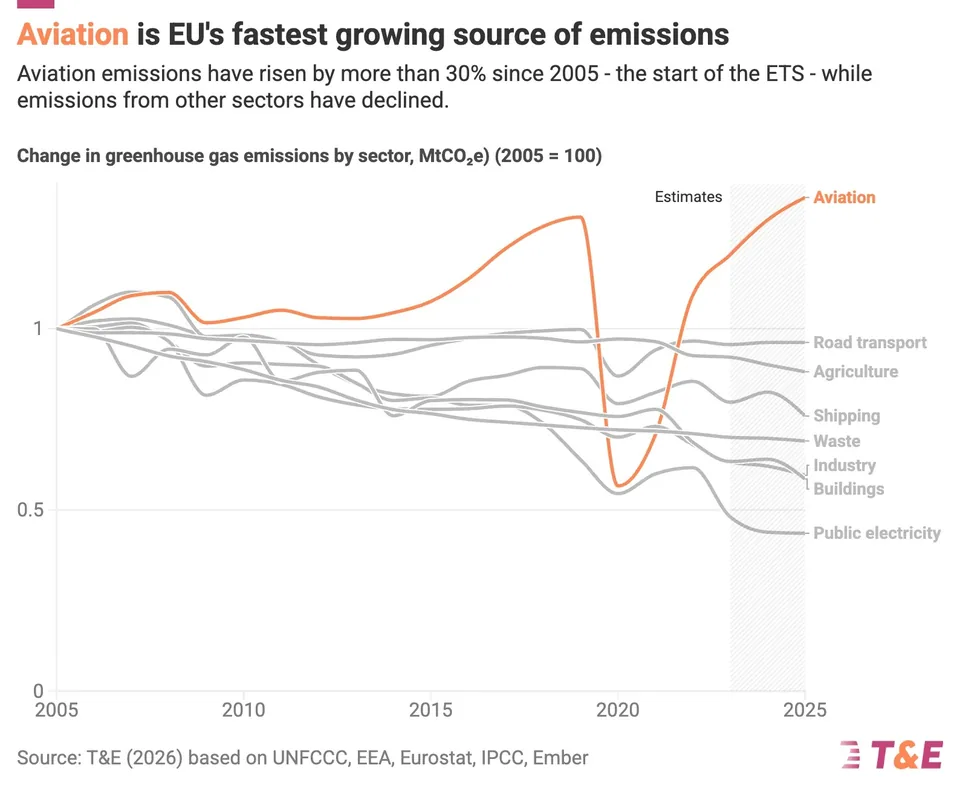
Aviation remains the fastest-growing source of emissions in the EU, with European emissions rising by over 30% since 2005. The sector's growth has been driven by increased demand for air travel, particularly among low-cost carriers.
The EU Emissions Trading System (ETS) is designed to reduce emissions, but it leaves two-thirds of aviation pollution unpriced. This means that airlines like Ryanair pay significantly less for their carbon emissions than legacy carriers.
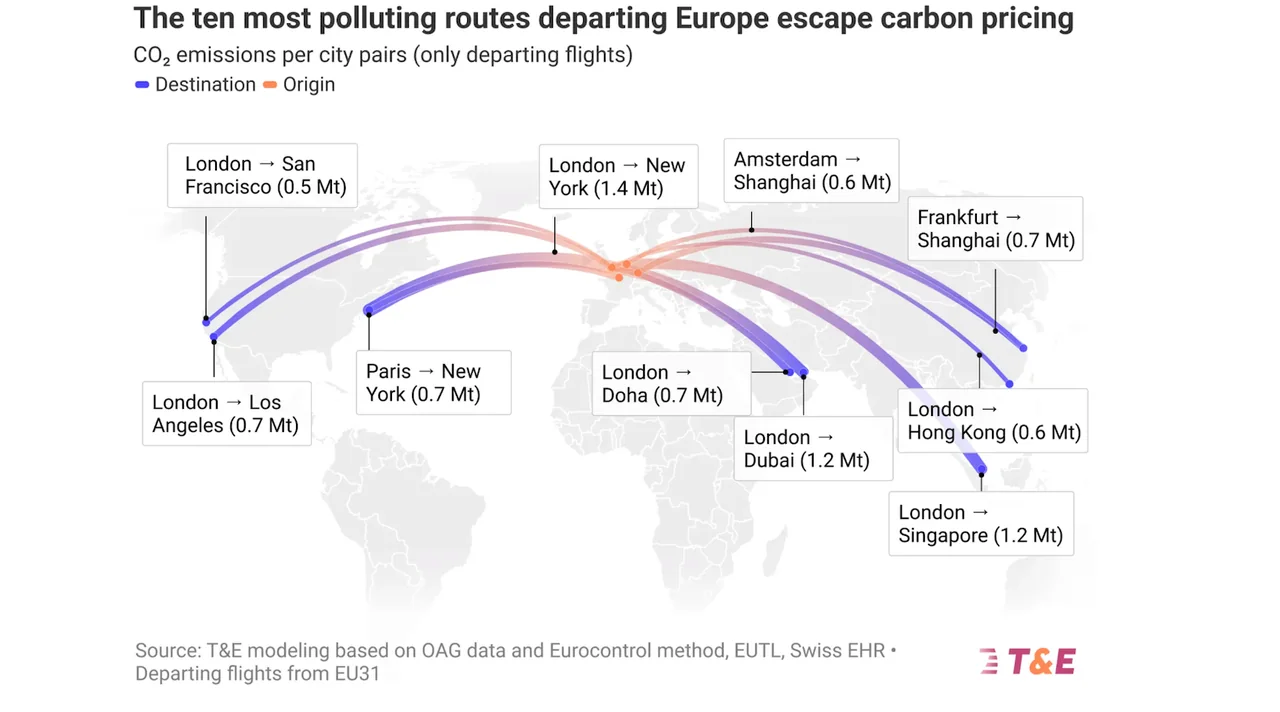
The top 10 most polluting intercontinental routes departing from European airports escape carbon pricing, with the London-New York route generating nearly 1.4 Mt of CO₂ in 2025 alone.
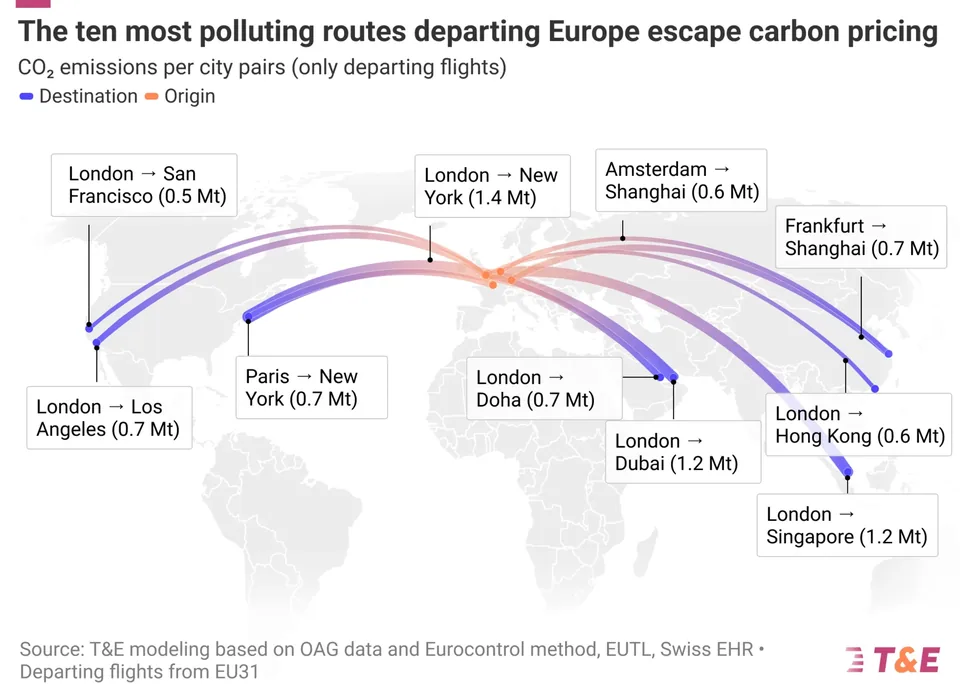
This structural flaw has significant implications for the EU's climate goals, as it allows airlines to continue emitting large amounts of pollution without facing meaningful penalties. The EU must address this issue to ensure that its carbon market is effective in reducing emissions.
The aviation sector's growth highlights the need for sustainable aviation fuels and more efficient aircraft designs to reduce emissions. Until then, the industry will continue to grapple with the challenges of reducing its environmental impact.
The EU's carbon market is structurally flawed, leaving polluters unpriced.