The global aviation industry has been exploring alternative fuels since the early 2000s, with limited success. Until recently, only waste fats and cooking oils were considered economically competitive with conventional kerosene jet fuel.
The recent surge in demand for sustainable aviation fuel (SAF) is largely driven by the global fuel crisis sparked by the Iran War. As a result, the cost gap between petroleum products and renewable alternatives has tightened up.
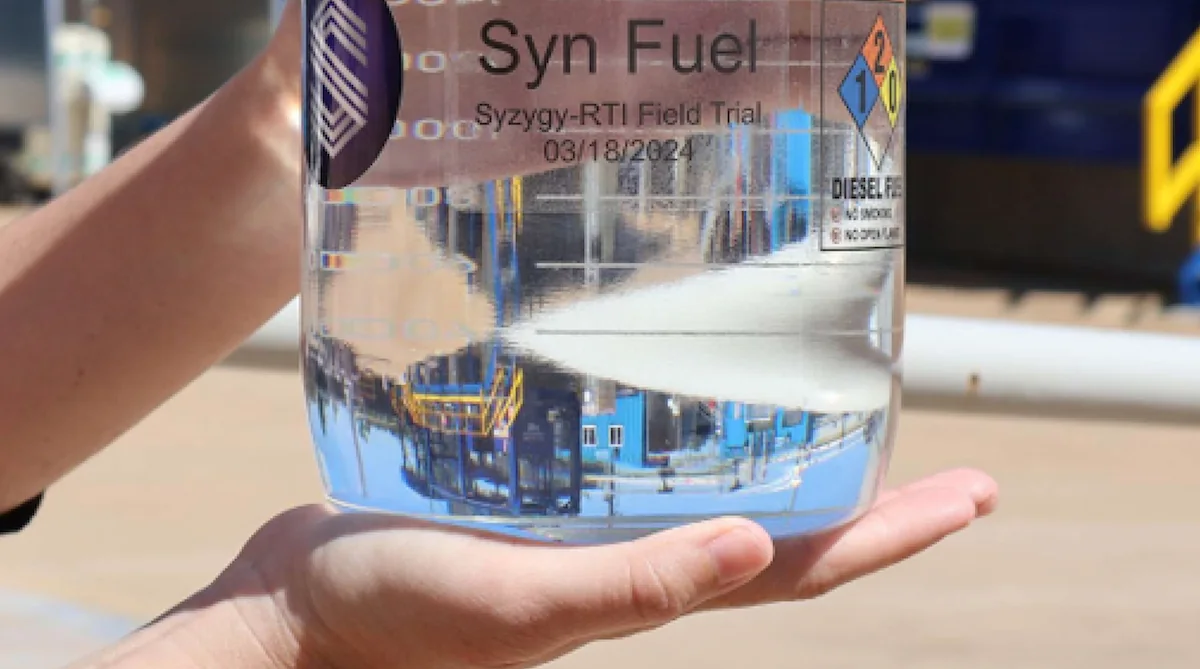
Syzygy Plasmonics' technology leverages electrolysis systems to produce hydrogen from water, combined with captured carbon, resulting in a drop-in replacement for kerosene jet fuel.
The company's photocatalytic system uses interchangeable catalysts to produce different fuels, including syngas and hydrogen as well as SAF.
Syzygy Plasmonics' innovation is particularly significant as it produces SAF from waste biogas without relying on high heat needed for conventional steam methane reforming.
This approach enables the production of high-grade SAF with reduced environmental impact.
The development of Syzygy Plasmonics' technology has sparked renewed interest in producing fuels from locally sourced, renewable feedstocks as a matter of national defense and economic security.
As the global fuel crisis continues to affect the aviation industry, innovative solutions like Syzygy Plasmonics' are crucial for reducing dependence on fossil fuels.
The company's breakthrough could pave the way for widespread adoption of sustainable aviation fuel in the coming years.
The development of Syzygy Plasmonics' proprietary light-driven reactor technology is a significant step forward for the sustainable aviation fuel industry.