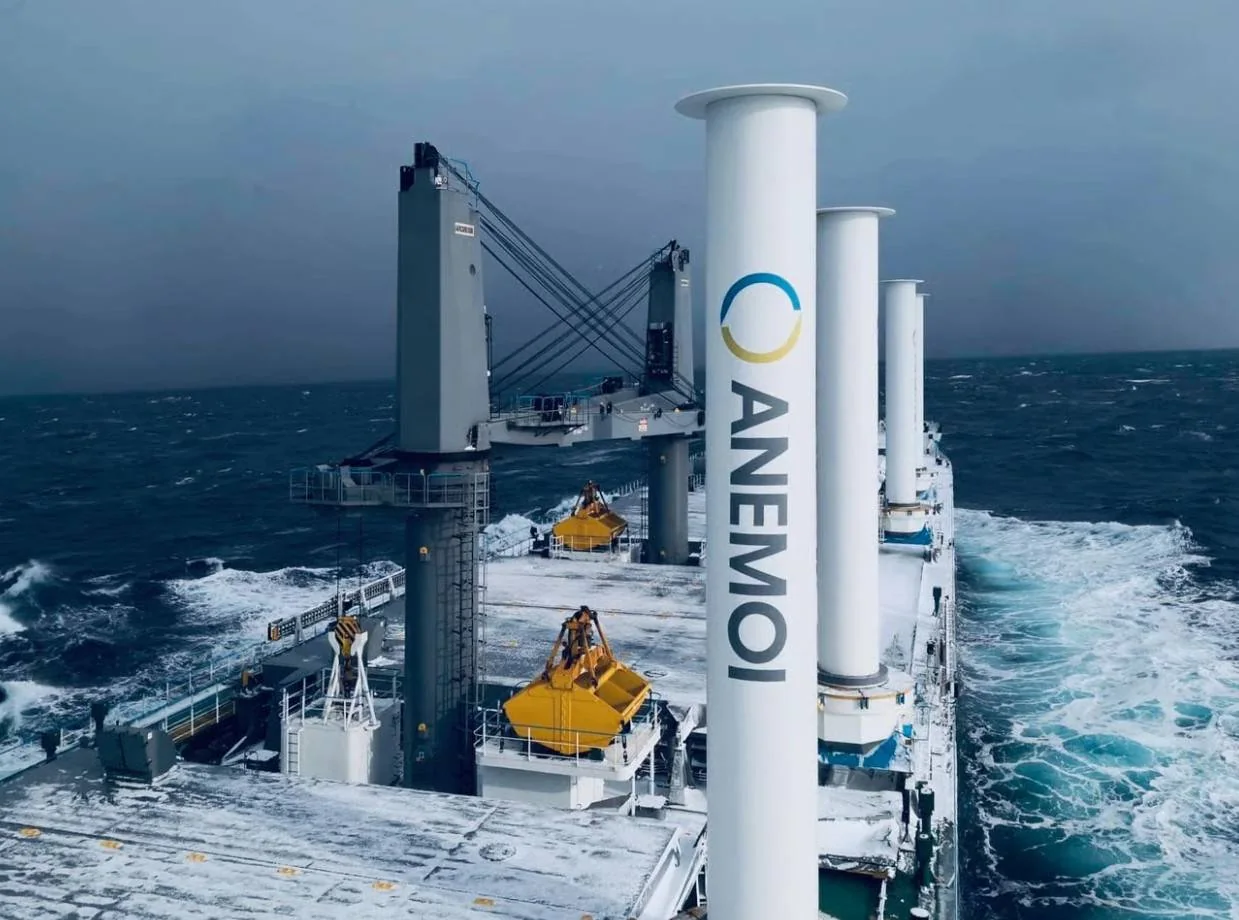
Anemoi Marine Technologies has successfully completed over eight years of continuous commercial operation with its Rotor Sail wind-assisted propulsion system. The M/V Afros, a 64,000-deadweight-tonne Ultramax bulk carrier, became the first vessel to be fitted with Rotor Sails in 2018.
The system has delivered significant fuel savings and reduced well-to-wake carbon dioxide emissions while maintaining operational availability above 95%. Independent confirmation from Lloyd's Register confirms the structural integrity and operational condition of the vessel's four Rotor Sails.
The successful completion of Afros' second intermediate survey is a landmark moment for Anemoi and the wider wind propulsion sector. It demonstrates that Rotor Sails are not just an innovative concept, but a durable and practical technology for the global fleet.
This level of long-term operational validation reduces uncertainty for shipowners considering wind-assisted propulsion and reinforces the role Rotor Sails can play in improving vessel efficiency and supporting compliance with tightening emissions regulations.
The installation of Rotor Sails on Afros has also reduced the vessel's IMO Energy Efficiency Existing Ship Index (EEXI) rating by about 4.2%. This is a significant achievement for the technology, which aims to reduce greenhouse gas emissions from shipping.
Anemoi Rotor Sails have completed 154 voyages, delivering fuel savings of 1,340 tonnes and reducing well-to-wake carbon dioxide emissions by 4,980 tonnes while maintaining operational availability above 95%. This is a testament to the technology's effectiveness in improving vessel efficiency.
The system has also been welcomed by commercial customers, with Afros serving 32 different charterers since its entry into service. This demonstrates that Rotor Sails are not just an innovative concept, but a commercially viable solution for shipowners.
The long-term durability and reliability of wind-assisted propulsion systems is crucial for their widespread adoption. Anemoi's success in achieving this milestone is a significant step forward for the technology and its potential to reduce emissions from shipping.
Wind-assisted propulsion technology is becoming increasingly important for reducing emissions and improving efficiency.