
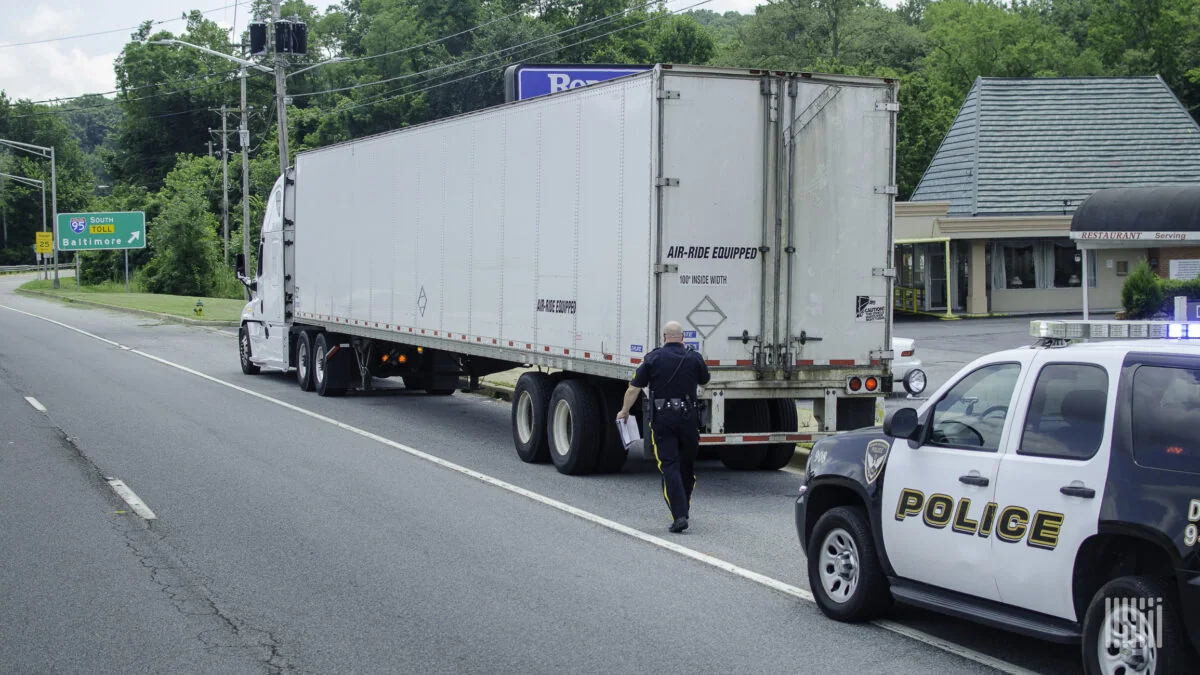
The 2026 CVSA Roadcheck has officially opened, and the first day of real data is in, revealing a concerning trend. FMCSA inspection records show that Day 1 produced 1,580 inspections across 1,417 distinct carriers, with a total of 2,637 violations logged.
This represents a significant increase from the full-event benchmark of 2025, which saw an 18.1% vehicle out-of-service rate across all 56,178 inspections conducted during that event. The Day 1 data shows that Pennsylvania led the country with 217 inspections, followed closely by Kentucky and New Jersey.
The top 10 states by inspection count were: Pennsylvania, Kentucky, New Jersey, Oklahoma, Michigan, Alabama, Connecticut, Massachusetts, Nebraska, and Maine. These states accounted for exactly one-third of the national total, concentrated in just three states.

The Northeast corridor and I-75/I-65 through Kentucky are identified as enforcement density hotspots based on Day 1 data. This geographic pattern is crucial for carriers to focus their pre-trip discipline and ensure compliance with safety regulations.
Large carriers have access to real-time enforcement data, but solo owner-operators and dispatchers also benefit from the same live FMCSA feed without subscription or account requirements. Knowing which states are producing the most inspections can help carriers adjust their routes and schedules accordingly.
The Day 1 data highlights the importance of proactive maintenance and inspection procedures among carriers to prevent mechanical failures that lead to costly OOS orders.
Inspectors found significant issues in some of the worst individual inspections, including a New Jersey truck with 30 total violations, representing accumulated mechanical failures across multiple systems. This underscores the need for improved compliance and enforcement strategies to address these issues.
As Days 2 and 3 unfold, carriers will continue to face scrutiny from inspectors, and the data from these events will provide valuable insights into safety trends and areas for improvement.
The high OOS rate highlights the need for improved compliance and enforcement strategies among carriers.