
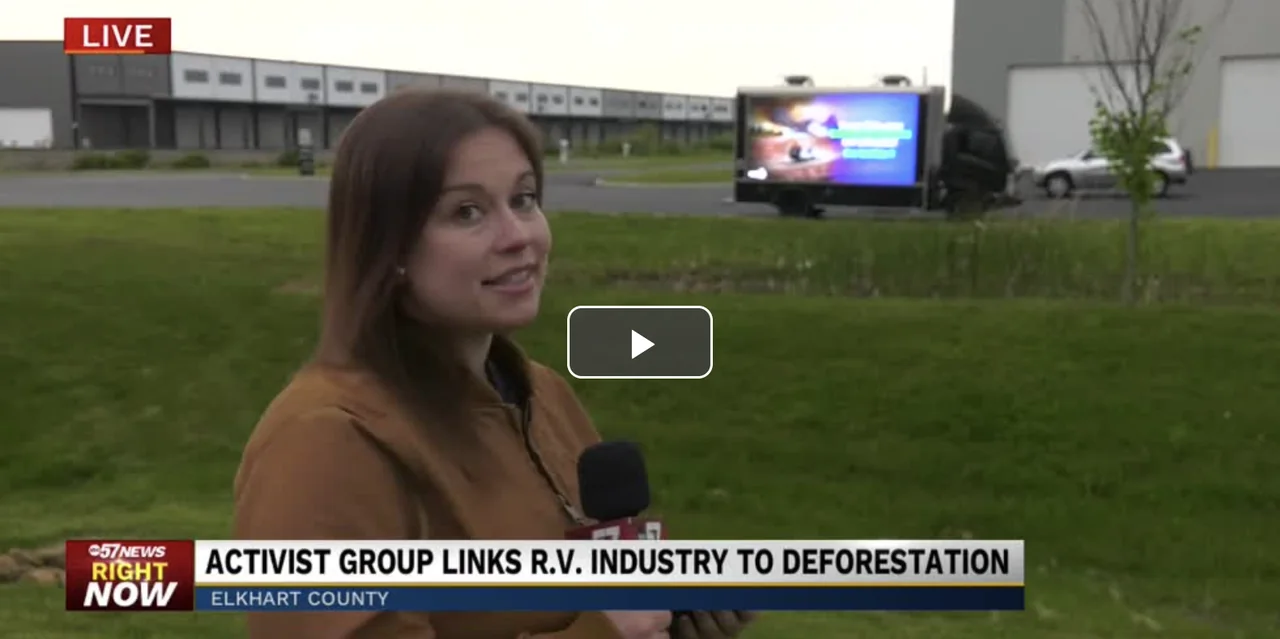
The RV industry has come under scrutiny for its role in rainforest deforestation, with environmental activists launching a pressure campaign against major companies. A billboard truck carrying digital screens made its way through Elkhart County, Indiana, displaying messages targeted at the industry. The screens read, 'Your RVs are deforestation on wheels!' and 'RVs shouldn't kill orangutans.' This was part of a larger effort by Mighty Earth, a non-governmental environmental activist organization, in partnership with EKO.
The pressure campaign is aimed at forcing major recreational vehicle companies to change their wood-sourcing practices. In August 2025, Mighty Earth authored a report linking the RV industry to rainforest deforestation in Indonesia, on the island of Borneo. The report highlighted the devastating impacts of the industry's use of wood from deforested areas on ecosystems and wildlife populations.
Environmental activists argue that the RV industry's reliance on wood from deforested areas is not only environmentally unsustainable but also morally reprehensible. They demand that companies take immediate action to change their sourcing practices and ensure that wood used in their products comes from sustainably managed forests.
The use of digital screens on the billboard truck allowed the activists to reach a wider audience and raise awareness about the issue. The campaign is part of a larger effort by environmental groups to hold industries accountable for their environmental impact.
Mighty Earth's report has sparked a global conversation about the importance of sustainable forestry practices in the RV industry. Companies are now facing increased pressure to adopt more environmentally friendly sourcing methods.
The impact of the campaign will be closely watched as companies respond to the demands of environmental activists. If successful, the changes could have far-reaching implications for industries across the globe.
Environmental activism is becoming an increasingly important force in shaping corporate policy and behavior. The success of this campaign will depend on the ability of environmental groups to mobilize public support and pressure companies into making meaningful changes.
The use of wood from deforested areas is a complex issue with far-reaching consequences for ecosystems and wildlife populations. The RV industry's role in perpetuating this problem highlights the need for greater transparency and accountability in supply chains.
As the campaign continues, it will be interesting to see how companies respond to the demands of environmental activists. Will they adopt more sustainable sourcing practices, or will they continue to prioritize profits over people and the planet?
The future of the RV industry will depend on its ability to balance economic growth with environmental sustainability. The success of this campaign is a crucial test of whether companies are willing to make the necessary changes to ensure a more sustainable future.
The use of wood from deforested areas can have devastating impacts on ecosystems and wildlife populations.