

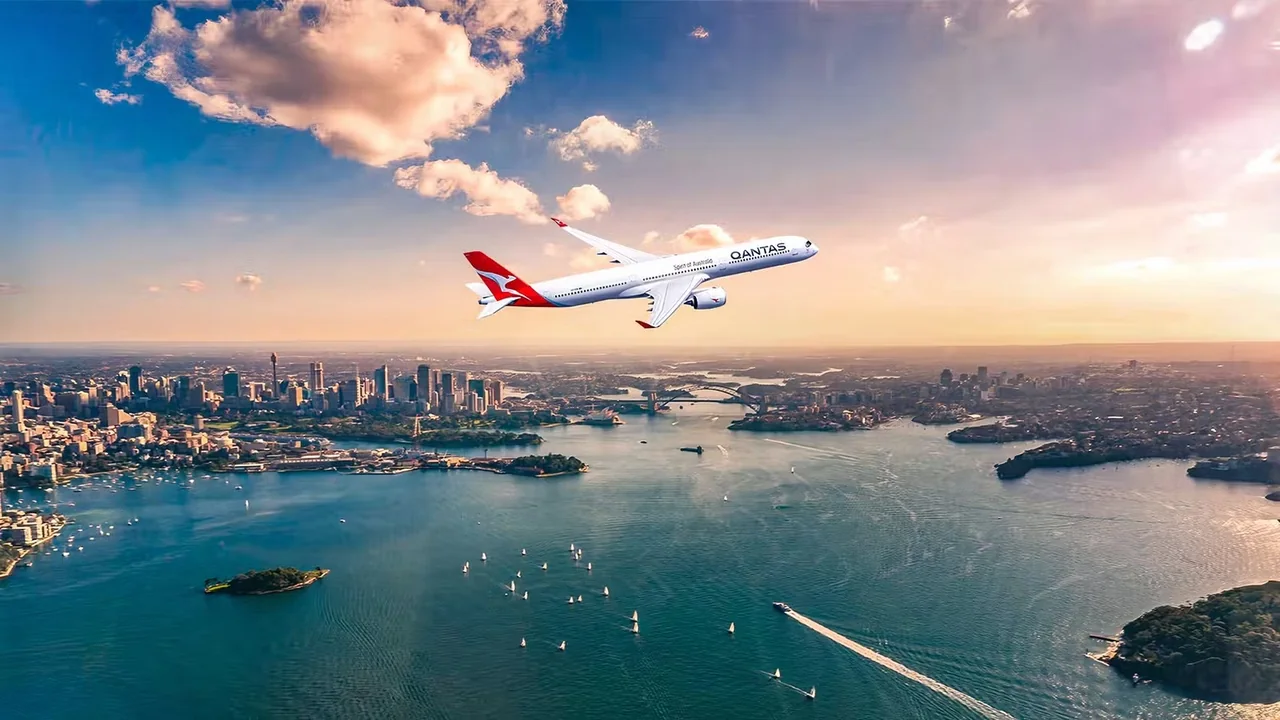
Qantas' Qantas Project Sunrise will make a great leap forward once its non-stop routes launch. The specially modified Airbus A350-1000ULRs will fly behemoth non-stop routes like Sydney Airport to London Heathrow Airport or New York John F. Kennedy International Airport. Such routes require the jet to remain airborne for up to 22 hours, longer than is currently the case for Singapore Airlines' Airbus A350-900ULR.
The modifications needed to achieve such an impressive flight time are detailed below. This includes larger fuel tanks and a lower passenger and cargo capacity. Qantas has also had to cover crew and passenger considerations and other operational complexities.
A Boeing 787 uses 2,900 gallons per hour, with an Airbus A350 using 200 gallons per hour less. If an airline wants to fly a further distance, it needs to find a way to pack in more fuel.

Qantas and Airbus achieve this goal with Project Sunrise by designing an aircraft around giant fuel tanks. At the rear center, a 5,283-gallon fuel tank has been added.
This is an interesting diversion from aircraft manufacturers' usual focus, which is about maximizing passenger and cargo capacity rather than range alone.
However, a standard A350 would not be able to take off with this additional fuel, as it would bring the aircraft over its maximum takeoff weight. Airbus has increased this figure for the Airbus A350-1000ULR, while also reinforcing the landing gear to keep the aircraft safe while it's fully loaded.

The A350-1000 currently has a maximum takeoff weight of 710,000 lb, which has been increased through structural reinforcements, high-power engines, and fuel balancing upgrades.
Increasing range isn't just about packing in more fuel, but ensuring that the aircraft is less thirsty while also having the necessary power.
The A350-1000ULR is fitted with two Rolls-Royce Trent XWB-97 engines, which are the most powerful engines ever fitted to an Airbus plane.

The Qantas Project Sunrise is a significant leap forward in aviation technology.