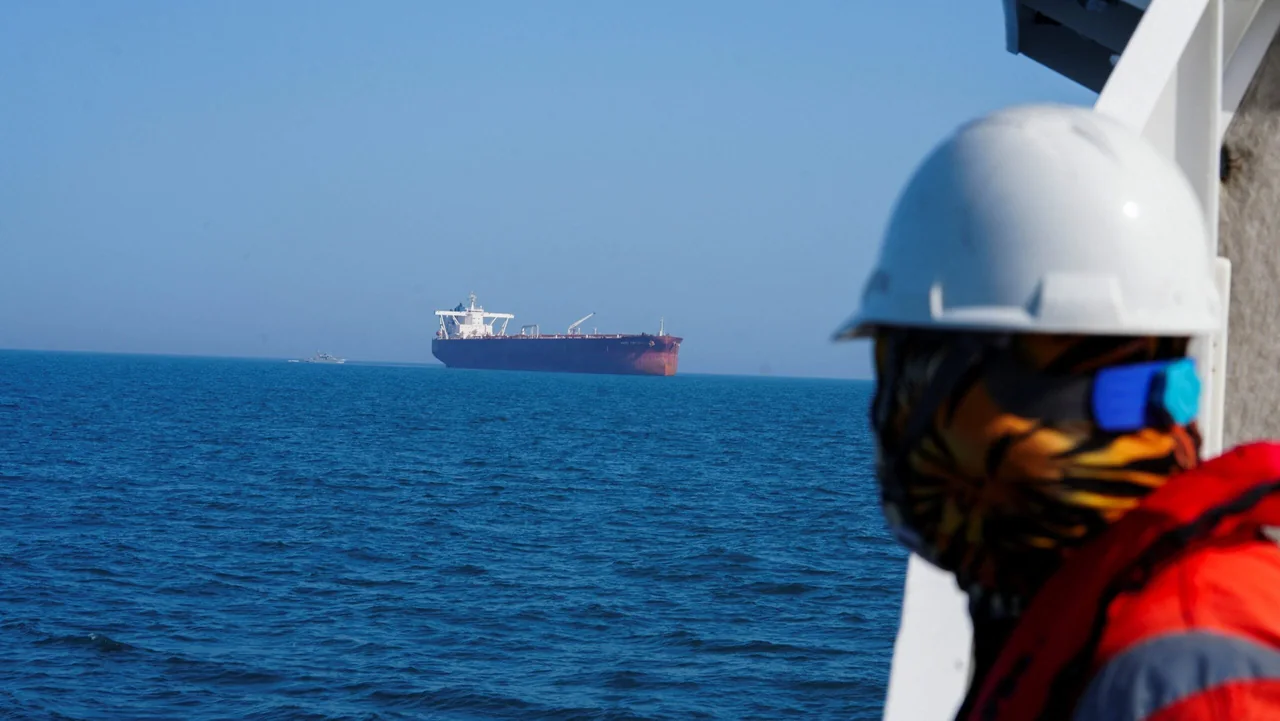
A Vietnam-bound supertanker carrying 2 million barrels of Iraqi crude has resumed its journey after being halted by US forces days ago. The vessel, Agios Fanourios I, had been stopped by US authorities at the Strait of Hormuz due to the ongoing US naval blockade of Iranian shipping.
The tanker's manager, Eastern Mediterranean Maritime, confirmed that it had received clearance from US authorities to continue its journey. However, the exact details of this clearance remain unclear. The vessel had sailed past the boundary line where the US is enforcing its blockade of Iranian shipping before resuming its journey.
This development comes after a two-day summit between US President Donald Trump and his Chinese counterpart Xi Jinping, where both agreed that the Strait of Hormuz should be open but made no apparent progress toward the goal. Despite this, traffic through the waterway remains far below pre-war levels.
The Agios Fanourios I's journey has significant implications for the global energy market, particularly in Southeast Asia. The vessel is carrying 2 million barrels of Iraqi crude, which is expected to be delivered to PetroVietnam Oil Corp., a trading arm of Vietnam's national energy company.
The cargo's buyer had sent a letter of appeal to the US for the tanker's release, citing the importance of the shipment to Nghi Son Refinery and the Vietnamese people. Any further delay in delivering this cargo could have significant consequences for millions of Vietnamese consumers, businesses, public services, and industries.
The resumption of the Agios Fanourios I's journey also highlights the challenges faced by international shipping companies operating in a complex and often unpredictable global environment. The vessel's manager must navigate a range of regulatory requirements and security protocols to ensure safe passage for its crew and cargo.
Furthermore, the ongoing US naval blockade of Iranian shipping has significant implications for regional stability and trade. The blockade has been in place since 2019 and has had a major impact on Iran's economy and energy exports.
In recent days, there have been several crude tankers that have exited the Persian Gulf, indicating a slight uptick in traffic through the waterway. However, the overall trend remains one of decline, with traffic levels far below pre-war levels.
The Agios Fanourios I's journey is just one example of the many challenges faced by international shipping companies operating in this complex environment. As global trade continues to evolve and new technologies emerge, it is essential that nations work together to ensure safe and efficient passage for all vessels.
The resumption of the Agios Fanourios I's journey highlights the complexities of international maritime trade and the need for clear communication between nations.