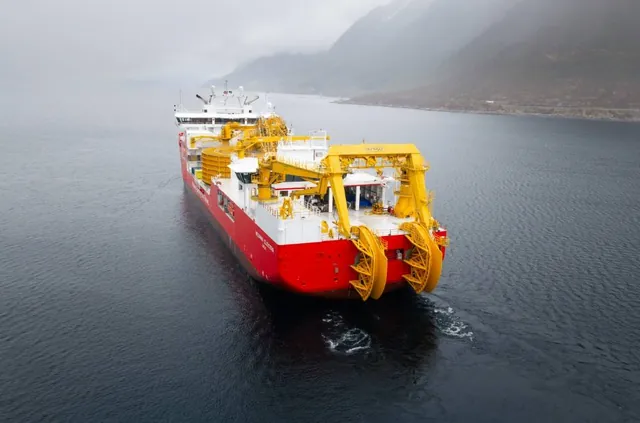
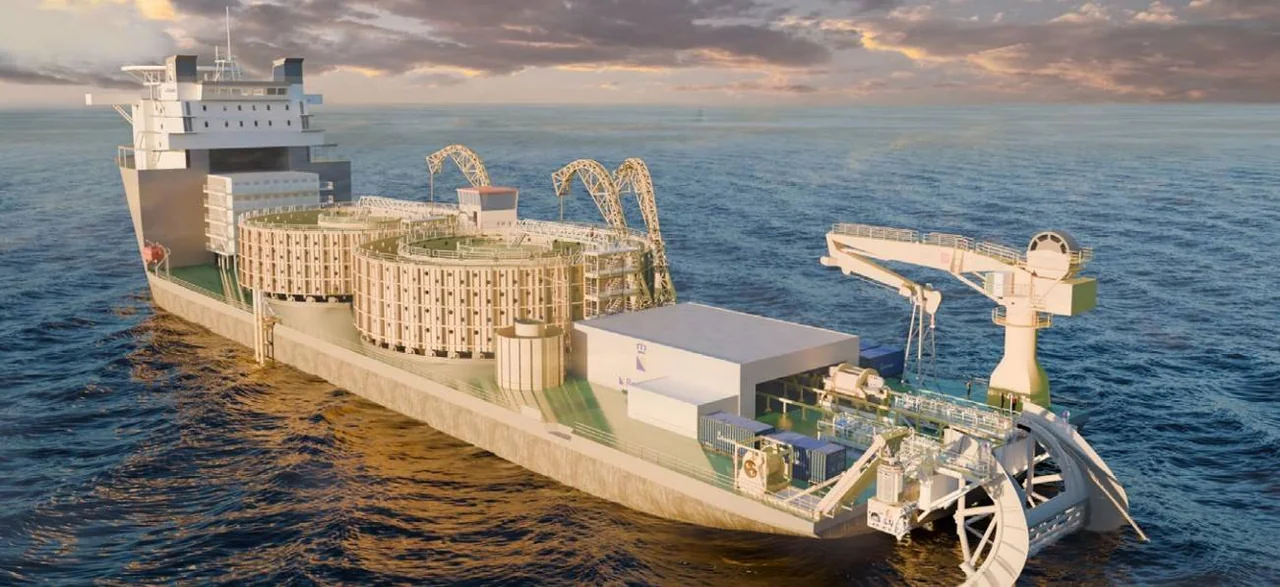
Boskalis has decided to invest in a new high-capacity cable laying vessel (CLV) to support growing demand in the offshore wind and interconnector markets. The company aims to capitalize on the increasing need for long-distance cable solutions in these markets. This investment is expected to play a significant role in supporting global renewable energy infrastructure development.
The CLV, which is expected to enter service in 2029, will be designed to target long-distance cable installation projects, particularly for high-voltage direct current cables. The vessel's capabilities will enable the installation of longer continuous cable sections and reduce the need for offshore joints. This design feature will significantly improve the efficiency and reliability of offshore wind transmission systems.
Boskalis' decision to invest in a new CLV is driven by the growing demand for robust grid infrastructure in support of renewable energy sources. The company's existing fleet, which includes three CLVs, trenching support vessels, and a portfolio of trenching equipment, will be augmented by this new vessel. This expansion will enable Boskalis to better serve its customers and meet the increasing needs of the offshore wind market.
The investment in the CLV is also seen as a strategic move by Boskalis to strengthen its position in the offshore energy market. The company's expertise in cable laying and trenching will be further enhanced by this new vessel, allowing it to better compete with other players in the industry. This will enable Boskalis to provide more comprehensive services to its customers and support the development of sustainable infrastructure worldwide.
The CLV is expected to have a significant impact on the offshore wind market, particularly in terms of reducing costs and increasing efficiency. The vessel's advanced design features will enable it to handle longer cable sections, reducing the need for offshore joints and minimizing downtime. This will lead to cost savings for customers and improve the overall reliability of offshore wind transmission systems.
The growth of the offshore wind market is driven by increasing demand for renewable energy sources and a desire to reduce carbon emissions. The development of sustainable infrastructure worldwide requires robust grid infrastructure, including long-distance cable solutions. Boskalis' investment in the CLV will play a critical role in enabling this transition and supporting the global energy transition.
The new CLV will feature two 12,000-ton cable carousels, including a concentric carousel, which will enable the installation of longer continuous cable sections. This design feature will significantly improve the efficiency and reliability of offshore wind transmission systems. The vessel's advanced capabilities will also reduce the need for offshore joints, minimizing downtime and cost savings for customers.
Boskalis' investment in the CLV is a testament to its commitment to supporting the development of sustainable infrastructure worldwide. The company's expertise in cable laying and trenching will be further enhanced by this new vessel, allowing it to provide more comprehensive services to its customers. This will enable Boskalis to play a leading role in the global energy transition.
The CLV is expected to enter service in 2029, marking an important milestone for Boskalis and the offshore wind market. The vessel's advanced design features and capabilities will enable it to handle longer cable sections, reducing costs and increasing efficiency. This will lead to improved reliability of offshore wind transmission systems and support the global energy transition.
The investment highlights the importance of robust grid infrastructure in enabling a smooth transition to renewable energy sources.