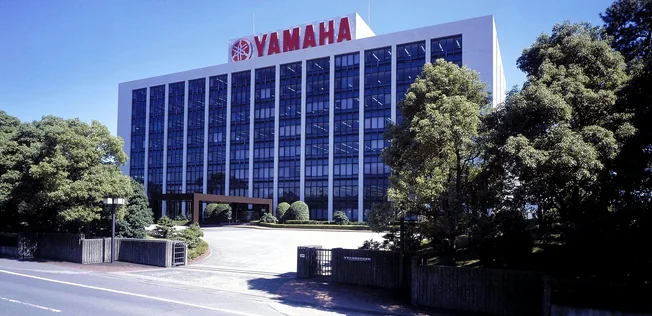
Yamaha Motor Co., Ltd. has reported strong first-quarter financial results for fiscal 2026, driven largely by higher motorcycle sales in developed markets. The company's revenue grew 16.6% year-over-year to $4.65 billion USD, while operating income rose 43.8% to $399 million USD.
The strong sales performance was led by the Land Mobility division, which includes motorcycles, with revenue climbing 23.7% to $3.06 billion USD. This growth was driven by stronger demand in Europe and the U.S., offsetting softer sales in Japan.
Emerging markets also improved as Vietnam returned to normal production operations following disruptions last year. The results provide another sign that motorcycle demand in North America remains resilient despite higher interest rates and ongoing economic uncertainty.

Yamaha's marine business also saw gains, with outboard motor sales increasing in the U.S., Europe, Asia, and Latin America, helping revenue rise 6% to $946 million USD.
However, profitability in the marine segment declined due to tariff-related costs and other expenses. Yamaha noted that personal watercraft sales in the U.S. remained weak compared to last year.
Tariffs continued to weigh on several Yamaha business units during the quarter, including marine products, ATVs, side-by-sides, and low-speed vehicles. The company expects some relief after the U.S. Supreme Court ruled reciprocal tariffs unconstitutional and certain products received exemptions from steel and aluminum tariffs.
Despite this, geopolitical instability in the Middle East and rising raw material prices continue to create uncertainty for manufacturers globally. Yamaha's Outdoor Land Vehicles segment saw revenue essentially flat at $262 million USD while operating losses widened to $50 million USD due largely to tariff impacts and higher costs.
The company's low-speed mobility business, including golf cars, also saw weaker U.S. demand.
Overall, the strong Q1 results demonstrate the resilience of motorcycle demand in North America, but ongoing tariff pressures and raw material costs remain a concern for manufacturers.

The strong Q1 results demonstrate the resilience of motorcycle demand in North America, but ongoing tariff pressures and raw material costs remain a concern for manufacturers.